






Manila Bulletin
 Philippines
National
Duterte camp appeals jurisdiction ruling, asks ICC for 'immediate' release
Philippines
National
Duterte camp appeals jurisdiction ruling, asks ICC for 'immediate' release
Philippines
National
Duterte camp appeals jurisdiction ruling, asks ICC for 'immediate' release
Duterte camp appeals jurisdiction ruling, asks ICC for 'immediate' release
Published Nov 15, 2025 11:38 am
|
Updated Nov 15, 2025 01:32 pm


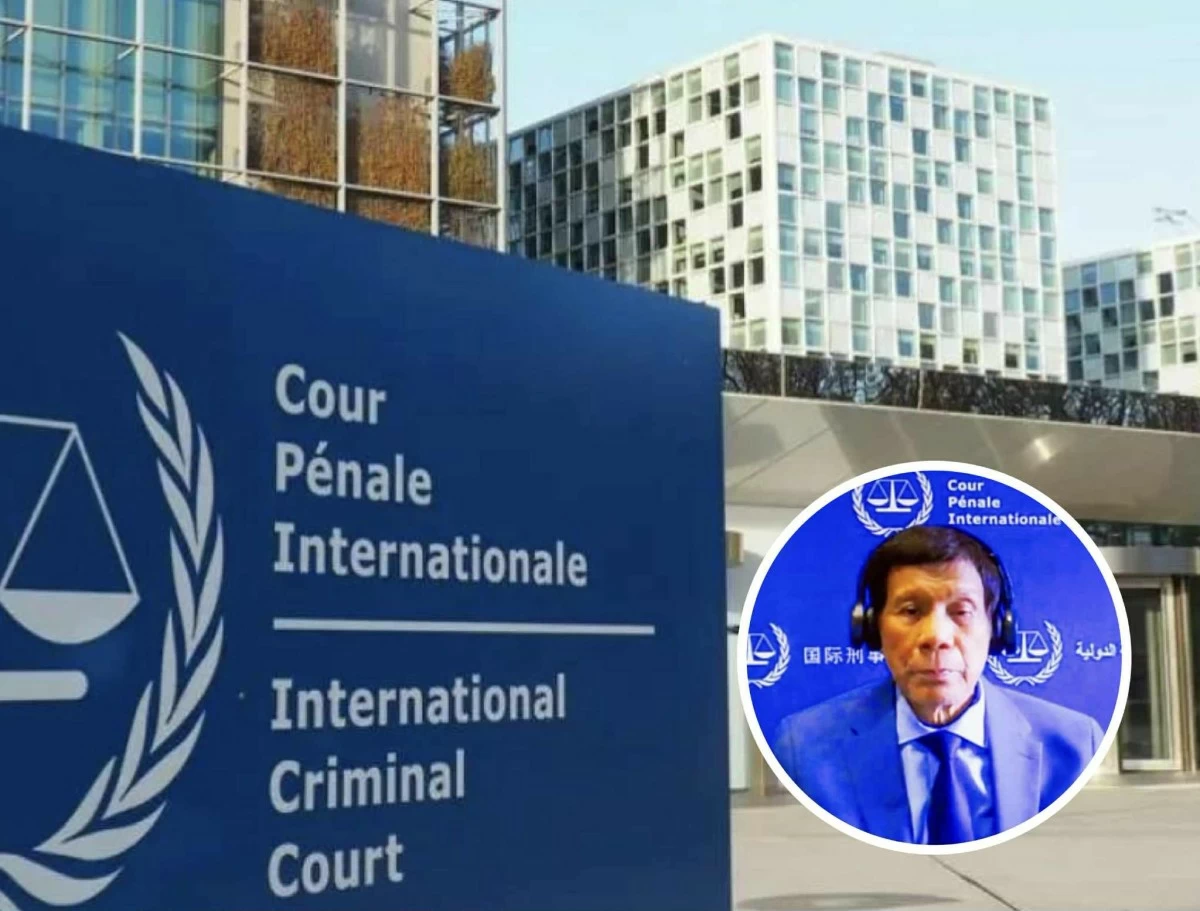
Former president Rodrigo Duterte (ICC Photos)
The camp of former president Rodrigo Duterte formally appealed the decision of the pre-trial chamber of the International Criminal Court (ICC) affirming its jurisdiction on his crimes against humanity charges, and asked the international body for the “immediate and unconditional” release of the ex-leader.
In a 21-page document dated Nov. 14 and submitted to the ICC’s Appeals Chamber—headed by Presiding Judge Luz del Carmen Ibáñez Carranza and Judges Tomoko Akane, Judge Solomy Balungi Bossa, Judge Gocha Lordkipanidze, and Judge Erdenebalsuren Damdin—the defense team raised several arguments against the “impugned decision” on the defense challenge to the ICC jurisdiction.
Under the “relief sought” section of the submission, the defense requested the Appeals Chamber to “reverse the impugned decision; find that there exists no legal basis for the continuation of International Criminal Court proceedings against Mr. Rodrigo Roa Duterte; and order his immediate and unconditional release.”
The defense argued that there were “three further errors of law and fact,” namely: a preliminary examination is a ‘matter under consideration’; the reference to ‘the Court’ in Article 127(2) includes the Office of the Prosecutor; and the ‘object and purpose’ of the Rome Statute permits the opening of an investigation even after the effective withdrawal of the Philippines.
‘Lex specialis’
Further, the Duterte camp reasoned that the Pre-Trial Chamber I (PTC I) that handles the former leader’s case “erred in law by finding that Article 127 of the Rome Statute is lex specialis.”
It questioned the PTC I’s ruling based on “extending the exercise of jurisdiction beyond the effective date of a State Party’s withdrawal.”
“The Impugned Decision does not cite a single authoritative source in support of its contention that Article 127(2) was specifically enacted as lex specialis 18 in relation to Article 12,” the submission read.
“Indeed, the words ‘lex specialis’ appear nowhere in any of the 10,531 pages of documented preparatory negotiations to the Rome Statute 19 nor is there any support whatsoever for such a view in any of the recognized commentaries to the Rome Statute,” it added.
‘Matters Under Consideration’
The Duterte camp claimed that the PTC I made a wrong basis of it ruling when it said that preliminary examinations and investigations are not two different “matters under consideration.”
“There are, at least, two ‘matters’ under consideration by the Court: On the one hand,
the preliminary examination, and, on the other, the decision to open an investigation. These matters are definitely not identical since the ‘consideration’ of each of them is carried out by different organs of the Court and is subject to distinct provisions,” it argued.
The preliminary examinations into the situation in the Philippines began in February 2018, a month after the Philippines’ withdrawal from the Rome Statute.
However, it was only in September 2021 that the pre-trial chamber authorized the ICC Prosecutor to open an investigation of crimes committed when the Philippines was still a member of the Rome Statute.
“As a consequence, for a matter to be ‘under consideration’, it cannot be of such an abstract nature – as seems to be the approach of the Pre-Trial Chamber – but, rather, it must be an issue envisaged both legally and procedurally under the Rome Statute,” the document said.
Opening an investigation after the PH withdrawal
The defense argued that the “one-year period already provided by the drafters of the Rome Statute in Article 127(1)” is already a “necessary safeguard” to prevent state-parties from avoiding an investigation by way of withdrawal from the Rome Statute.
“This is the very balance which the Pre-Trial Chamber insists must be struck to uphold the Statute,” it said, adding that the PTC I “made a policy-oriented determination” in objecting against the Philippines’ withdrawal because it is “entirely against the object and purpose” of the Rome Statute.
“Given that the Prosecutor could have prevented the feared impunity by seeking its investigation within the statutory withdrawal period, it is unclear why the Pre-Trial Chamber failed to insist on an explanation for the Prosecution’s dilatory attitude rather than promoting a strained interpretation of Article 127(2) to prevent the plain application of Article 12(2) of the Statute,” it added.