







Scoring the 15-minute city strategy in urban planning
A new study by Filipino researchers introduced innovations in indexing the application of the 15-minute city concept in Pasig City
Published Nov 14, 2025 03:01 pm


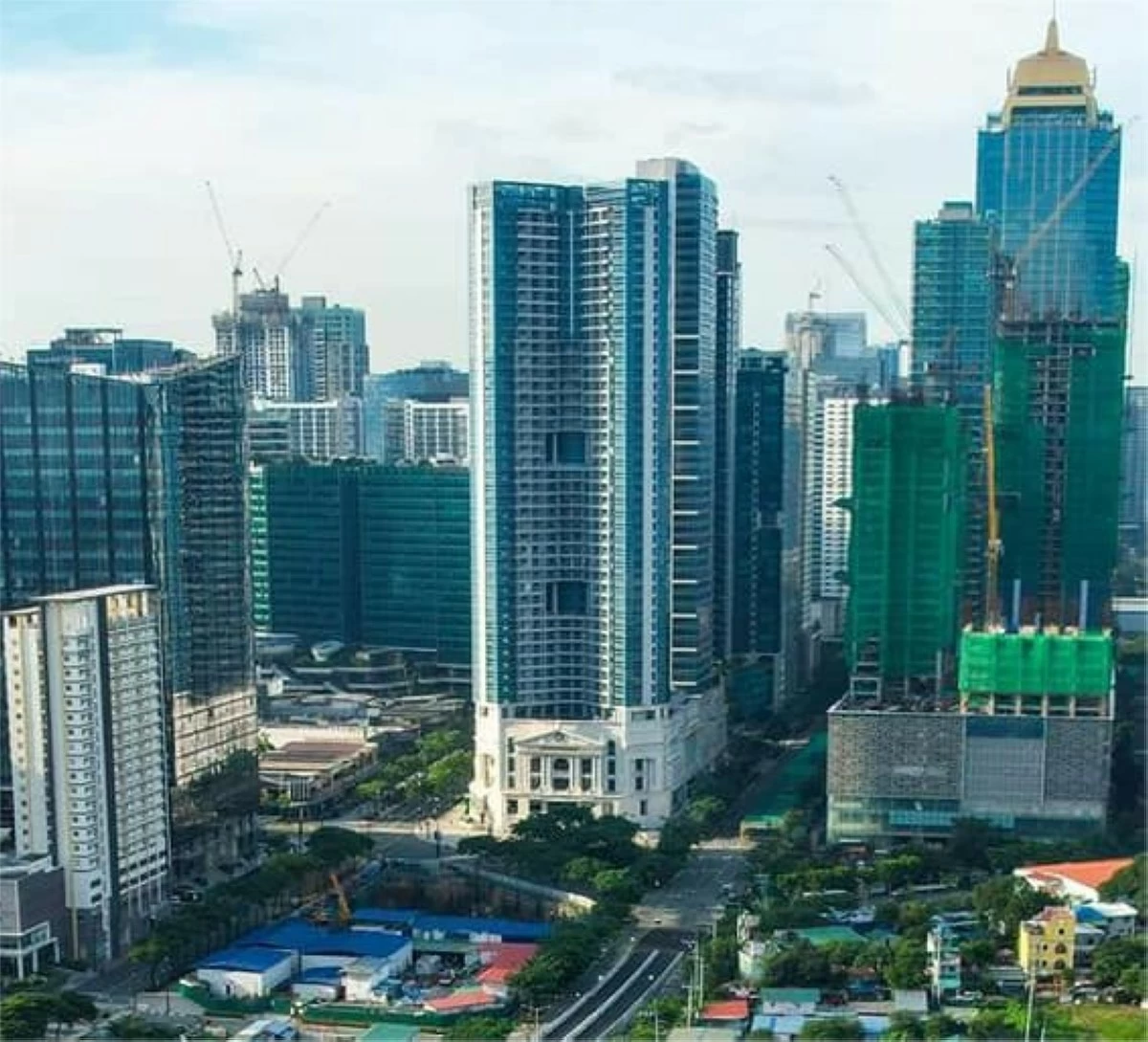
A recent study on the application of the 15-minute city concept was conducted in Pasig City. (Vico Sotto Facebook page)
After the Covid-19 lockdown, C40 Cities, an international coalition of urban leaders, proposed the 15-minute city concept as part of the post-pandemic recovery. Introduced by researcher Carlos Moreno, the urban model is characterized by essential establishments, services, stores, and institutions in proximity within a 15-minute reach.
In the Philippines, the concept has been gaining traction, with both public and private sectors exploring the 15-minute city model as a solution to urban congestion and to improve the quality of life of residents.
Recently, the Department of Geodetic Engineering and the College of Engineering from the University of the Philippines Diliman released a research study on the development of the Fifteen-Minute City Index (FMCI). This methodology produces a more holistic and in-depth assessment of existing 15-minute cities. Published in the International Journal of Geo-Information, the study was authored by Carlo Angelo R. Mañago, Marielle G. Nasalita, Cesar V. Saveron, Ynah Andrea D. Sunga, and Alexis Richard C. Claridades.
As an innovation, FMCI measures the accessibility of a specific area to the six essential social functions (living, working, supplying, caring, learning, and enjoying) within a 15-minute walk. The new method also takes into account factors such as walkability, the location of key services, and the different walking speeds of various age groups.
The study focused on Pasig City to demonstrate the city's progress toward achieving the 15-minute city status. Open-source data and extended network analysis were also utilized in the course of the research.
Key findings revealed that while no barangay in Pasig City achieved a perfect FMCI score of 1, a substantial majority showed a relatively high alignment with the 15-minute city concept. More than half of the barangays achieved an FMCI score of 0.5 or higher.
This suggests that Pasig City still favors industrial demands over urban mobility, which promotes active transportation. A score closer to 1 signifies better conformity to the 15-minute city model, indicating that the area is highly accessible to the essential social functions.
In a high-scoring area, residents can access a wide range of amenities—related to living, working, supplying, caring, learning, and enjoying—by walking for a short duration. The walking environment (sidewalks, safety, comfort) is well-designed and does not significantly hinder the 15-minute travel time. The amenities are evenly distributed across the area, ensuring that residents do not have to travel far to meet their daily needs, regardless of their age group.
The study also found that the size of a barangay's population does not significantly affect its corresponding FMCI score. Pinagbuhatan, which has the largest population (163,598), attained the second-lowest FMCI, while Bagong Katipunan, with the smallest population size (879), attained the fourth-highest FMCI.
The finding that population size does not strongly correlate with FMCI suggests that 15-minute city planning is achievable even in cities of smaller and medium sizes.
The developed FMCI was designed to be replicated; thus, by utilizing the methodology, highly urbanized cities can assess their urban planning strategies based on the weighted importance of walkability, amenities, and population distribution.