






Manila Bulletin
 Business
Trade & Industry
Philippine exports seen to outperform even with US tariffs—Oxford Economics
Business
Trade & Industry
Philippine exports seen to outperform even with US tariffs—Oxford Economics
Business
Trade & Industry
Philippine exports seen to outperform even with US tariffs—Oxford Economics
Philippine exports seen to outperform even with US tariffs—Oxford Economics
Published Nov 14, 2025 02:42 pm


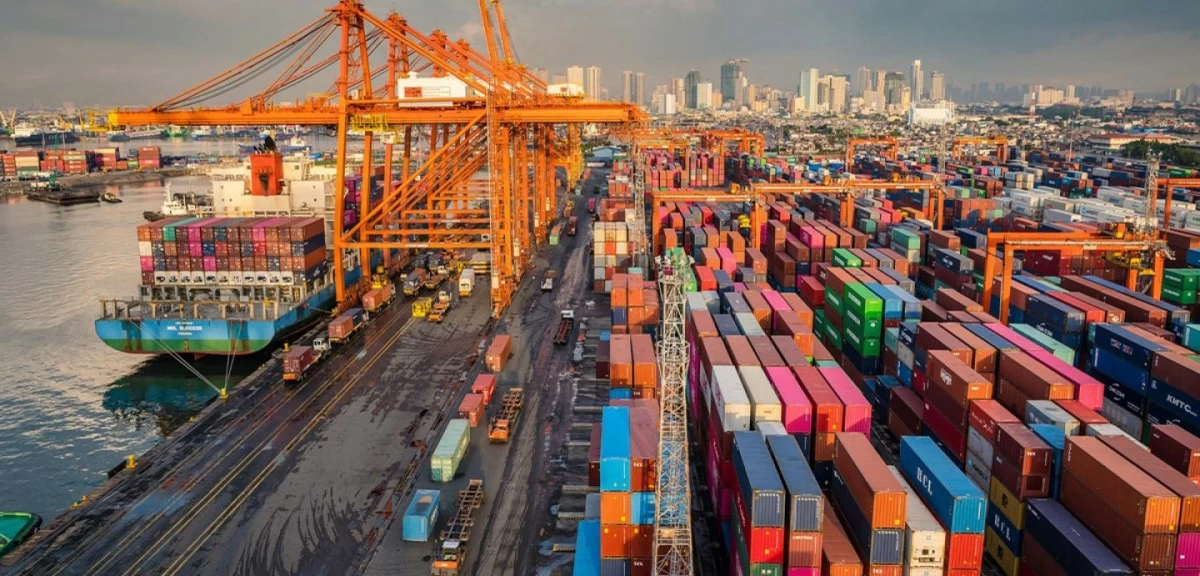
Despite United States (US) tariffs of 19 percent slapped on shipments to America, Philippine merchandise exports are expected to perform better this year amid market diversification, think tank Oxford Economics said.
“We’ve become more optimistic about 2026 goods export receipts across emerging markets (EMs) since our major downgrade in April 2025 to reflect the liberation day tariffs,” Oxford Economics senior economist Callee Davis said in a Nov. 13 report, referring to US President Donald Trump’s first official announcement of higher taxes on products coming from America’s trading partners.
“Across most major EMs, including China, we’ve revised up our nominal goods exports forecasts for 2025 and 2026 in absolute terms... Exports are now projected to meet or exceed our pre-Trump baseline for many EMs, including Chile, the Philippines, Thailand, Vietnam, China, and South Africa,” Oxford Economics said.
The think tank explained that EMs like the Philippines, Argentina, Brazil, Chile, and Malaysia “have significantly reduced the share of exports destined for the US, redirecting much of that trade to China and elsewhere.”
“We think that the recent upward reassessment of China’s import demand—reflecting a more optimistic outlook—could lead to export forecast upgrades for some smaller EMs,” the think tank added.
Manila Bulletin reported earlier that despite global trade uncertainties stemming from US tariffs, the Philippines’ merchandise exports from January to September 2025 hit a nine-month record high, with the US still the No. 1 market.
Latest preliminary Philippine Statistics Authority (PSA) data showed that the country’s goods exports at end-September totaled $63.02 billion. National Statistician Claire Dennis S. Mapa told Manila Bulletin that merchandise exports in the first nine months of the year posted the highest end-September level on record.
Back in June, the Cabinet-level Development Budget Coordinating Committee (DBCC) conceded that goods exports would likely decline by two percent this year, “largely due to slower global demand and heightened trade policy uncertainties”—reversing the government’s previous six-percent growth expectations prior to the world trade tensions started by Trump at the start of the year when he returned to office for a second term.
Oxford Economics data showed that between March and September, the share to total of Philippine exports to the US has decreased, while the share of shipments to China has risen.
Meanwhile, “China’s exports to the US have also declined significantly, with much of that trade redirected to the EU, emerging Asia, and the Middle East,” Oxford Economics noted.
The latest PSA data showed that the Philippines’ imports reached $100.2 billion, recording the highest nine-month value since 2022.
China remained the Philippines’ No. 1 import source for the first nine months. The Philippines is a net importer of the goods it consumes.
Economists have been bracing for a surge of products coming from China—already the top source of Philippine imports for many years now—as Chinese exporters tapped alternative markets other than the US at the height of trade tensions between Beijing and Washington.
The DBCC expects goods imports to grow by 3.5 percent this year “due to resilient domestic economic activity,” despite a downscaled 5.5- to 6.5-percent gross domestic product (GDP) growth target for the year in a mostly consumption-driven economy.
The DBCC’s latest imports growth projection is below the five-percent increase expected previously.
(With a report from Ricardo M. Austria)