







Peso weakens amid corruption scandal, says UK think tank
Published Nov 14, 2025 03:52 pm


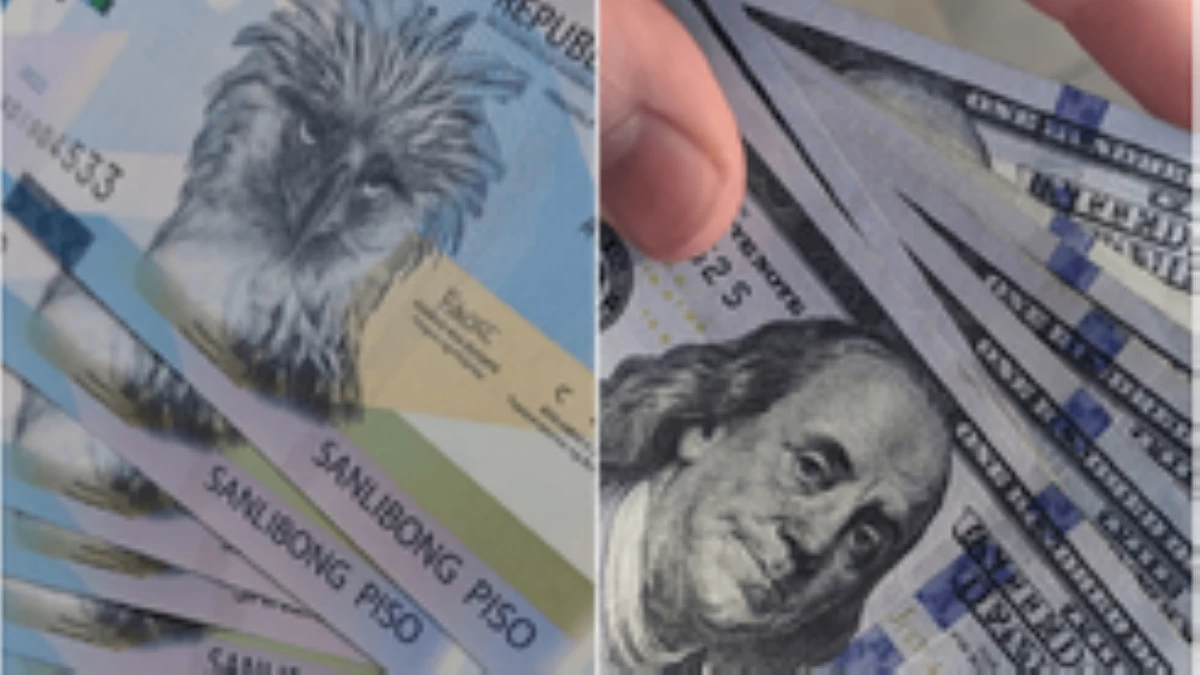
The Philippine peso’s recent decline against the United States (US) dollar reflects growing investor concerns amid the ongoing corruption scandal, leaving the local currency vulnerable to further pressure as capital inflows slow, according to London-based think tank Capital Economics.
“The corruption scandal currently engulfing the country appears to have contributed to the recent weakness in the peso, which is down by nearly five percent against the dollar since President Marcos’ State of the Nation Address (SONA) in July,” said Capital Economics deputy chief emerging markets (EMs) economist Jason Tuvey in a report on Thursday, Nov. 13.
“That leaves the Philippine peso susceptible to a deterioration in investor risk appetite, either due to global or domestic developments, which causes capital inflows to slow,” the think tank added.
Earlier, Manila Bulletin reported that if governance issues persist and investors continue moving funds into safe-haven US dollars, the Philippine peso could weaken further, potentially falling to ₱60 per dollar.
This comes on the heels of the peso hitting a fresh record low, closing at ₱59.17 against the US dollar on Wednesday, Nov. 12. Wednesday’s close surpassed the previous all-time low of ₱59.13:$1 on Oct. 28.
Despite the decline, the think tank said that the Philippines is at “low risk” on its proprietary indicator of currency risk, emphasizing that “even if the currency does come under pressure, we doubt that there would be a sharp adjustment. What’s more, the central bank could step in to prevent excessive volatility.”
“The crumb of comfort is that the Philippines’ broader external position is in reasonable health,” the think tank added, highlighting that foreign exchange (forex) reserves stand at nearly $110 billion—well above the estimated $40 billion needed to cover the current account deficit and maturing external debt.
However, risks persist. The think tank warned that the Philippine peso could face additional downward pressure if the ongoing scandal and anti-corruption efforts scare off foreign investors, or if individuals implicated move their assets abroad. A potential easing of monetary policy could also weaken the currency.
The think tank noted that the Philippines’ current account deficit reached 4.1 percent of gross domestic product (GDP) in June, widening by about 1.5 percentage points (ppts) from a year earlier. This is among the largest deficits in the past two decades and ranks as one of the widest in emerging markets (EMs) today.
The deficit is largely due to a drop in goods exports relative to GDP, particularly in electronic products like semiconductors.
Shipments to South Korea have been especially weak this year, despite a free trade agreement (FTA) taking effect earlier. Meanwhile, goods imports have remained broadly stable as a share of GDP.
The latest Philippine Statistics Authority (PSA) data showed that the major expenditure items contributing to third-quarter GDP growth of four percent—the slowest quarterly expansion in 4.5 years—were exports, which rose seven percent, and imports, which increased 2.6 percent.
Services exports have also suffered, the think tank noted, with travel and transport receipts down, especially from Chinese tourists after an e-visa suspension. Tourist arrivals from China remain 85 percent below pre-pandemic levels, though the e-visa program has now been reinstated.
The think tank noted that overseas Filipino remittances have declined steadily, dropping from around 10 percent of GDP in 2007 to below 7.5 percent today, with the US contributing less over the past year, possibly due to stricter immigration policies.
“On the financial account side of the balance of payments, there have also been worrying developments,” the think tank said, noting that although net direct investment has risen, this is due to fewer Filipinos investing abroad, while foreign direct investment (FDI) into the Philippines fell to 1.8 percent of GDP in the year to June—the lowest in a decade.
“When the Philippines’ current account position deteriorated in the second half of the last decade, we argued that this was not overly concerning as it largely reflected a ramp in imports to support the government’s infrastructure drive and, what’s more, the deficit was funded by relatively stable direct investment,” the think tank said. “Now, the deficit is not only wider but the Philippines also finds itself increasingly reliant on more flighty portfolio and ‘other’—mainly banking—flows to finance it.”
(Ricardo M. Austria)