







One young world opened the door; build AI for every language
Published Nov 14, 2025 12:05 am


NIGHT OWL
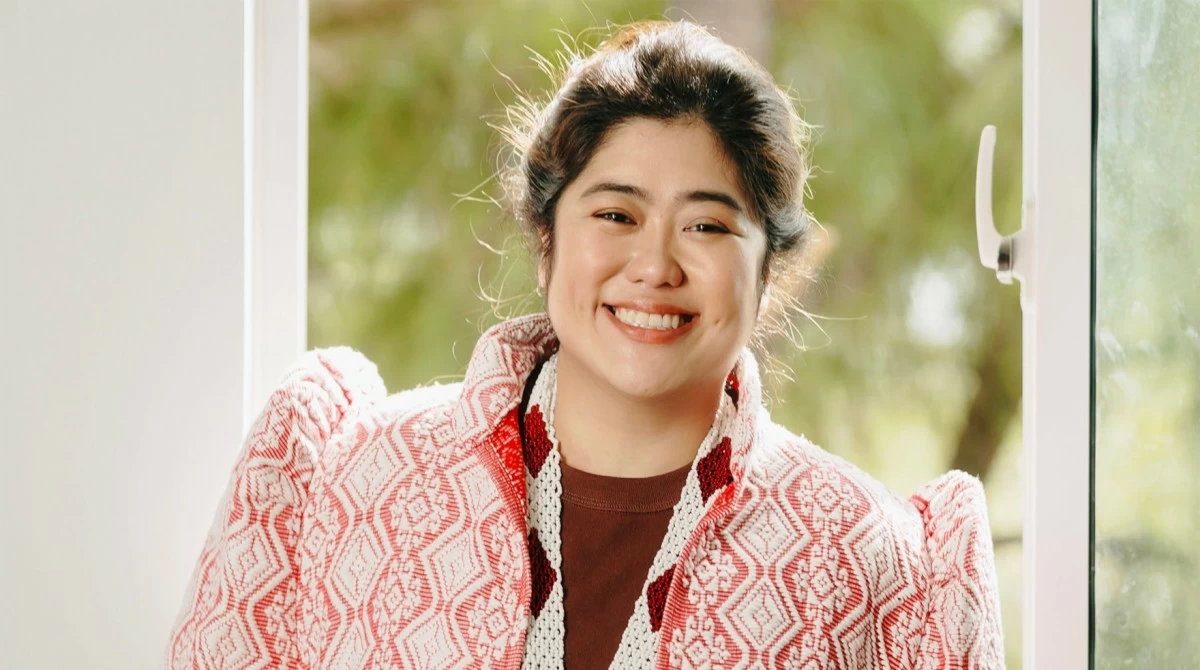
On Nov. 6, I stood on the One Young World stage at ICM Messe Munich, looking out at 2,500 young leaders from 190 countries. The room fell quiet as I introduced myself in Kinaray-a, my mother tongue from Western Visayas in the Philippines. It was a short greeting, but for me it felt like bringing my whole community into a space where our language is almost never heard.
I did not grow up imagining myself on a global stage.
As a child, I wrestled with a speech defect—words with the letter “s” made me stumble. My playmates mimicked my accent and my stutter. To them, I was a small, round, stuttering nerd. I became insecure, but I kept going to school. I learned to measure progress not in perfect consonants but in courage: one breath, one word, one more try.
On nights when my tongue felt locked, my mother would whisper proverbs in Kinaray-a. Slowly, my mouth would loosen to the sounds—familiar, ours. After decades of practice and stubborn repetition, my mouth finally caught up with my mind. The first time I addressed a room in English without stuttering, I felt a door swing open to a future I had never allowed myself to picture.
That journey taught me something I now see everywhere in the digital world: words are not equal. Language is not fair.
Today, that unfairness is embedded in our technology.
The world has about 7,100 languages. Over 40 percent are endangered, and without serious intervention, as many as 95 percent could disappear by the 22nd century. Yet the digital tools shaping our lives overwhelmingly serve just a tiny fraction of these languages—roughly a few dozen that have huge amounts of written and digital content.
In the Philippines, we have 175 languages. Fifty-nine are already considered endangered. Two have gone silent. The vast majority do not exist in the AI systems and platforms that claim to “speak the world’s languages.” When I tried using one of the most widely known AI tools in my own language, Kinaray-a, it simply did not understand me. That moment was more than a technical limitation; it was a reminder of who is seen as “worth understanding” by our technology.
How can we call technology that understands less than one percent of the world’s languages fair and responsible?
In 2023, I decided I couldn’t just point at the problem; I had to help build a solution. I founded NightOwl AI to safeguard linguistic heritage and ensure that every language can be digitally represented—especially endangered and low-resource languages with complex morphology that are often dismissed as “too difficult” or “too small to matter.”
Our AI-powered platform focuses on what communities actually need. We provide real-time translation, document oral speech, create transcriptions, and digitize archived texts. We design everything to work both online and offline, because your ability to preserve your language should not depend on how strong your internet connection is that day. And we work with communities as partners—co-creating, collecting data with consent, and centering pride rather than extraction.
Our goal is simple: enable elders to teach, children to learn, and communities to access their own words every day, with dignity, online or offline.
What started in the Philippines is now reaching far beyond our shores. After a successful pilot supporting Tagalog, Cebuano, and Ilokano, we are scaling across Asia, Africa, and Latin America—anywhere linguistic diversity is at risk. In just two years, we have translated more than two million words across 22 languages. Our volunteer network now spans 20 countries, from Colombia to Nigeria to the United Kingdom.
Together, we have preserved oral stories and texts in Tagalog, Karay-a, Urdu, Bisaya, and more. We have digitized archives from the 1930s that might otherwise remain fragile and forgotten. We have partnered with media organizations to pilot AI that delivers news in four regional Philippine languages. We are co-creating open dictionaries with communities and working with an international team on a framework that puts language inclusion at the very heart of AI development.
NightOwl AI has been recognized by She Shapes AI, joined the Worldwide Alliance for AI and Democracy, and become a UN-recognized civil society partner. These recognitions matter not as trophies, but as keys—they open doors to collaboration, visibility, and resources.
And that is where One Young World becomes truly life changing.
For me, One Young World is not just another conference. It is an environment that accelerates transformation. It opens doors—to opportunities, to conversations, and to a community of game changers who turn a five-minute hallway chat into a real partnership.
In Munich, I met a broadcaster who wants to localize news beyond the dominant national language, a linguist documenting verbs in an endangered tongue, an engineer building offline-first apps for rural schools, and an entrepreneur looking for concrete ways to invest in local data and language inclusion. These are not abstract “stakeholders;” they are potential co-builders.
One Young World compresses the world into a few intense days, where a single shared coffee can lead to a pilot project, and a question from the audience can become the seed of a new program. It is a place where a greeting in Kinaray-a is not a footnote but the start of a conversation. It is a community that makes you feel less alone in your mission, because you are surrounded by young leaders equally obsessed with solving “impossible” problems.
But inspiration and community are only the beginning. If we truly want responsible AI, we must start with inclusion—not as a slogan, but as a design principle.
That means building local language support from day one, not as a future “nice to have.” It means investing in affordable internet, devices, and locally stewarded data. It means designing for low bandwidth, erratic electricity, and classrooms where one phone might be shared by many students. It means rejecting extractive “data grabs” and treating communities as co-authors, co-owners, and experts in their own languages.
In my speech, I said: “For AI and technology to be used responsibly, they first need to be more inclusive. This starts with local language integration then extends to affordable internet, devices, and local data. We can debate AI’s power and risks, but access is a pre-requisite for responsible use.” I stand by that. We cannot call AI transformative if it only transforms life for those already privileged by language, geography, and infrastructure.
Sometimes I think about my three-year-old self—the little girl who couldn’t say her “s” and who avoided speaking whenever she could. If you told her that one day she would stand on a stage in Munich, speaking to 2,500 young leaders about using AI to protect Kinaray-a and other endangered languages, she would never believe you.
And yet, here I am.
One Young World opened the door—to a global network, to new ideas, to a community of people who believe that the world can and must work differently. My promise, and NightOwl AI’s promise, is this: we will leave no community or language behind.
Now the real work is to walk through that open door together and build a technological future where every language counts, every story can be told, and every child grows up knowing that the words they speak at home belong in the digital world we are creating.