ADVERTISEMENT

More aid pours in as PH recovers from recent typhoons

EU, New Zealand, US boost disaster relief

Published Nov 14, 2025 11:39 am  |  Updated Nov 14, 2025 01:54 pm
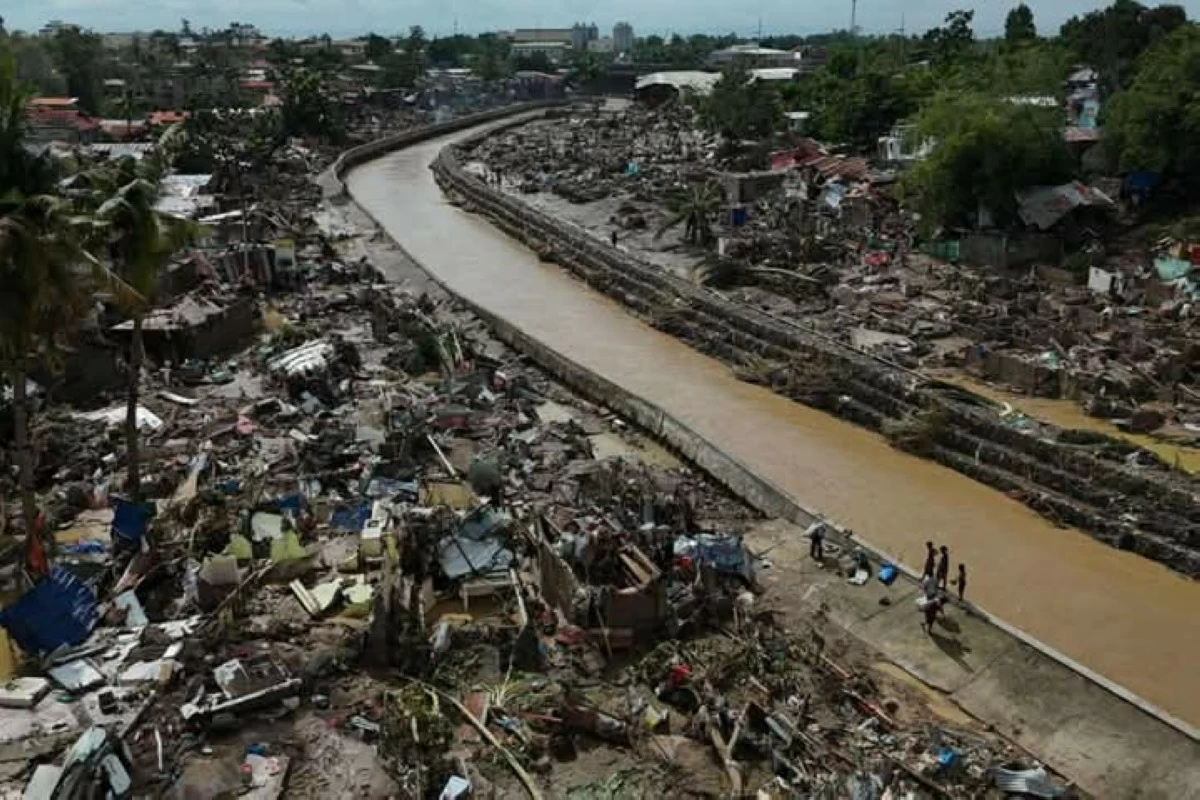
Residents return to what remains of their homes along the Mananga River in Talisay City, Cebu province, on Nov. 5, 2025, after Typhoon Kalmaegi (locally Tino) caused widespread devastation. (AP Photo/Jacqueline Hernandez)
The international community has stepped up support for the Philippines’ relief and recovery efforts following the destruction caused by Typhoons Tino and Uwan, with the European Union, New Zealand, and the United States mobilizing new humanitarian aid packages and military assistance.

€1.25 million from EU

The European Union announced on Friday, Nov. 14, the release of €1.25 million (approximately P85 million) in humanitarian aid to help the most affected communities, particularly in Cebu, which was hit by both typhoons and a recent major earthquake.
Of the total funding, €250,000 (P17 million) will be coursed through the Philippine Red Cross to assist families still displaced by the Cebu earthquake and again exposed to flooding and landslides. Assistance includes shelter materials, household items, cash support, and water, sanitation, and health services.
EU partners have also deployed previously allocated funds for disaster preparedness and anticipatory action, enabling early cash assistance and first-response operations.
The new allocation adds to the €8.5 million (approximately P578.6 million) in EU humanitarian and disaster-preparedness funding already provided to the Philippines this year, including support after typhoons in July and September and earthquakes in Cebu and Davao.
The EU assistance is being mobilized through the European Civil Protection and Humanitarian Aid Operations (ECHO), which supports vulnerable populations worldwide. Brussels also maintains a €16-million (approximately P1.09 billion) agreement with the International Federation of Red Cross and Red Crescent Societies (IFRC) to replenish its global Disaster Response Emergency Fund.

P26 million from New Zealand

New Zealand’s Ministry of Foreign Affairs and Trade likewise announced NZ$750,000 (P26 million) in humanitarian assistance for communities affected by the typhoons and the Cebu earthquake.
The aid will be delivered through the IFRC to support urgent needs in devastated areas.
“Our hearts go out to the families and communities affected by these disasters,” New Zealand Ambassador to the Philippines Dr. Catherine McIntosh said, adding that the contribution aims to provide “timely, practical support to help communities recover.”

Military assets from US

The United States, meanwhile, deployed military personnel and assets to assist the Philippine government’s disaster-response operations, following Manila’s request for foreign disaster relief support.
The US Indo-Pacific Command said American forces are working “shoulder-to-shoulder” with the Armed Forces of the Philippines, the National Disaster Risk Reduction and Management Council (NDRRMC), the Office of Civil Defense, JUSMAG, Task Force-Philippines, and the US Department of State to bring aid to hard-hit regions.
The rapid response was enabled by the US military’s forward presence in the Indo-Pacific, the command said.
“I have been thoroughly impressed by the preparedness and forward-leaning measures taken by the Philippine government,” US Marine Corps Brig. Gen. Robert Brodie said, adding that supporting allies and partners “in a time of need is non-negotiable.”
Since Nov. 5, US and Philippine forces have coordinated mission planning and the delivery of critical supplies, underscoring the long-standing alliance and shared commitment to regional resilience.

Related Tags

Typhoon Tino Typhoon Uwan PH-EU PH-US PH-New Zealand
ADVERTISEMENT
.most-popular .layout-ratio{ padding-bottom: 79.13%; } @media (min-width: 768px) and (max-width: 1024px) { .widget-title { font-size: 15px !important; } }

{{ articles_filter_1561_widget.title }}

.most-popular .layout-ratio{ padding-bottom: 79.13%; } @media (min-width: 768px) and (max-width: 1024px) { .widget-title { font-size: 15px !important; } }

{{ articles_filter_1562_widget.title }}

.most-popular .layout-ratio{ padding-bottom: 79.13%; } @media (min-width: 768px) and (max-width: 1024px) { .widget-title { font-size: 15px !important; } }

{{ articles_filter_1563_widget.title }}

{{ articles_filter_1564_widget.title }}

.mb-article-details { position: relative; } .mb-article-details .article-body-preview, .mb-article-details .article-body-summary{ font-size: 17px; line-height: 30px; font-family: "Libre Caslon Text", serif; color: #000; } .mb-article-details .article-body-preview iframe , .mb-article-details .article-body-summary iframe{ width: 100%; margin: auto; } .read-more-background { background: linear-gradient(180deg, color(display-p3 1.000 1.000 1.000 / 0) 13.75%, color(display-p3 1.000 1.000 1.000 / 0.8) 30.79%, color(display-p3 1.000 1.000 1.000) 72.5%); position: absolute; height: 200px; width: 100%; bottom: 0; display: flex; justify-content: center; align-items: center; padding: 0; } .read-more-background a{ color: #000; } .read-more-btn { padding: 17px 45px; font-family: Inter; font-weight: 700; font-size: 18px; line-height: 16px; text-align: center; vertical-align: middle; border: 1px solid black; background-color: white; } .hidden { display: none; }
function initializeAllSwipers() { // Get all hidden inputs with cms_article_id document.querySelectorAll('[id^="cms_article_id_"]').forEach(function (input) { const cmsArticleId = input.value; const articleSelector = '#article-' + cmsArticleId + ' .body_images'; const swiperElement = document.querySelector(articleSelector); if (swiperElement && !swiperElement.classList.contains('swiper-initialized')) { new Swiper(articleSelector, { loop: true, pagination: false, navigation: { nextEl: '#article-' + cmsArticleId + ' .swiper-button-next', prevEl: '#article-' + cmsArticleId + ' .swiper-button-prev', }, }); } }); } setTimeout(initializeAllSwipers, 3000); const intersectionObserver = new IntersectionObserver( (entries) => { entries.forEach((entry) => { if (entry.isIntersecting) { const newUrl = entry.target.getAttribute("data-url"); if (newUrl) { history.pushState(null, null, newUrl); let article = entry.target; // Extract metadata const author = article.querySelector('.author-section').textContent.replace('By', '').trim(); const section = article.querySelector('.section-info ').textContent.replace(' ', ' '); const title = article.querySelector('.article-title h1').textContent; // Parse URL for Chartbeat path format const parsedUrl = new URL(newUrl, window.location.origin); const cleanUrl = parsedUrl.host + parsedUrl.pathname; // Update Chartbeat configuration if (typeof window._sf_async_config !== 'undefined') { window._sf_async_config.path = cleanUrl; window._sf_async_config.sections = section; window._sf_async_config.authors = author; } // Track virtual page view with Chartbeat if (typeof pSUPERFLY !== 'undefined' && typeof pSUPERFLY.virtualPage === 'function') { try { pSUPERFLY.virtualPage({ path: cleanUrl, title: title, sections: section, authors: author }); } catch (error) { console.error('ping error', error); } } // Optional: Update document title if (title && title !== document.title) { document.title = title; } } } }); }, { threshold: 0.1 } ); function showArticleBody(button) { const article = button.closest("article"); const summary = article.querySelector(".article-body-summary"); const body = article.querySelector(".article-body-preview"); const readMoreSection = article.querySelector(".read-more-background"); // Hide summary and read-more section summary.style.display = "none"; readMoreSection.style.display = "none"; // Show the full article body body.classList.remove("hidden"); } document.addEventListener("DOMContentLoaded", () => { let loadCount = 0; // Track how many times articles are loaded const offset = [1, 2, 3, 4, 5, 6, 7, 8, 9, 10]; // Offset values const currentUrl = window.location.pathname.substring(1); let isLoading = false; // Prevent multiple calls if (!currentUrl) { console.log("Current URL is invalid."); return; } const sentinel = document.getElementById("load-more-sentinel"); if (!sentinel) { console.log("Sentinel element not found."); return; } function isSentinelVisible() { const rect = sentinel.getBoundingClientRect(); return ( rect.top < window.innerHeight && rect.bottom >= 0 ); } function onScroll() { if (isLoading) return; if (isSentinelVisible()) { if (loadCount >= offset.length) { console.log("Maximum load attempts reached."); window.removeEventListener("scroll", onScroll); return; } isLoading = true; const currentOffset = offset[loadCount]; window.loadMoreItems().then(() => { let article = document.querySelector('#widget_1690 > div:nth-last-of-type(2) article'); intersectionObserver.observe(article) loadCount++; }).catch(error => { console.error("Error loading more items:", error); }).finally(() => { isLoading = false; }); } } window.addEventListener("scroll", onScroll); });

Sign up by email to receive news.