ADVERTISEMENT

DA pushes stricter monitoring of meat handling, labeling

Published Nov 14, 2025 02:38 pm
The Department of Agriculture sets a minimum farmgate price for live hogs to help local raisers recover from an influx of cheaper imports.
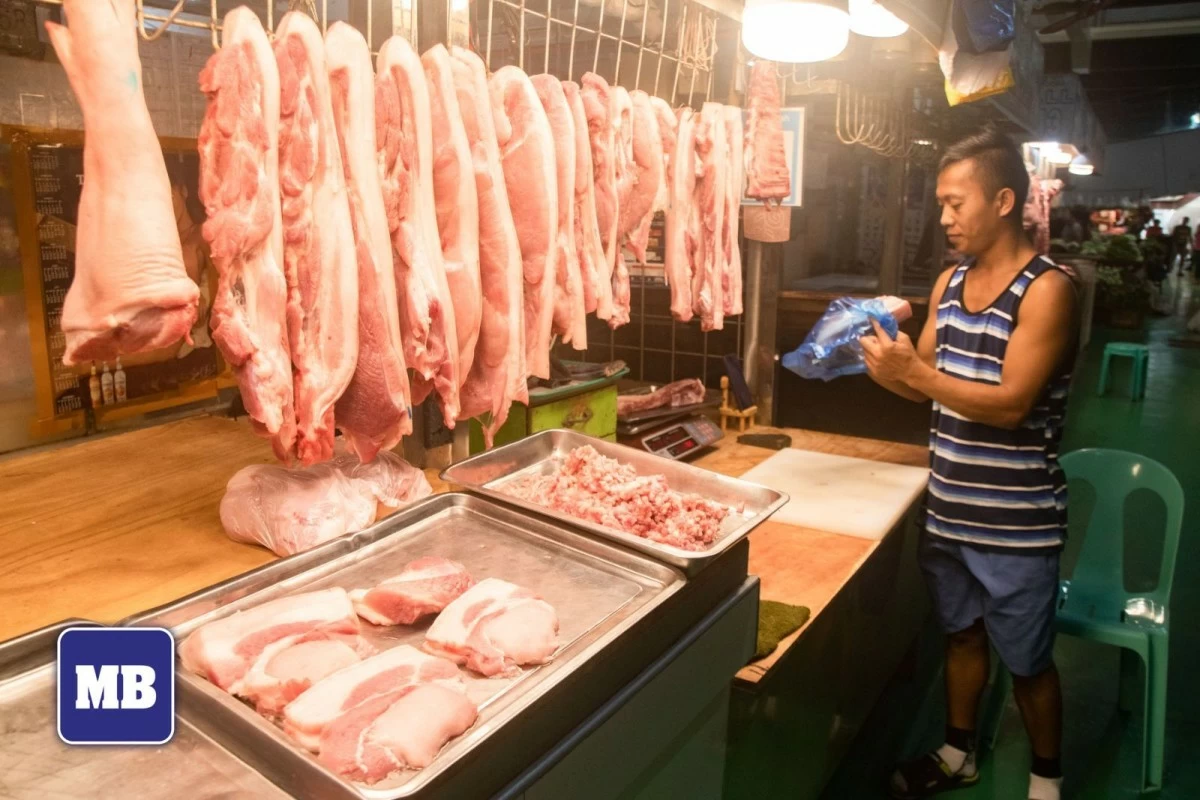
The Department of Agriculture (DA) will implement stricter monitoring of supermarkets and wet markets to ensure that frozen meat is properly labeled and not sold as “fresh,” further upholding food safety.
In a statement, Agriculture Secretary Francisco Tiu Laurel said he has ordered nationwide inspections to monitor the compliance of markets with meat handling and labeling rules.
Tiu Laurel said it is important that frozen meat is properly labeled and stored to safeguard not only consumers but also local producers.
“Retailers cannot pass off frozen products as fresh,” he added. “Food safety and fair trade are non-negotiable.”
The Bureau of Animal Industry (BAI), Agribusiness and Marketing Assistance Service (AMAS), and the National Meat Inspection Service (NMIS) have been directed to conduct the inspections.
NMIS, the regulatory agency in charge of meat inspection and hygiene, said locally slaughtered meat comes with a meat inspection certificate (MIC) to confirm that it has undergone inspection.
Imported meat, meanwhile, must have a certificate of meat inspection (COMI) as proof that it has been subjected to antemortem and postmortem inspection by authorized meat inspectors in the country of origin, and that the meat came from countries that passed the evaluation of NMIS and BAI.
“Ensuring that the meat has the appropriate inspection certificate is important to guarantee that it is safe for human consumption, and that it does not pose any threat to their health and safety, as well as to the health of local animals that supply meat in our country,” NMIS said in a statement.
The agency also said that any meat, whether local or imported, without the proper inspection certificate is considered “hot meat” and shall face the corresponding violations based on the Meat Inspection Code of the Philippines.
The law states that anyone who sells, transports, offers, or accepts for sale or transport meat without a legitimate MIC or COMI could face a fine of up to ₱500, along with a three-year prohibition from operating the business.
NMIS emphasized that it is the responsibility of business owners to ensure that the meat being sold is not “hot meat.”
Meanwhile, the DA said the order to conduct tighter inspections coincides with ongoing efforts to stabilize pork prices.
The department and industry groups earlier agreed to establish a minimum farmgate price of ₱210 per kilo for live hogs, higher than the current range of ₱150 to ₱180 per kilo.
Aside from this, the DA is also studying a maximum suggested retail price (MSRP) for pork, the potential restoration of pork import tariffs from 25 percent to 40 percent, and the reclassification of pork jowls to apply higher tariffs, among others.
“These measures aim to bring transparency to the meat market, protect consumers, and help restore profitability to local hog raisers amid persistent price volatility,” said Tiu Laurel.
ADVERTISEMENT
.most-popular .layout-ratio{ padding-bottom: 79.13%; } @media (min-width: 768px) and (max-width: 1024px) { .widget-title { font-size: 15px !important; } }

{{ articles_filter_1561_widget.title }}

.most-popular .layout-ratio{ padding-bottom: 79.13%; } @media (min-width: 768px) and (max-width: 1024px) { .widget-title { font-size: 15px !important; } }

{{ articles_filter_1562_widget.title }}

.most-popular .layout-ratio{ padding-bottom: 79.13%; } @media (min-width: 768px) and (max-width: 1024px) { .widget-title { font-size: 15px !important; } }

{{ articles_filter_1563_widget.title }}

{{ articles_filter_1564_widget.title }}

.mb-article-details { position: relative; } .mb-article-details .article-body-preview, .mb-article-details .article-body-summary{ font-size: 17px; line-height: 30px; font-family: "Libre Caslon Text", serif; color: #000; } .mb-article-details .article-body-preview iframe , .mb-article-details .article-body-summary iframe{ width: 100%; margin: auto; } .read-more-background { background: linear-gradient(180deg, color(display-p3 1.000 1.000 1.000 / 0) 13.75%, color(display-p3 1.000 1.000 1.000 / 0.8) 30.79%, color(display-p3 1.000 1.000 1.000) 72.5%); position: absolute; height: 200px; width: 100%; bottom: 0; display: flex; justify-content: center; align-items: center; padding: 0; } .read-more-background a{ color: #000; } .read-more-btn { padding: 17px 45px; font-family: Inter; font-weight: 700; font-size: 18px; line-height: 16px; text-align: center; vertical-align: middle; border: 1px solid black; background-color: white; } .hidden { display: none; }
function initializeAllSwipers() { // Get all hidden inputs with cms_article_id document.querySelectorAll('[id^="cms_article_id_"]').forEach(function (input) { const cmsArticleId = input.value; const articleSelector = '#article-' + cmsArticleId + ' .body_images'; const swiperElement = document.querySelector(articleSelector); if (swiperElement && !swiperElement.classList.contains('swiper-initialized')) { new Swiper(articleSelector, { loop: true, pagination: false, navigation: { nextEl: '#article-' + cmsArticleId + ' .swiper-button-next', prevEl: '#article-' + cmsArticleId + ' .swiper-button-prev', }, }); } }); } setTimeout(initializeAllSwipers, 3000); const intersectionObserver = new IntersectionObserver( (entries) => { entries.forEach((entry) => { if (entry.isIntersecting) { const newUrl = entry.target.getAttribute("data-url"); if (newUrl) { history.pushState(null, null, newUrl); let article = entry.target; // Extract metadata const author = article.querySelector('.author-section').textContent.replace('By', '').trim(); const section = article.querySelector('.section-info ').textContent.replace(' ', ' '); const title = article.querySelector('.article-title h1').textContent; // Parse URL for Chartbeat path format const parsedUrl = new URL(newUrl, window.location.origin); const cleanUrl = parsedUrl.host + parsedUrl.pathname; // Update Chartbeat configuration if (typeof window._sf_async_config !== 'undefined') { window._sf_async_config.path = cleanUrl; window._sf_async_config.sections = section; window._sf_async_config.authors = author; } // Track virtual page view with Chartbeat if (typeof pSUPERFLY !== 'undefined' && typeof pSUPERFLY.virtualPage === 'function') { try { pSUPERFLY.virtualPage({ path: cleanUrl, title: title, sections: section, authors: author }); } catch (error) { console.error('ping error', error); } } // Optional: Update document title if (title && title !== document.title) { document.title = title; } } } }); }, { threshold: 0.1 } ); function showArticleBody(button) { const article = button.closest("article"); const summary = article.querySelector(".article-body-summary"); const body = article.querySelector(".article-body-preview"); const readMoreSection = article.querySelector(".read-more-background"); // Hide summary and read-more section summary.style.display = "none"; readMoreSection.style.display = "none"; // Show the full article body body.classList.remove("hidden"); } document.addEventListener("DOMContentLoaded", () => { let loadCount = 0; // Track how many times articles are loaded const offset = [1, 2, 3, 4, 5, 6, 7, 8, 9, 10]; // Offset values const currentUrl = window.location.pathname.substring(1); let isLoading = false; // Prevent multiple calls if (!currentUrl) { console.log("Current URL is invalid."); return; } const sentinel = document.getElementById("load-more-sentinel"); if (!sentinel) { console.log("Sentinel element not found."); return; } function isSentinelVisible() { const rect = sentinel.getBoundingClientRect(); return ( rect.top < window.innerHeight && rect.bottom >= 0 ); } function onScroll() { if (isLoading) return; if (isSentinelVisible()) { if (loadCount >= offset.length) { console.log("Maximum load attempts reached."); window.removeEventListener("scroll", onScroll); return; } isLoading = true; const currentOffset = offset[loadCount]; window.loadMoreItems().then(() => { let article = document.querySelector('#widget_1690 > div:nth-last-of-type(2) article'); intersectionObserver.observe(article) loadCount++; }).catch(error => { console.error("Error loading more items:", error); }).finally(() => { isLoading = false; }); } } window.addEventListener("scroll", onScroll); });

Sign up by email to receive news.