






Manila Bulletin
 Philippines
National
Agri, infra damage due to 'Uwan,' 'Tino' hits P2.8 billion – NDRRMC
Philippines
National
Agri, infra damage due to 'Uwan,' 'Tino' hits P2.8 billion – NDRRMC
Philippines
National
Agri, infra damage due to 'Uwan,' 'Tino' hits P2.8 billion – NDRRMC
Agri, infra damage due to 'Uwan,' 'Tino' hits P2.8 billion – NDRRMC
Published Nov 14, 2025 03:49 pm


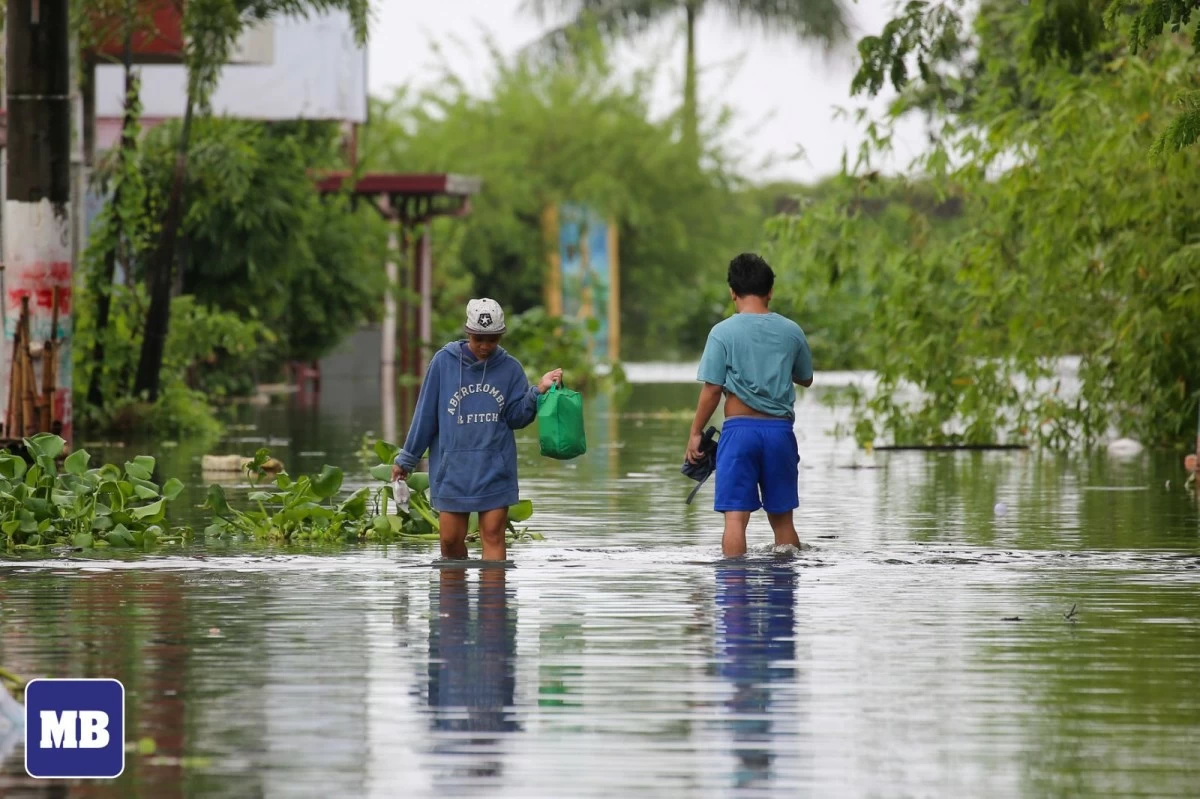
Residents of Angono, Rizal, wade through knee-to-waist-deep floodwaters on Nov. 10, 2025 as Super Typhoon "Uwan" brings heavy rains to the area. Locals said it may take one to two months before the floodwaters fully subside. (Photo: John Louie Abrina / MANILA BULLETIN)
Damage to agriculture and infrastructure caused by consecutive typhoons “Uwan” and “Tino” has reached more than P2.8 billion, according to consolidated figures from government agencies released by the National Disaster Risk Reduction and Management Council (NDRRMC) on Friday, Nov. 14.
For Super Typhoon Uwan, agricultural losses totaled P174,674,174.96 based on the assessment by the Department of Agriculture (DA) while the National Irrigation Administration (NIA) reported an additional P170,400,000 in damages to irrigation systems. Infrastructure damage from the storm reached P1,705,654,020.27, bringing Uwan’s total loss to P2,050,728,195.23.
Typhoon Tino, on the other hand, inflicted another P327,511,453.42 in agricultural losses and P483,013,585.96 in damage to public infrastructure. Its total cost of destruction reached P810,525,039.38.
Combined damage from the two weather disturbances now stood at P2,861,253,234.61, affecting farms, irrigation systems, roads, bridges, and other key public facilities across multiple regions.
The NDRRMc reported widespread crop losses, particularly in rice and high-value crops. Damage to irrigation lines could also affect planting schedules, it added.
Infrastructure assessments also pointed to major repair needs for road networks that remain partially obstructed by landslides, flooding, and debris.
The NDRRMC said response and rehabilitation efforts were ongoing as national agencies coordinated the delivery of relief goods, heavy equipment, and engineering support to the hardest-hit communities.
The combined death toll due to the two storms was 259; 232 for Tino and 27 for Uwan.
AFP, US troops deliver relief aid to typhoon victims
Meanwhile, the Armed Forces of the Philippines (AFP) and United States military worked side by side as relief flights and sealift missions brought aid to communities battered by Uwan and Tino.
In Catanduanes, the Philippine Air Force (PAF) and the United States Marine Corps carried out a joint relief mission on Thursday, Nov. 13, to deliver family food packs to Virac aboard a USMC MV-22 Osprey.
PAF personnel and US Marines loaded 198 boxes of supplies from the Department of Social Welfare and Development (DSWD) while Philippine Army (PA) and Philippine Coast Guard (PCG) teams helped unload the cargo on arrival for immediate distribution to residents hit by Super Typhoon “Uwan.”
“This collaborative effort underscores the enduring partnership between the Philippine Air Force and the United States Armed Forces in extending timely humanitarian assistance and foreign disaster relief to Filipino communities in need,” PAF spokesperson Colonel Ma. Christina Basco said.
Meanwhile in Cebu, the Philippine Navy (PN) mounted a separate large-scale humanitarian lift for areas affected by Typhoon “Tino.”
The BRP Bacolod City (LS550) departed Manila carrying more than 205 tons of donated relief goods valued at over P1.2 million which included food packs, water, rice, clothing, hygiene kits, and other essentials contributed by private groups and civic organizations.
Alongside the cargo, the PN also deployed 150 personnel from the Philippine Marine Corps (PMC) and the Naval Combat Engineering Brigade to bolster ongoing operations on the ground.
Humanitarian equipment was likewise transported to support clearing and rehabilitation efforts.
“The relief operations highlight the Philippine Navy’s steadfast commitment to support the government’s disaster response and rehabilitation efforts by ensuring the timely delivery of aid to those most in need,” said Commander Marie Angelica Sisican, head of the PN public affairs office.
Meanwhile, the AFP said more flights and sealift missions are being readied as military units continue to open access routes, transport relief goods, and assist local governments in stabilizing affected communities.