







Senate starts marathon debates on 2026 budget bill


At A Glance
- Sen. Sherwin Gatchalian, chairman of the Senate finance panel, said he intends to finish the marathon debates in 10 days.
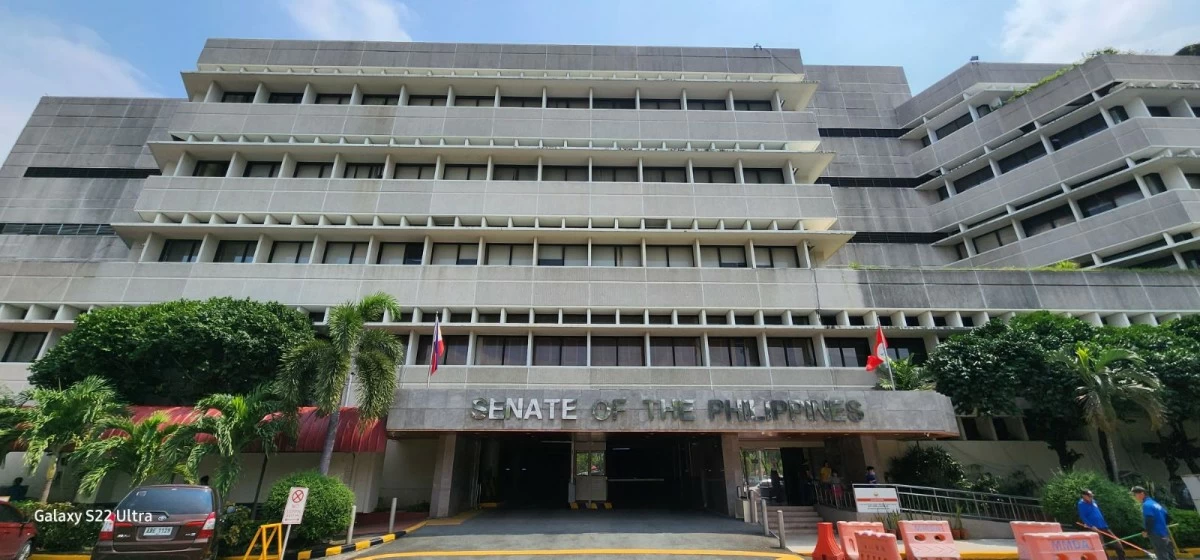
The Senate on Thursday, November 13 kicked off its marathon plenary deliberations on the proposed P6.793-trillion General Appropriations Bill (GAB) for 2026.
This, after Sen. Sherwin Gatchalian, chairman of the Senate Finance Committee, sponsored and endorsed House Bill No. 4058 that contains next year’s proposed national budget, on Wednesday (Nov. 12) evening.
The budgets for the Department of Budget and Management, the Department of Finance, and the Department of Economic Planning and Development, along with their attached agencies were the first batch of agencies that were taken up during the deliberations.
Gatchalian, in an interview, said he intends to finish the marathon hearings in 10 days.
But the budget deliberations will take a back seat on Friday, Nov. 14 to pave way for the continuation of the Senate Blue Ribbon Committee’s investigation into the anomalous government flood control projects.
Next year’s budget is 7.4 percent higher than the enacted 2025 national budget which is at P6.326-trillion, and equivalent to 22 percent of the country’s gross domestic product.
Gatchalian also said the Senate is still eyeing passing a 2026 budget that is lower than the Palace’s approved version which is P6.793-trillion.
Moreover, in his sponsorship speech of the budget, the senator said the Senate is pushing to reduce the corruption-prone unprogrammed appropriations to P174.5 billion, as well as slashing the Department of Public Works and Highways (DPWH) budget.
“For 2026, the House GAB allotted 243 billion pesos. The Senate version trims this down to P174.5 billion. A reduction of more than P68.5 billion. Of the 11 line items in unprogrammed funds, the Senate version reduced them to seven, with only three cash items,” Gatchalian said.
“We (also) reduced the budget of the (DPWH) by P55.91 billion. During the hearings, we discovered several red flags such as roads with no station IDs, duplicate projects, projects in multiple phases, and reappearing projects from previous year’s budget,” he also said.