







Limited internet access weakens news quality, PIDS warns
Published Nov 13, 2025 03:11 pm


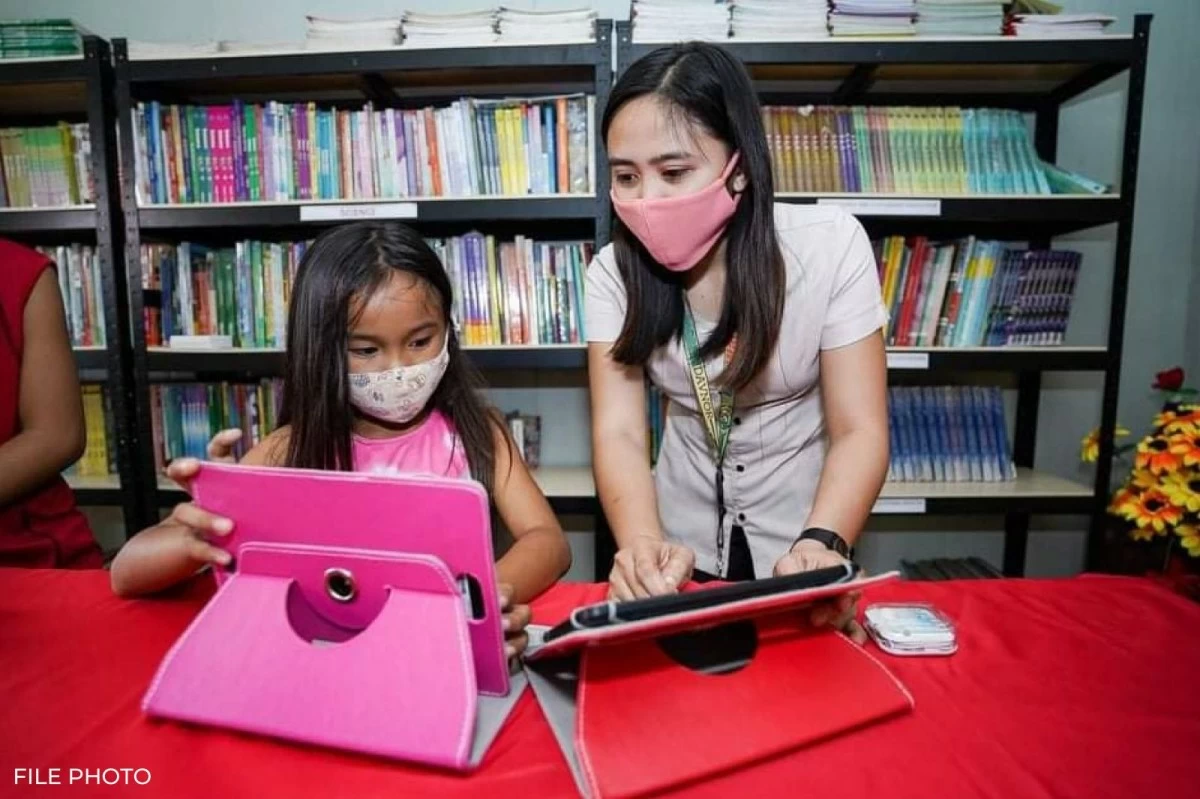
CitizenWatch urges the public to dismiss fears over telco towers in schools, citing global studies proving safety and stressing the need for stronger internet in education. (DepEd file photo)
Amid the country’s push for digital transformation, state-run think tank Philippine Institute for Development Studies (PIDS) warned that limited internet access is undermining the quality and depth of news available to the public.
“The fact that the population outside the National Capital Region (NCR) still lack access to the internet really affects the quality and the content that they can consume in terms of the news that they receive,” said PIDS senior research fellow Ramonette Serafica during the joint webinar forum of PIDS and Philippines Communication Society (PCS) titled “Conversation on Media, Communication, and Development” on Thursday, Nov. 13.
“This is a big concern,” she said, stressing that even those with mobile access often rely on free content, which is rarely vetted for quality or accuracy.
Serafica emphasized that the recent enactment of Konektadong Pinoy (KP) Act marks a significant step toward improving connectivity across the country but stressed that “that's just on the supply side.”
On the demand side, she added, there is also a need to support consumers through digital literacy programs and improved access to digital devices.
“That’s how you balance—or rather address—the fact that people are shifting to online, but then there’s still a big gap in terms of connectivity, especially outside of Metro Manila,” she said.
PIDS research specialist Queen Cel Oren echoed the same sentiment, emphasizing the need for more inclusive digital infrastructure to expand access across the country while empowering consumers to engage with more reliable content. She added that this would help ensure “they won’t fall victim to misinformation.”
Earlier, the Department of Economy, Planning, and Development (DEPDev) said the Philippines is now closer to providing faster, more reliable, and affordable internet access for all—particularly in underserved and remote areas—following the signing of the implementing rules and regulations (IRR) of KP Act, or Republic Act (RA) No. 12234.
“This important milestone strengthens our resolve to build a more connected, competitive, and inclusive Philippines,” said DEPDev Secretary Arsenio M. Balisacan in a statement last week.
“The passage of this law and the adoption of its IRR signal a decisive advance toward one of the key objectives of the Philippine Development Plan (PDP) 2023-2028—that is, to harness digital innovation as a catalyst for productivity and equitable growth,” he added.
DEPDev noted that the IRR sets performance standards and cybersecurity safeguards to ensure internet services are both accessible and reliable. It also simplifies registration and processes for smaller, community-based providers, making it easier for them to extend connectivity to long-underserved areas.
“The KP Act confronts these persistent barriers head-on,” Balisacan said. “By opening the market to more participants, promoting infrastructure sharing, and enhancing oversight over essential facilities and spectrum use, this law lays the foundation for stronger competition, improved interconnection, and a modernized approach to spectrum management.”
Balisacan added that the reforms are expected to reduce costs, expand service coverage, and promote greater competition in the data transmission sector. He emphasized that “Connectivity is not merely convenient. It is essential to socioeconomic participation and central to enabling innovation, education, and progress.”
DEPDev reaffirmed its commitment to collaborate with the Department of Information and Communications Technology (DICT), National Telecommunications Commission (NTC), Philippine Competition Commission (PCC), and other agencies to ensure the effective implementation of the reform. It also noted that the IRR will take effect 15 calendar days after publication.
(Ricardo M. Austria)