







Cebu Pacific profits soar to ₱9 billion on travel boom
Published Nov 13, 2025 03:14 pm


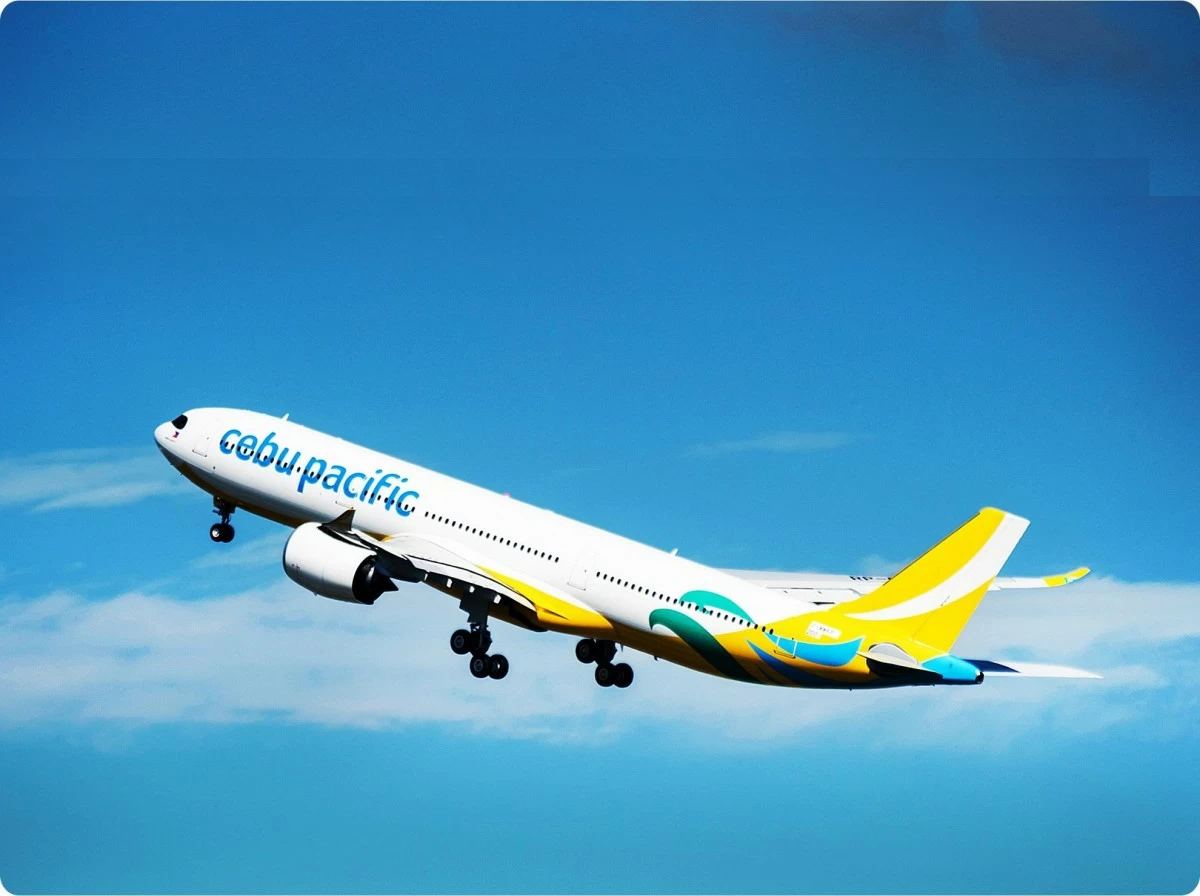
Low-cost carrier Cebu Pacific reported that its net income surged to over ₱9 billion in the first nine months compared to the previous year, as its expansion strategy capitalized on rising demand for air travel.
In a public disclosure, Cebu Pacific’s parent firm, Cebu Air Inc., said its net income from January to September rose by a whopping 181 percent to ₱9.47 billion from ₱3.37 billion in the same period last year.
The airline’s revenues grew by 18 percent to ₱87.6 billion, offsetting the 16-percent increase in expenses to ₱79.81 billion.
The growth was primarily fueled by a 15-percent hike in passenger volume by the end of September, which reached 19.95 million passengers versus last year’s 17.51 million.
During the period, Cebu Pacific served 14.89 million domestic passengers and 5.07 million international passengers.
The carrier offered a total of 23.52 million seats. Its seat load factor—which measures how many of the available seats were occupied—stood at a healthy 84.8 percent.
Driven by the increase in travel demand, passenger revenues over the nine months reached ₱59.66 billion, up 17 percent from ₱51.15 billion last year.
Because of this, ancillary revenues were also 17-percent higher at ₱22.76 billion from ₱19.39 billion the year before.
Likewise, cargo revenues improved by 30 percent to ₱5.19 billion, surpassing last year’s ₱4 billion on the back of stronger cargo volume.
The growth in net income was also boosted by additional gains from five free-of-charge engines from American aerospace manufacturer Pratt & Whitney as part of its compensation package.
Cebu Pacific said each engine is valued at ₱1.2 billion, amounting to a total of ₱5.99 billion, which was recognized as “other income” in its financial report.
The airline said these engines are part of Pratt & Whitney’s compensation for airlines amid ongoing aircraft-on-ground (AOG) issues.
The manufacturer earlier flagged thousands of turbofan engines over potentially flawed components.
For the third quarter—which is typically a lean period for airlines—revenues rose five percent to ₱24.3 billion, with passenger volume inching up to over six million passengers.
Despite the expected slowdown in the quarter, Cebu Pacific Chief Executive Officer (CEO) Michael Szucs said the company still delivered a strong year-to-date performance.
“This reflects the resilience of our business model, the strength of underlying travel demand, and the discipline of our teams in managing cost and capacity amid an evolving operating environment,” said Szucs.
“We remain committed to making air travel affordable and sustainable for everyone, while ensuring efficiency and reliability as we aim for an even stronger finish to 2025,” he added.
As of September, Cebu Pacific offers more than 3,100 weekly flights across 124 routes, serviced by 98 aircraft.
The carrier’s fleet has since reached 100, composed of 40 Airbus A320s, 26 Airbus A321s, 22 ATR turboprops, and 12 A330neos.
Cebu Pacific said it is still intent on transitioning its fleet to the larger, higher-capacity, and more fuel-efficient A330neo aircraft.
Cebu Pacific, the largest operator of the widebody aircraft in the Asia-Pacific region, earlier stated that it seeks to operate an all-neo fleet by 2027.