ADVERTISEMENT

The Julia Buencamino Project: A parent's way of making sense

Published Nov 12, 2025 06:02 pm
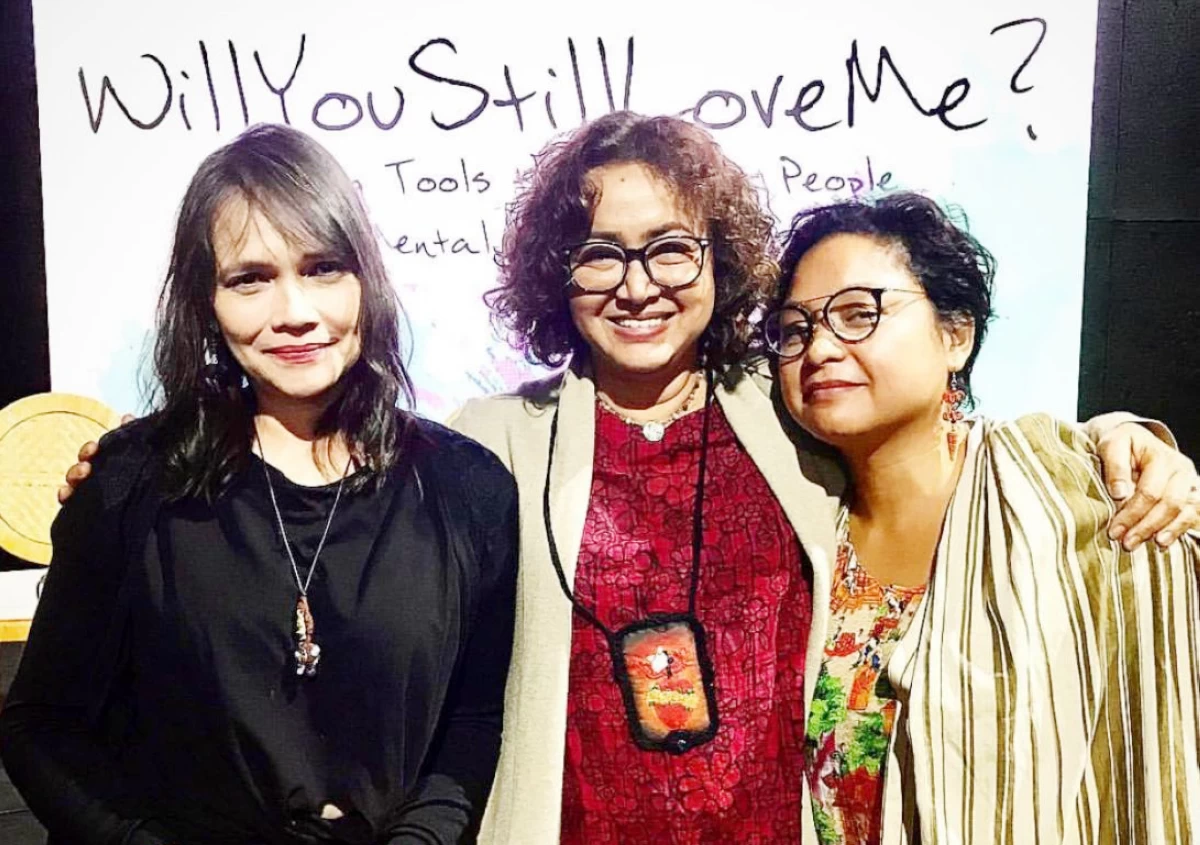
(L-R) Visual artist Annatha Lilo Gutierrez, Shamaine Centenera-Buencamino, and university professor and culture advocate Nina Tesoro Poblador at a Julia Buencamino Project exhibit.
I’m Shamaine Centenera-Buencamino, an actress and a mental health advocate.
My youngest daughter took her life at the age of 15 and we were totally blindsided by it. In an attempt to understand what happened to her, I started pursuing the subject matter.
She died in 2015. [My husband, actor and mental health advocate Nonie Buencamino and I] launched the Julia Bunecamino Project in 2016 on her death anniversary. At that time, the stigma was so strong and people hardly talked about it. I found that it was happening to other people. I thought it was rare, only to find that it wasn't.
As actors, the only way we could help was share our story. We couldn't tell anyone what to do because she didn't get well. It wasn't about healing; it was about warning other parents about what could happen to your child if you don't know what's really happening inside them.
Because I’m in an artist community, a lot of artists began offering their talents. We would hold workshops and exhibits. During the pandemic, we started giving online art journaling classes. I started picking up art as medicine, the concept of helping yourself heal yourself.
I discovered that visual arts as a very potent way to not only heal myself, but to reach [Julia]. Every time I felt sad, I would get one of her artworks and I would work with it in my collage. That helped me a lot. It's not medication. This is more of listening to yourself, sitting with your grief or your issues and accepting them.
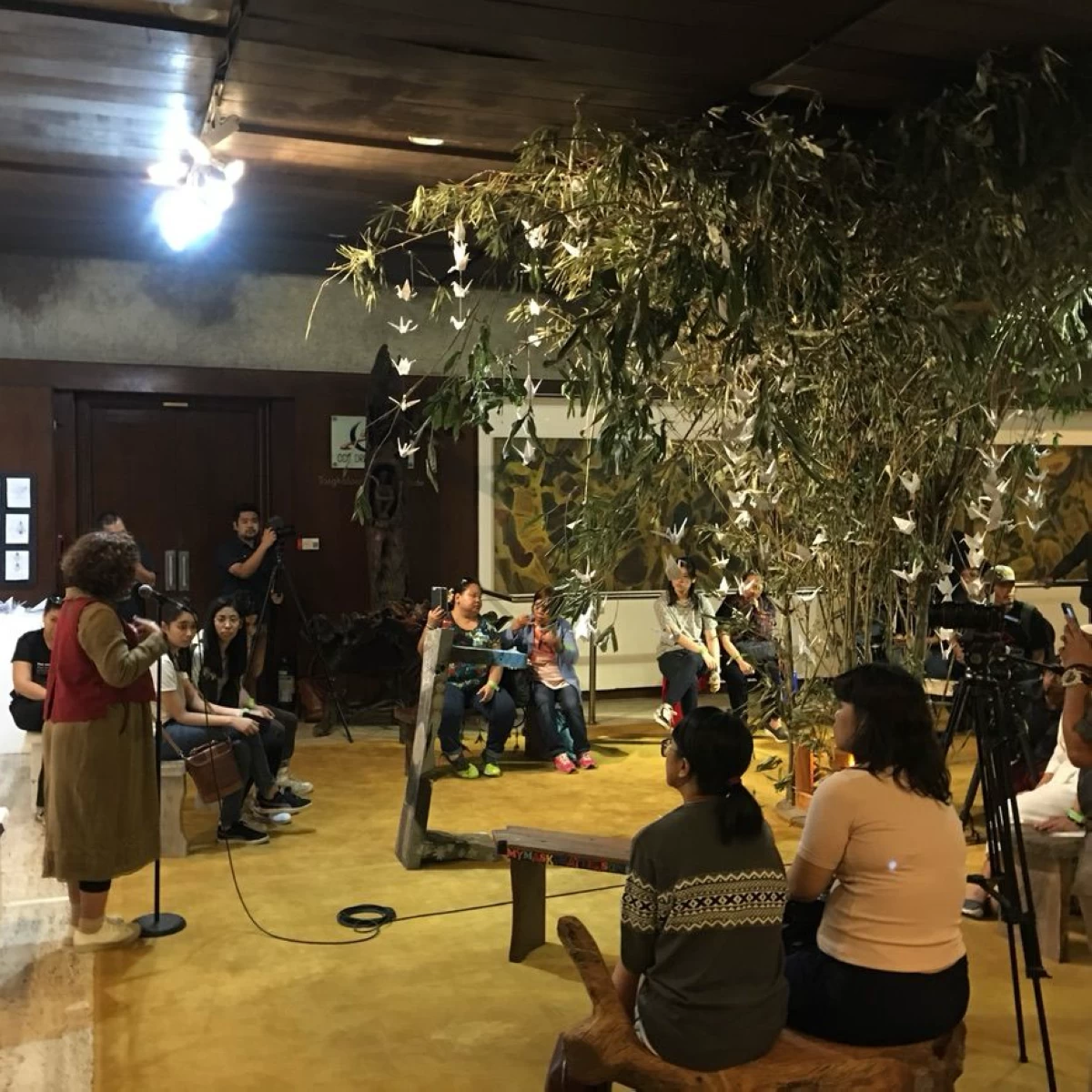
The Julia Buencamino Project exhibit at the CCP.
We have Julia’s Bench project. At first, we just simply interpreted Julia’s poems and scribbles on benches. This was patterned after a bench project in another country where they put a bench in a school and if a child sat there, it would signal to another child that this child needed a companion. So the same thing, but towards mental health issues. In one school, the children would stick notes on the bench, where they won't be stigmatized.
We began by giving one bench to one school and having that school pay it forward, but after three years, I commissioned a woodworking store in Calumpit that used recycled wood to make the benches and asked my schoolmates from the Philippine High School for the Arts to interpret Julia’s poems on each bench.
We put this on exhibit in White Space, where we also had a program. We invited mothers who lost a child or who's dealing with the complications of a child with mental health issues. We had poetry reading and music.
We moved to CCP, where we had the same thing, but this time with movement, a film showing, forums, and talks with a psychologist—there has to be a professional at almost all our events because we look at it as an illness.
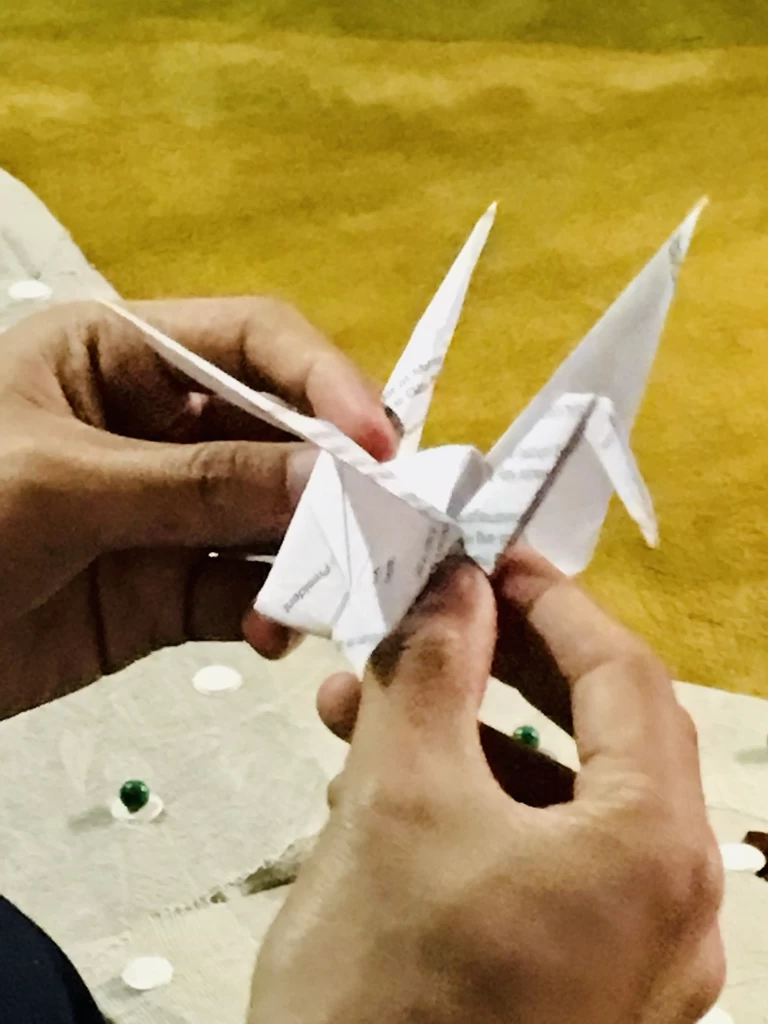
Folding paper cranes as part of the Julia Buencamino Project program.
I remember the first time we spoke in a school. One of my suggestions was to look through their child's things. There was this parent who did that and found that their child was thinking of taking her life, so they were thankful.
Students would ask for help and I always tell them, ‘Tell an adult,’ because that would have been my advice to my child, because I never knew. She never told us. She told her friends, who didn’t tell us.
They would tell me, ‘We tell our parents that they don't believe us.’ I tell them, ‘Tell someone, another adult who values you, not necessarily your parents.’ And I try to explain to them that, ‘Your parents feel very defensive about you. They probably love you so much, but they feel defensive about the fact, because they feel responsible for how you feel.’
It's Julia’s 10th year anniversary. We are going to start giving away the benches to schools.
I wish there were more communities to support those who need help mentally. It doesn't have to be only doctors or therapists. It can be concerned elders or artists who will make a safe space for them to talk about their pain because sometimes, it's all a matter of being able to tell another person who can listen to you without judgment. And if it's difficult to have a person listen to you, then you can write, you can draw, you can bead just so you're able to get out there.
I'm not trained in putting up an advocacy. I'm just guided by my experience and how people respond to it. A lot of times, everything is so emotional because it's coming from a place of pain.
I think what guides me is the honest desire to be able to save another soul because I wasn't able to save my daughter. To share our story so that another person's life is saved.
Inquires can be coursed through The Julia Buencamino Project on Facebook (Photos courtesy of Nina Tesoro Poblador)
The article has been edited for clarity and brevity.

Related Tags

SPOTLIGHT FEATURES THE JULIA BUENCAMINO PROJECT
ADVERTISEMENT
.most-popular .layout-ratio{ padding-bottom: 79.13%; } @media (min-width: 768px) and (max-width: 1024px) { .widget-title { font-size: 15px !important; } }

{{ articles_filter_1561_widget.title }}

.most-popular .layout-ratio{ padding-bottom: 79.13%; } @media (min-width: 768px) and (max-width: 1024px) { .widget-title { font-size: 15px !important; } }

{{ articles_filter_1562_widget.title }}

.most-popular .layout-ratio{ padding-bottom: 79.13%; } @media (min-width: 768px) and (max-width: 1024px) { .widget-title { font-size: 15px !important; } }

{{ articles_filter_1563_widget.title }}

{{ articles_filter_1564_widget.title }}

.mb-article-details { position: relative; } .mb-article-details .article-body-preview, .mb-article-details .article-body-summary{ font-size: 17px; line-height: 30px; font-family: "Libre Caslon Text", serif; color: #000; } .mb-article-details .article-body-preview iframe , .mb-article-details .article-body-summary iframe{ width: 100%; margin: auto; } .read-more-background { background: linear-gradient(180deg, color(display-p3 1.000 1.000 1.000 / 0) 13.75%, color(display-p3 1.000 1.000 1.000 / 0.8) 30.79%, color(display-p3 1.000 1.000 1.000) 72.5%); position: absolute; height: 200px; width: 100%; bottom: 0; display: flex; justify-content: center; align-items: center; padding: 0; } .read-more-background a{ color: #000; } .read-more-btn { padding: 17px 45px; font-family: Inter; font-weight: 700; font-size: 18px; line-height: 16px; text-align: center; vertical-align: middle; border: 1px solid black; background-color: white; } .hidden { display: none; }
function initializeAllSwipers() { // Get all hidden inputs with cms_article_id document.querySelectorAll('[id^="cms_article_id_"]').forEach(function (input) { const cmsArticleId = input.value; const articleSelector = '#article-' + cmsArticleId + ' .body_images'; const swiperElement = document.querySelector(articleSelector); if (swiperElement && !swiperElement.classList.contains('swiper-initialized')) { new Swiper(articleSelector, { loop: true, pagination: false, navigation: { nextEl: '#article-' + cmsArticleId + ' .swiper-button-next', prevEl: '#article-' + cmsArticleId + ' .swiper-button-prev', }, }); } }); } setTimeout(initializeAllSwipers, 3000); const intersectionObserver = new IntersectionObserver( (entries) => { entries.forEach((entry) => { if (entry.isIntersecting) { const newUrl = entry.target.getAttribute("data-url"); if (newUrl) { history.pushState(null, null, newUrl); let article = entry.target; // Extract metadata const author = article.querySelector('.author-section').textContent.replace('By', '').trim(); const section = article.querySelector('.section-info ').textContent.replace(' ', ' '); const title = article.querySelector('.article-title h1').textContent; // Parse URL for Chartbeat path format const parsedUrl = new URL(newUrl, window.location.origin); const cleanUrl = parsedUrl.host + parsedUrl.pathname; // Update Chartbeat configuration if (typeof window._sf_async_config !== 'undefined') { window._sf_async_config.path = cleanUrl; window._sf_async_config.sections = section; window._sf_async_config.authors = author; } // Track virtual page view with Chartbeat if (typeof pSUPERFLY !== 'undefined' && typeof pSUPERFLY.virtualPage === 'function') { try { pSUPERFLY.virtualPage({ path: cleanUrl, title: title, sections: section, authors: author }); } catch (error) { console.error('ping error', error); } } // Optional: Update document title if (title && title !== document.title) { document.title = title; } } } }); }, { threshold: 0.1 } ); function showArticleBody(button) { const article = button.closest("article"); const summary = article.querySelector(".article-body-summary"); const body = article.querySelector(".article-body-preview"); const readMoreSection = article.querySelector(".read-more-background"); // Hide summary and read-more section summary.style.display = "none"; readMoreSection.style.display = "none"; // Show the full article body body.classList.remove("hidden"); } document.addEventListener("DOMContentLoaded", () => { let loadCount = 0; // Track how many times articles are loaded const offset = [1, 2, 3, 4, 5, 6, 7, 8, 9, 10]; // Offset values const currentUrl = window.location.pathname.substring(1); let isLoading = false; // Prevent multiple calls if (!currentUrl) { console.log("Current URL is invalid."); return; } const sentinel = document.getElementById("load-more-sentinel"); if (!sentinel) { console.log("Sentinel element not found."); return; } function isSentinelVisible() { const rect = sentinel.getBoundingClientRect(); return ( rect.top < window.innerHeight && rect.bottom >= 0 ); } function onScroll() { if (isLoading) return; if (isSentinelVisible()) { if (loadCount >= offset.length) { console.log("Maximum load attempts reached."); window.removeEventListener("scroll", onScroll); return; } isLoading = true; const currentOffset = offset[loadCount]; window.loadMoreItems().then(() => { let article = document.querySelector('#widget_1690 > div:nth-last-of-type(2) article'); intersectionObserver.observe(article) loadCount++; }).catch(error => { console.error("Error loading more items:", error); }).finally(() => { isLoading = false; }); } } window.addEventListener("scroll", onScroll); });

Sign up by email to receive news.