






Manila Bulletin
 Business
The Economy
Rising Philippine defense spending could force cuts to social programs, economists warn
Business
The Economy
Rising Philippine defense spending could force cuts to social programs, economists warn
Business
The Economy
Rising Philippine defense spending could force cuts to social programs, economists warn
Rising Philippine defense spending could force cuts to social programs, economists warn
Published Nov 12, 2025 01:24 pm


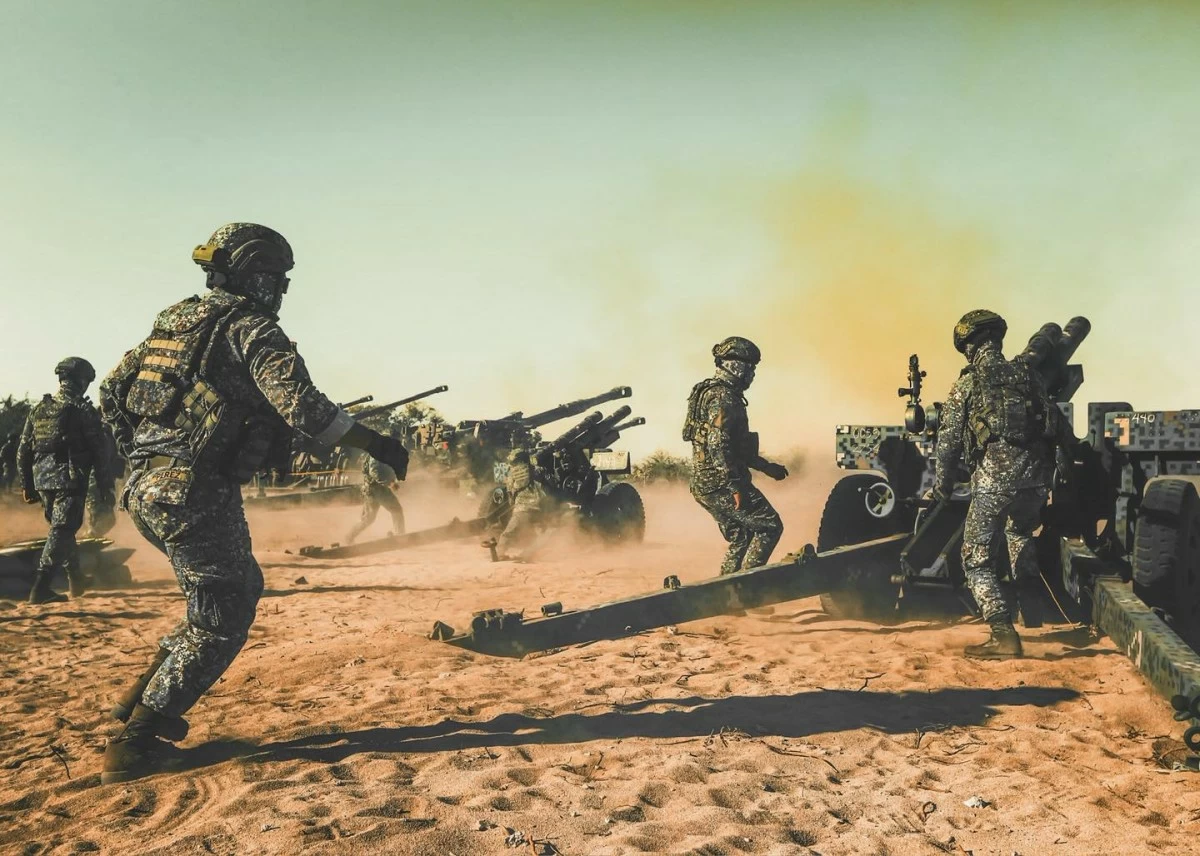
Philippine Marines Corps (PMC) Artillery Battery personnel thunder across the shoreline, perfecting precision and power in combined counter-landing live fire rehearsals as part of preparations for the Armed Forces of the Philippines (AFP) Joint Exercise (AJEX) DAGIT-PA. (Photo: AFP)
Higher defense spending in the Philippines could force cuts to other government programs, according to London-based think tank Capital Economics, even as the country grapples with slowing economic growth and recurring natural disasters.
“Defense spending across much of Asia, Central and Eastern Europe, and the Middle East is set to rise in the coming years, driven by heightened regional tensions and United States (US) pressure on allies to take greater responsibility for their own security,” Capital Economics senior Asia economist Gareth Leather said in a Nov. 11 report.
“The countries where fiscal constraints are most pronounced are Pakistan and the Philippines, where any substantial increase in defense spending would likely need to be matched by reductions in other areas,” the report added.
According to the President’s Budget Message for the ₱6.793-trillion 2026 national budget proposal, ₱430.9 billion will be allocated to the defense sector “to bolster domestic security and modernize our defense capabilities.”
The bulk of next year’s defense budget would go to the Department of National Defense (DND), amounting to ₱291.6 billion, of which ₱286.9 billion would be for the Armed Forces of the Philippines (AFP).
According to reports, the 2026 defense budget would be nearly 14-percent higher than this year’s allocation.
“Nations with weaker fiscal positions—including Pakistan, the Philippines, and parts of Central Europe—would need to offset higher defense outlays, limiting the boost to gross domestic product (GDP),” Leather noted.
While defense spending is expected to increase in emerging markets (EMs), Leather emphasized that countries with a strong military-industrial base and fiscal space are likely to benefit the most.
It added that South Korea stands out as a potential winner, while Israel, Russia, and Ukraine could see export boosts if their ongoing conflicts end, drawing on their expertise in weapons production and electronic warfare.
“Strengthening defense is of course important for national security and regional stability, but it should not come at the expense of social and economic resilience,” John Paolo Rivera, senior research fellow at state policy think tank Philippine Institute for Development Studies (PIDS), told Manila Bulletin on Wednesday, Nov. 12.
Rivera underscored that defense modernization can continue, but it should be done in phases with fiscally sustainable spending to ensure it supports rather than hinders economic growth.
“The national government’s (NG) focus now should be on rebuilding confidence, accelerating public spending, and protecting vulnerable communities, so that when the economy regains stronger momentum, we will have both the fiscal capacity and stability to support long-term defense commitments more effectively,” Rivera added.
He stressed that the Philippines must carefully balance its defense priorities with the country’s immediate economic growth and recovery needs.
Michael Ricafort, chief economist at Rizal Commercial Banking Corp. (RCBC), said the government should continue prioritizing spending on education and other social programs that deliver the greatest benefits, particularly for the poorest, helping more people rise out of poverty.
“Though defense spending is also important,” Ricafort said, “an investment approach with the greatest return for the Philippine economy and society, in terms of faster and more inclusive economic growth and development, should be prioritized. These social spending-related items would offset any possible slowdown in government spending, especially on flood control projects and other infrastructure initiatives.”
(Ricardo M. Austria)