






Manila Bulletin
 Business
Trade & Industry
PLDT slams Konektadong Pinoy's IRR, MVP calls it 'new colonialism'
Business
Trade & Industry
PLDT slams Konektadong Pinoy's IRR, MVP calls it 'new colonialism'
Business
Trade & Industry
PLDT slams Konektadong Pinoy's IRR, MVP calls it 'new colonialism'
PLDT slams Konektadong Pinoy's IRR, MVP calls it 'new colonialism'
Published Nov 12, 2025 07:00 pm


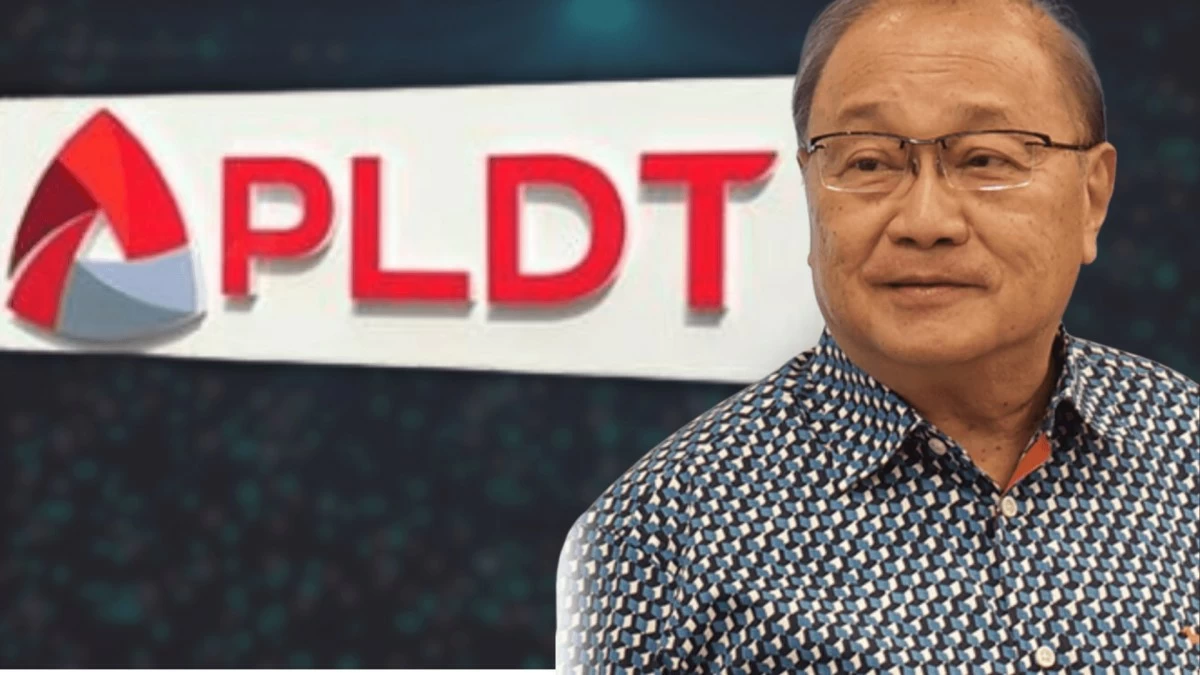
PLDT Inc. Chairman, President and CEO Manuel V. Pangilinan
Telecommunications giant PLDT Inc. has opposed the Konektadong Pinoy Act anew following the signing of its implementing rules and regulations (IRR), which is seen as heavily favoring foreign players, with its top executive likening the policy to a new form of colonialism.
Tycoon Manuel V. Pangilinan, chairman and chief executive officer of PLDT, stated that the new law was intended to provide consumers with cheaper internet, build new infrastructure for connectivity, and encourage new investments.
“It doesn't seem to be that way from the way the IRR's written,” Pangilinan said in a briefing.
He said the IRR would allow incoming telco players to skip investing altogether, as they would be granted access to the infrastructure of existing operators.
“Why should we benefit somebody coming in without putting in any new money into the country? To exploit the market without putting in new money,” said Pangilinan.
“They're like the colonizers of old, like the Spanish and the Americans who came in here, exploited our wealth and then left,” he stressed.
PLDT senior vice president and corporate secretary Marilyn Victorio-Aquino even said that the company has no excess funds to fund the investments of new entrants.
Under the infrastructure sharing provision of the IRR, public or private passive infrastructure is made available for co-location and co-use on an “open, fair, reasonable, and non-discriminatory basis.”
Such access shall support data transmission networks and services, it said.
Access may only be refused on grounds including technical unsuitability, lack of space, risks to public safety or national security, risks to network integrity or cybersecurity, and other relevant factors.
Last week, the Department of Information and Communications Technology (DICT) Secretary Henry Aguda said his agency and other government agencies have signed the IRR to outline the proper implementation of the Konektadong Pinoy Act.
At its core, the law seeks to enhance internet connectivity in the country by enhancing competition in the industry through streamlined processes, thereby encouraging cheaper prices and better services.
Aguda earlier told reporters that around seven foreign companies have already signaled their intent to enter the Philippine market once the IRR takes effect, with investments of up to $1.5 billion each.
The secretary stated that the DICT, in coordination with other agencies, crafted the IRR with input from various sectors, including the World Bank.
PLDT chief legal counsel Joan de Venecia-Fabul, however, noted that majority of the company’s inputs were not considered by the government.
She also said that the government only held one consultation, lasting four hours, with telco companies and tower operators.
Pangilinan said PLDT will still have to assess what its next steps would be, as the company grapples with the new changes imposed by the Konektadong Pinoy Act.
“I doubt very much whether they will revise the IRR, knowing the government won’t do that for a number of reasons. So we have to look at what the options available to telcos are,” said Pangilinan.
“What we don’t like is to discriminate against the local telcos because we’re the Filipinos here. Most likely these guys are foreigners as I understand it,” he added.
One of the options that the PLDT could take is to challenge the law’s constitutionality, as the company previously indicated in early August when it was still a bill.
Victorio-Aquino, also senior legal advisor to the chairman, said the company remains open to taking the government to court over the measure.
“All options are being considered to protect the company and to protect our business and our subscribers,” she said.