






Manila Bulletin
 Business
Trade & Industry
Philippine seeks foreign shipyard investment with proposed incentive bills
Business
Trade & Industry
Philippine seeks foreign shipyard investment with proposed incentive bills
Business
Trade & Industry
Philippine seeks foreign shipyard investment with proposed incentive bills
Philippine seeks foreign shipyard investment with proposed incentive bills
Published Nov 12, 2025 04:52 pm


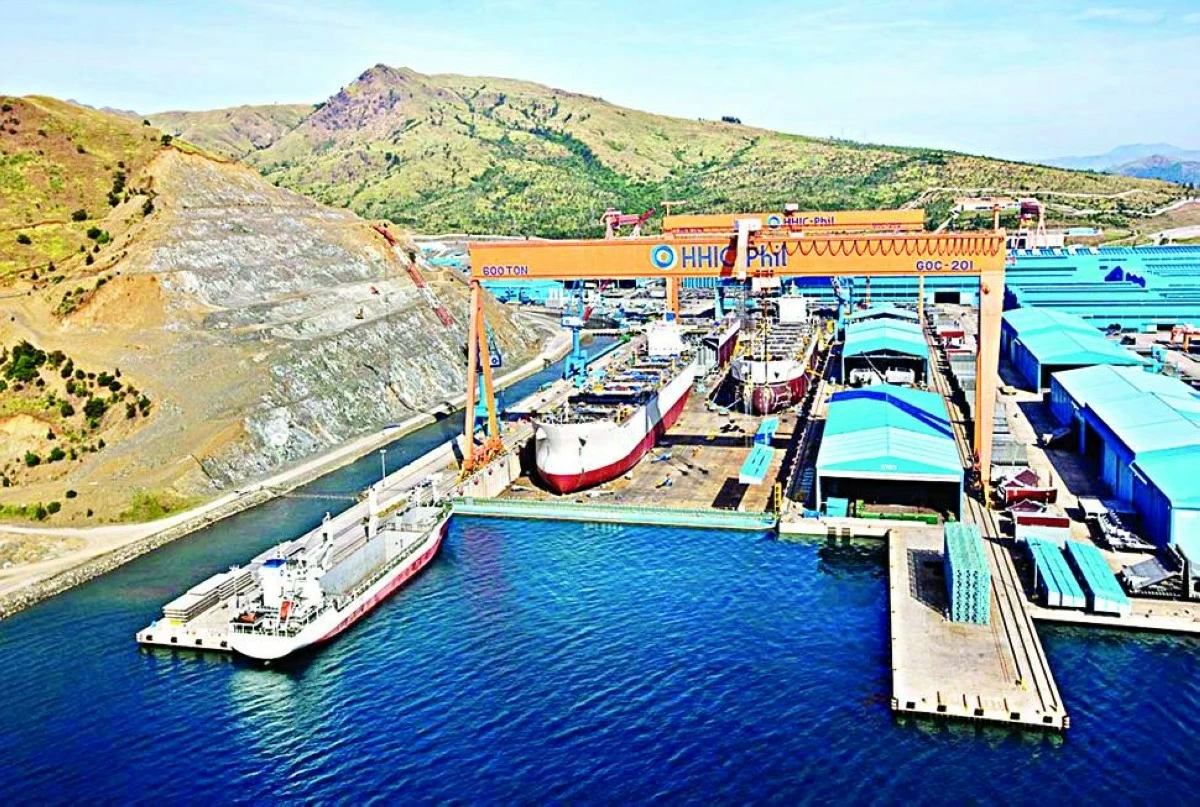
Proposed legislative measures aimed at modernizing and granting incentives to the shipbuilding and ship repair (SBSR) industry are expected to attract foreign investments to the Philippines, according to a Danish envoy.
Danish Ambassador to the Philippines Franz-Michael Mellbin said the country is well-positioned to become a major shipbuilding hub, citing its available and highly skilled workforce.
Mellbin noted the Philippines could serve as an alternative for companies looking to expand operations away from China, whose dominance in the industry is increasingly viewed as a concern amid global trade and security tensions.
The Philippines is already recognized as the world's fourth-largest shipbuilding nation, behind only China, South Korea, and Japan.
“You see, that's why the international community is interested in the Philippines as [a] location,” Mellbin told reporters, underscoring the country’s investment potential.
He did, however, express caution, stating that companies are hesitant to invest given persistent challenges with the ease of doing business. “I think it's absolutely essential that, on the regulatory side, the government improves the ease of doing business opportunities here,” the envoy said.
Mellbin also cited an ongoing corruption scandal as further undermining confidence, emphasizing that good governance and anti-corruption measures are central to improving the business climate.
Still, he expressed optimism, citing the government’s anti-corruption efforts and, more importantly, the proposed reforms to strengthen the domestic SBSR sector.
The Maritime Industry Authority (MARINA) has been pushing for the passage of two SBSR bills: the SBSR Development Bill and the SBSR Fiscal Incentives Bill, which aim to position the Philippines as a powerhouse in the global industry.
The Development Bill seeks to establish a clear policy framework to advance the sector through infrastructure improvements, technology adoption, and workforce training.
It would also enhance the ease of doing business by providing companies access to the fast-tracking of permits and financing programs. Complementing this, the Fiscal Incentives Bill would establish a set of fiscal and non-fiscal benefits to encourage investment.
Transportation Assistant Secretary Villamor Plan stated that the Department of Transportation (DOTr) is set to formally endorse the bills in a letter to Congress.
Even at their early stage, Plan noted that companies based in Denmark, Norway, and Sweden have already expressed interest in investing once the measures are enacted.
For now, the DOTr is looking to tap these companies as suppliers for fast patrol vessels for the Philippine Coast Guard (PCG), which is attached to the department.
Anti-Red Tape Authority (ARTA) Secretary Ernesto Perez noted his agency is already ramping up efforts to ensure ease of doing business is upheld by all government units, regardless of the bills’ status.
“We don’t have to wait for the bills to be passed in order to act,” he said, highlighting the urgency of boosting the SBSR sector’s role as an economic driver. Perez added that incentives are already present in existing policies, such as the CREATE MORE Act and the Board of Investments’ (BOI) green lane program.