






Manila Bulletin
 Business
Trade & Industry
Gov't ends total pork import ban, shifts to ASF regionalization
Business
Trade & Industry
Gov't ends total pork import ban, shifts to ASF regionalization
Business
Trade & Industry
Gov't ends total pork import ban, shifts to ASF regionalization
Gov't ends total pork import ban, shifts to ASF regionalization
Published Nov 12, 2025 12:24 am
|
Updated Nov 12, 2025 08:05 am


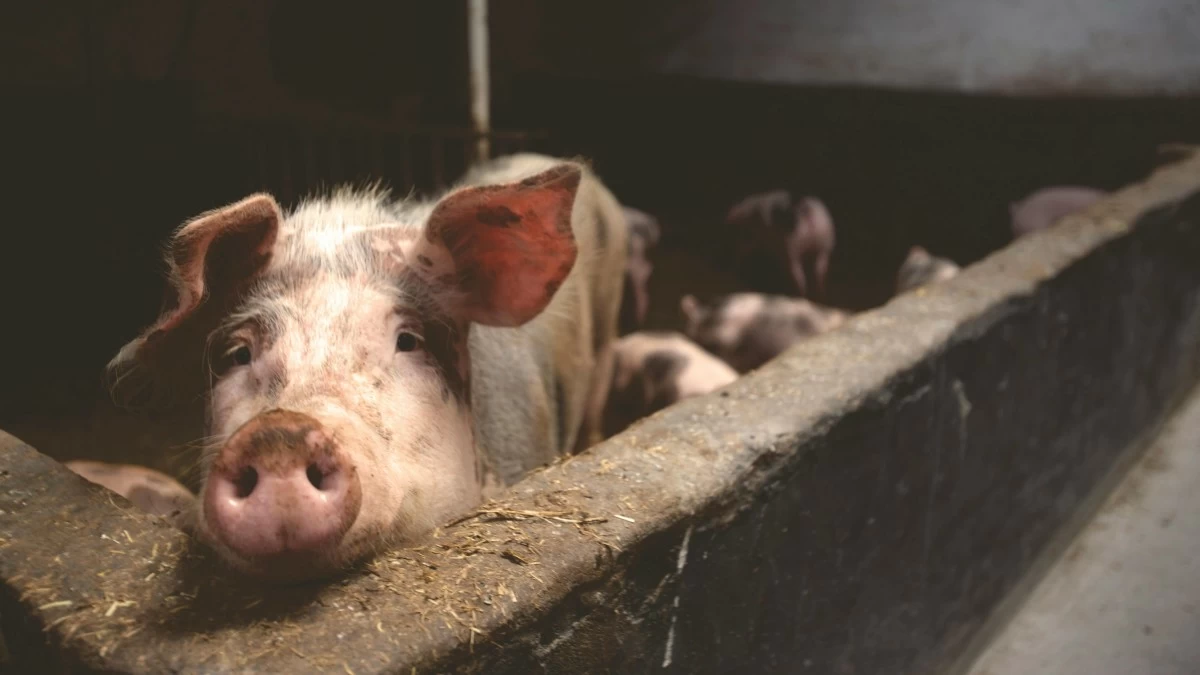
The Department of Agriculture (DA) has adopted a regionalization scheme to allow infection-free areas of countries affected by the African swine fever (ASF) to export pork products to the Philippines, replacing the previous country-wide ban.
In a statement on Tuesday, Nov. 11, Agriculture Secretary Francisco Tiu Laurel said he has ordered the implementation of the ASF regionalization to ensure the safe importation of pork products.
Embodied under Administrative Circular No. 12, signed Oct. 1, the country formally recognized the establishment of ASF-free zones accredited by exporting countries, aligning with the standards set by the World Organisation for Animal Health (WOAH).
“The government has been actively working to recover from ASF through a national zoning and movement plan, identifying areas already disease-free,” said Tiu Laurel.
“This highlights the importance of science-based monitoring, regionalization for ASF freedom, and adherence to WOAH guidelines for safe swine trade,” he added.
Based on the circular, only countries that were already accredited by the DA to export their swine and swine products may apply for the ASF regionalization scheme.
This shall only cover areas located outside the restricted regions—or localities where there are still confirmed or suspected cases of ASF—that have been declared free from ASF by the veterinary authority of the exporting country.
For the application, the veterinary authority must submit detailed reports on ASF surveillance, control measures, and the boundaries of ASF-free zones to the DA before the DA.
The Bureau of Animal Industry (BAI), through its risk import assessment team, will then conduct a six-month technical review to verify compliance with local and international standards.
Following the evaluation, the BAI would notify the exporting country of the results.
If approved, the Philippines will submit a draft ASF regionalization agreement covering animal health requirements and import terms and conditions, as well as a veterinary health certificate template to the exporting country.
If rejected, the country will send the overall result of the evaluation. It may also require the submission of additional documents, which shall be subjected to re-evaluation.
Bilateral recognition of the agreement would ensue once both countries’ chief veterinary officers sign the agreement, with the DA issuing the corresponding memorandum order.
The regionalization agreement shall be valid for two years. After the validity period, countries are required to submit a new application.
The DA noted that exporting countries under regionalization must submit an annual report regarding their ASF situation, including surveillance, monitoring, and control efforts.
Under the circular, live swine must show no clinical ASF signs, originate from ASF-free regions, and avoid restricted zones during transport.
Meanwhile, pork products must go directly to approved slaughterhouses in sealed vehicles and undergo ante- and post-mortem inspections with favorable results.
The policy mandates a review after two years to ensure regulations remain relevant and effective.
The DA’s move to adopt a regionalization scheme is the relief the European Union (EU) has long been seeking, as the 27-member bloc has opposed the country’s country-wide ban policy on ASF since 2019.
The EU has lodged several trade concerns against the Philippines over this matter under the Committee on Sanitary and Phytosanitary (SPS) Measures of the World Trade Organization (WTO).
In one of its many trade concerns filed with the WTO, the EU stated that the country’s policy is inconsistent with Article 6 of the SPS Agreement, which requires that any policy adapt to regional conditions—whether it applies to an entire country, a part of a country, or parts of several countries.