






Manila Bulletin
 Philippines
National
Akbayan Reform Bloc responds to Speaker Dy's call to clamp down on political dynasties
Philippines
National
Akbayan Reform Bloc responds to Speaker Dy's call to clamp down on political dynasties
Philippines
National
Akbayan Reform Bloc responds to Speaker Dy's call to clamp down on political dynasties
Akbayan Reform Bloc responds to Speaker Dy's call to clamp down on political dynasties
Published Nov 12, 2025 03:43 pm


At A Glance
- Akbayan Reform Bloc members hardly wasted any time in responding to House Speaker Faustino "Bojie" Dy III's calll for the filiing of an anti-poltical dynasty measure in the current 20th Congress.
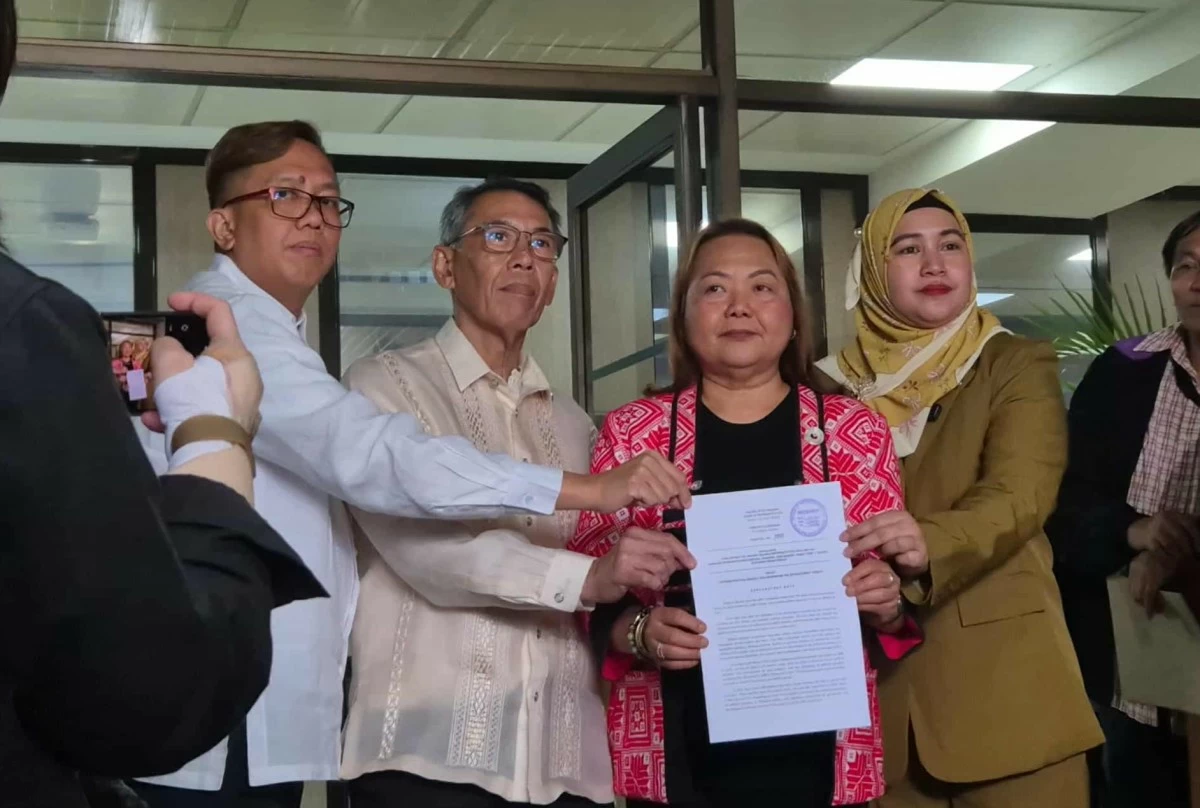
From left to right: Akbayan Party-list Reps Perci Cendaña, Chel Diokno; Dinagat Islands Rep. Kaka Bag-ao: Akbayan Party-list Rep. Dadah Kiram Ismula (Contributed photo)
Akbayan Reform Bloc members hardly wasted any time in responding to House Speaker Faustino "Bojie" Dy III's calll for the filiing of an anti-poltical dynasty measure in the current 20th Congress.
Appropriately enough, they were led by Dinagat Island lone district Rep. Kaka Bag-ao--a solon who gained the moniker "dragon slayer” for defeating four members of a political dynasty in her province.
On Wednesday afternoon, Nov. 12, Bag-ao along with Akbayan Party-list Reps. Chel Diokno, Perci Cendaña, and Dadah Kiram Ismula, filed House Bill (HB) No.5905, which sought to implement Article II, Section 26 of the 1987 Constitution.
The particular provision directs the State to “guarantee equal access to opportunities for public service, and prohibit political dynasties as may be defined by law".
"This bill ensures that capable leaders from communities can tackle those challenges without being blocked by inherited power,” Bag-ao said.
“Ordinary Filipinos shouldn’t have to fight political dynasties just to serve their communities. They're not the real dragons that need slaying. For me, the real dragons are poverty, inequality, and underdevelopment," she added.
That Speaker Dy--a known member of a dominant political clan in his native of Isabela--was leading the call for an Anti-Poltical Dynasty Law spoke volumes about the House of Representatives' intention to pursue change.
Dynasties continue to rule
Such dynasties dominate the political landscape in the Philippines. According to the Ateneo Policy Center, dynasties increased from 19 percent of all elected positions in 1988 to 29 percent in 2017, adding roughly 170 positions per election cycle.
In 2019, families holding multiple simultaneous elected offices continued to grow and reflected entrenched power across local and national levels.
HB No.5905 defines political dynasties clearly and specifies prohibited familial relationships among candidates and elected officials. Its authors said the measure is designed to broaden leadership, open democratic spaces, and give reform-oriented leaders a fair chance to serve.
“This is about giving our communities more voices and more choices...The principle behind this bill is not new,” Bag-ao said, referring to Sangguniang Kabataan Reform Law (Republic Act No.10742), which she authored.
“We’ve already ensured that SK leadership isn’t inherited. It’s time to do the same across all levels of government.”
Diokno said. "Sadly, political dynasties have grown in defiance of that mandate for decades. We should finally put a stop to this by passing this measure so we can end corruption and the rule of the few, giving others the opportunity to serve our countrymen.””
Cendaña, frowned at political dynasties and said that they "not only monopolize political power and economic opportunity in the hands of a few, they are also opportunities for corruption".
He added, “Parang kartel sa negosyo, pag sinosolo ng iilang pamilya ang poder, oportunidad ito na magkamal ng pera imbes na maglingkod sa bayan. Kung ang mayor ay kurakot paano nga naman siya babantayan ng vice mayor at mga konsehal kung sila yung asawa, anak, o pinsan niya?"
(Like a business cartel, when power is monopolized by a few families, it becomes an opportunity to amass wealth instead of serving the people. If the mayor is corrupt, how can the vice mayor and councilors keep him in check if they’re his spouse, child, or cousin?)
“Public office is meant for service, not family inheritance,” said Ismula. “Leadership should go to those who step up for the many, not those who simply protect power for the few.”
“In Mindanao, provinces controlled by political dynasties suffer from decades of inequality and injustice. If we end the rule of dynasties, we can unlock development in Mindanao,” she noted.
Previously filed bills
An ally of the Akbayan Reform Bloc--Mamamayang Liberal (ML) Party-list Rep. Leila de Lima--welcomed Dy's clarion call for Anti-Poltical Dynasty Law, which he first made in a plenary speech Tuesday, Nov. 11.
De Lima said she earlier filed such measure in HB No.2131.
Meanwhile, the Makabayan bloc in the House composed of ACT Teachers Party-list Rep. Antonio Tinio, Gabriela Party-list Rep. Sarah Elago, and Kabataan Party-list Rep. Renee Co couldn't help but remain skeptical of Dy's vow to pass the landmark law.
"History has shown us that political dynasties themselves have repeatedly blocked genuine reform. We challenge the House leadership to prove their sincerity by supporting and fast-tracking HB Nos. 209 and 4784—a true anti-political dynasty measure with clear and uncompromising provisions," the militant solons said, referring to their own anti-dynasy bills.
They claimed that the provisions of HB Nos. 209 and 4784 were comprehensive and free of loopholes.
"No person shall hold or run for any elective national or local office simultaneously with another relative within the fourth degree of consanguinity or affinity. Additionally, no person within the prohibited civil degree of relationship to an incumbent elected official shall immediately succeed to that official's position," they said.
"Ang tanong: tunay ba ang pangako, o isa na namang palabas? (Here's the question: will the promise be fulfilled, or is this again just for show?) We have seen this script before...This pattern of legislative theater must end," they further said.