







9 more bodies bring 'Uwan' death toll to 27 – OCD
Published Nov 12, 2025 11:33 am
|
Updated Nov 12, 2025 01:47 pm


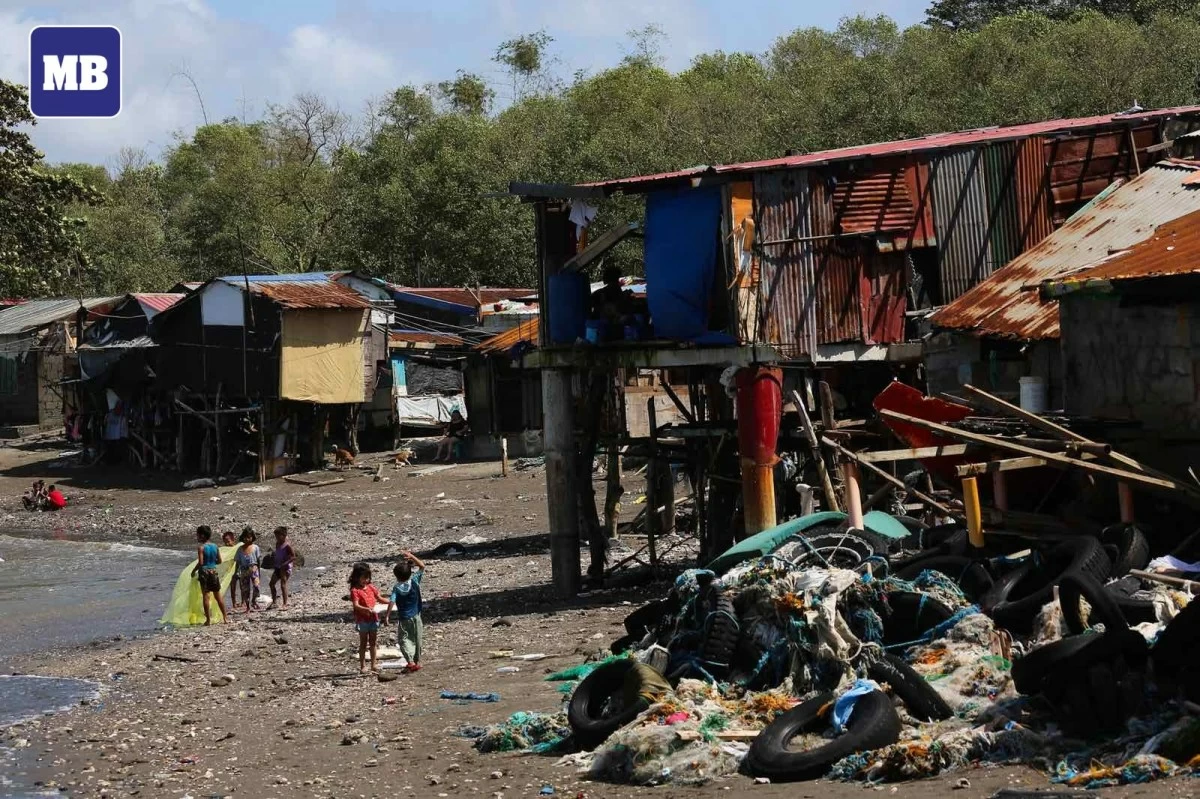
Houses along the coastal areas of Barangays Amaya 5 and Julugan 8 in Tanza, Cavite collapse after being damaged by Super Typhoon Uwan as seen in this photograph on Nov. 11, 2025. (Photo: John Louie Abrina / MANILA BULLETIN)
The number of fatalities from Super Typhoon “Uwan” climbed to 27 after nine additional bodies were recovered by authorities, the Office of Civil Defense (OCD) confirmed Wednesday, Nov. 12.
The latest figures showed that Ifugao in the Cordillera Administrative Region (CAR) had the highest tally of fatalities with nine, followed by Benguet with four, Mountain Province and Kalinga with three each, and Nueva Vizcaya in Cagayan Valley (Region 2) also with three.
One fatality each was reported in Catanduanes, Capiz, Samar, and Sulu. Another body is yet to be identified and traced to a specific province.
Two individuals remained missing, both from Kalinga, while 36 others sustained injuries across Benguet, Ifugao, Quezon, and Catanduanes.
“Actually ang dumami ang CAR, ang dumagdag is CAR (Actually, the number increased in the CAR, the [additional deaths] came from CAR),” OCD Deputy Administrator for Administration, Assistant Secretary Bernardo Rafaelito Alejandro IV said.
He noted that most of the new casualties came from landslide-prone areas in the highlands.
3.5 million affected nationwide
According to the OCD report, 1,006,149 families or 3,596,174 persons were affected in 9,643 barangays across 16 regions, including the National Capital Region (NCR), CAR, Ilocos (Region 1), Cagayan Valley (Region 2), Central Luzon (Region 3), Calabarzon (Region 4A), Mimaropa (Region 4B), Bicol (Region 5), Western Visayas (Region 6), Negros Island Region (NIR), Eastern Visayas (Region 8), Zamboanga Peninsula (Region 9), Northern Mindanao (Region 10), Soccsksargen (Region 12), Caraga (Region 13), and Bangsamoro Autonomous Region in Muslim Mindanao (BARMM).
Of these, 171,786 families or 623,310 individuals were displaced and temporarily staying in 9,014 evacuation centers while 84,524 families or 296,035 individuals were served outside these facilities.
Infrastructure and lifelines remain heavily disrupted and as of the latest update, 277 of 625 affected road sections and 61 of 78 affected bridges were still impassable.
Power remained out in 410 of 497 affected areas while 18 of 29 affected areas have yet to restore their water supply. Communication lines remain down in all 121 affected areas, including 88 areas in Eastern Visayas.
A total of 41,202 houses were reported damaged in Regions 1, 2, CAR, 4B, 5, 6, 8, 9, 12, Caraga, and BARMM.
Infrastructure damage reached P126.6 million in Regions 3, 5, and Caraga. Meanwhile, initial agricultural losses were recorded at P3,000 in Region 9.
Assistance and response efforts
Out of 466,369 families needing aid, the government has so far assisted 191,548 families, equivalent to 41.07 percent of the total. The cost of assistance has reached P200.53 million nationwide.
Meanwhile, the Armed Forces of the Philippines (AFP) said it has intensified humanitarian assistance and disaster response (HADR) operations in coordination with disaster agencies.
A total of 349 Disaster Response Task Units (DRTUs) and Search, Rescue, and Retrieval (SRR) teams composed of 2,550 personnel have been deployed nationwide, with 1,100 more on standby.
In Northern Luzon, troops from the 91st Infantry (Sinagtala) Battalion evacuated residents in Aurora while the 502nd Infantry Brigade and 95th Infantry (Salaknib) Battalion led pre-emptive evacuations in Ilagan, Gamu, and San Pablo, Isabela. Clearing operations also continued in Piddig, Ilocos Norte.
In Southern Luzon, the 83rd Infantry Battalion rescued residents in Virac, Catanduanes, while Philippine Air Force (PAF) personnel evacuated 85 families in Lubang, Mindoro.
In the Visayas, SRR teams aided evacuations in Samar, while NCR-based units assisted in flood-hit areas of Caloocan City.
“The AFP remains steadfast in supporting the national disaster response framework by ensuring the safety, welfare, and early recovery of affected communities,” the military said in a statement.
Typhoon Tino death toll at 232
While Uwan left extensive damage, its human toll remains far lower than that of Typhoon “Tino.”
As of Wednesday, Tino’s death toll remained at 232 but 112 persons were still missing across Visayas and Mindanao.
Tino’s deadliest impact was in Cebu where 150 people perished, followed by Negros Occidental with 42 dead and Negros Oriental with 21. Agusan del Sur had six deaths; Capiz with three; Dinagat Islands, Southern Leyte, and Leyte with two each; and Antique, Iloilo, Guimaras, and Bohol with one apiece.
A total of 523 were injured, including 451 in Cebu alone.
By contrast, Uwan’s casualties are concentrated in mountainous northern provinces where continuous rains triggered landslides and flash floods.
“Hopefully, this is the final count,” Alejandro said. He, however, acknowledged that authorities were verifying isolated reports of missing individuals but expressed optimism that the worst had passed.
“I hope it [death toll] won’t be as many as in Tino. More or less, this is probably it, I hope so. Personally, I don’t expect it to double. If there are any additions, maybe around 10 at most, that’s just my rough estimate,” Alejandro said.