






Manila Bulletin
 Business
The Economy
DLSU economists warn: Cutting spending amid graft probe risks decades-long underinvestment
Business
The Economy
DLSU economists warn: Cutting spending amid graft probe risks decades-long underinvestment
Business
The Economy
DLSU economists warn: Cutting spending amid graft probe risks decades-long underinvestment
DLSU economists warn: Cutting spending amid graft probe risks decades-long underinvestment
Published Nov 11, 2025 02:13 pm


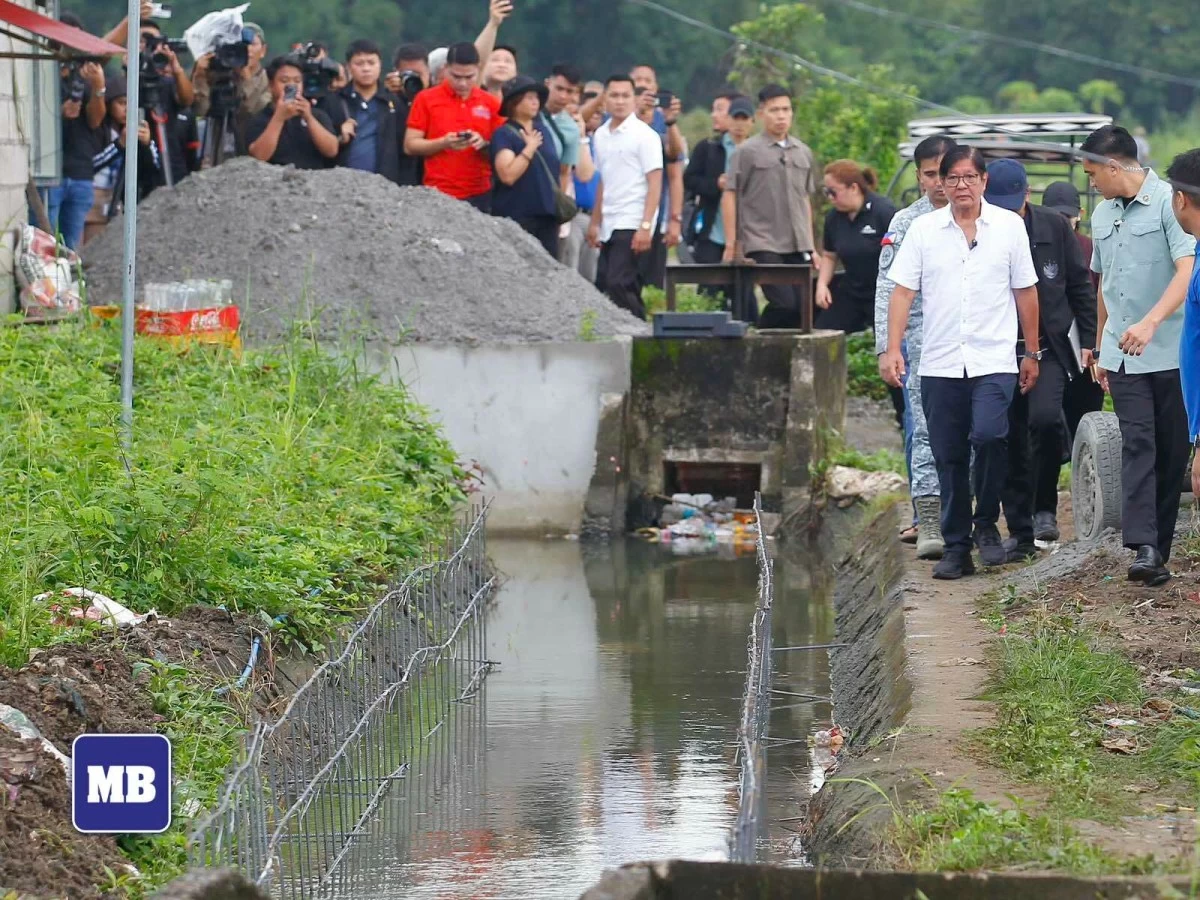
President Ferdinand R. Marcos Jr. leads the inspection of a riverwall in Barangay Piel, Baliuag, Bulacan which was tagged as a 'ghost project.' (Mark Balmores)
Economists from De La Salle University (DLSU) urged Philippine government officials to sustain public spending despite ongoing corruption investigations, warning that overly cautious fiscal policies could perpetuate decades of underinvestment.
“The ugliest outcome from this historical moment would be for bad governance to be compounded by craven economics,” said DLSU economists Jesus Felipe, Gerardo Largoza, and Mariel Monica Sauler in a 10-page commentary titled “The bad, the ugly, and the possibly good about flood control corruption.”
“That is, if well-meaning lawmakers and economic planners fear fiscal collapse so much they’re happy to continue a decades-long pattern of public underinvestment,” they said, pointing out that “no country has ever been able to increase national productivity—the one driver of development that matters—without significant spending on public goods.”
Philippine Statistics Authority (PSA) data released last week showed that the third-quarter gross domestic product (GDP) growth rate of four percent marked the steepest slowdown in more than four years—the weakest since the 3.8-percent contraction in the first quarter of 2021 during Covid-19 lockdowns—with the government’s continued underspending cited as one of several factors contributing to the slowdown.
Department of Economy, Planning, and Development (DEPDev) Secretary Arsenio M. Balisacan had noted that there has been significant underspending in key government priority areas this year, especially after the flood control corruption scandal erupted.
Government spending rose 5.8 percent year-on-year in the third quarter, marking its slowest pace since the same period in 2024. Infrastructure spending fell 26.2 percent, the sharpest decline in nearly 14 years, as tighter measures were enforced to prevent fund misuse.
Meanwhile, gross capital formation declined 2.8 percent.
The third-quarter figure fell short of the government’s full-year 2025 growth target range of 5.5 to 6.5 percent and was lower than the 5.5 percent recorded in the second quarter and 5.4 percent in the first quarter.
The DLSU economists emphasized that public spending and investment are crucial for developing countries, not only to boost productivity but also because sustained economic growth raises wages and builds a middle class that demands better governance and stronger institutions.
They stressed the importance of the public and lawmakers understanding how modern public finances work, noting that Philippine pesos are created by the government in coordination with the Bangko Sentral ng Pilipinas (BSP), rather than being backed by gold, silver, or foreign currencies as in the past.
“This does not mean the government can spend without restraint. But it means that the true limit to spending is the condition of the real economy—the stock of idle labor, capital, and productive resources—which can be monitored by monthly inflation,” they added.
The economists also explained that in a modern economy, government spending is not strictly limited by tax revenue. Instead, taxes serve other purposes: creating demand for the currency, redistributing income, discouraging undesirable activities, expressing public priorities, and helping manage and cool down the economy.
“What taxes do not do is fund public services,” they said, noting that governments must first inject money into the economy—through fiat spending—before businesses, banks, and consumers can participate in the monetary system.
They added that while prosecuting corrupt officials is important, it cannot undo decades of underinvestment. Philippine budgets have long prioritized stability and tax collection over spending on education, health, and infrastructure, leaving per capita income at $4,400—recently surpassed by Vietnam, which was far poorer just 35 years ago, they noted.
The DLSU economists said that despite hundreds of billions in embezzled flood control funds over the past decade, the government has always had the fiscal space to spend. They added that Philippine administrations have lacked the vision to mobilize resources and pursue industrialization to boost productivity and incomes.
They cited the United Nations Educational, Scientific, and Cultural Organization (UNESCO), noting that the UN agency has long recommended that countries allocate between four and six percent of their GDP to education.
The economists highlighted that this year’s proposed education budget is set at four percent of GDP, a historical high compared with an average of 2.87 percent from 1980 to 2023. But they raised concerns that recent scandals in the Department of Education (DepEd) could be used as a pretext to reduce funding.
They also noted that the Department of Trade and Industry (DTI) received ₱7.66 billion last year, just 0.14 percent of the national budget—far below the 0.3 to 0.7 percent of GDP spent by other countries.
“Assuming the DTI were to finally commit to a serious industrial policy, its budget would have to be increased tenfold just to approach the lower bound,” the DLSU economists said.
(Ricardo M. Austria)