ADVERTISEMENT

The flavors of Uruguay: A celebration of premium beef and fine wine

Uruguay's premium beef and wines take center stage at a Makati Shangri-La dinner marking half a century of diplomatic ties

Published Nov 10, 2025 11:30 am

At A Glance

  • By Treena Tecson
It was an evening of refined flavors and culinary discovery at the Uruguay Beef and Wine Dinner held last Nov. 6, 2025, at the Sage Grill, Makati Shangri-La. Graced by Uruguayan Ambassador Cristina Gonzalez, the event showcased why Uruguay, located in the Southeastern region of South America is globally recognized for producing some of the best beef in the world.
The event also commemorated the 50th anniversary of Uruguay and Philippine diplomatic relations. Guests, trade partners, culinary enthusiasts, and members of the media savored the authentic taste of Uruguay through its premium, pasture-raised beef expertly paired with the country’s finest wines.
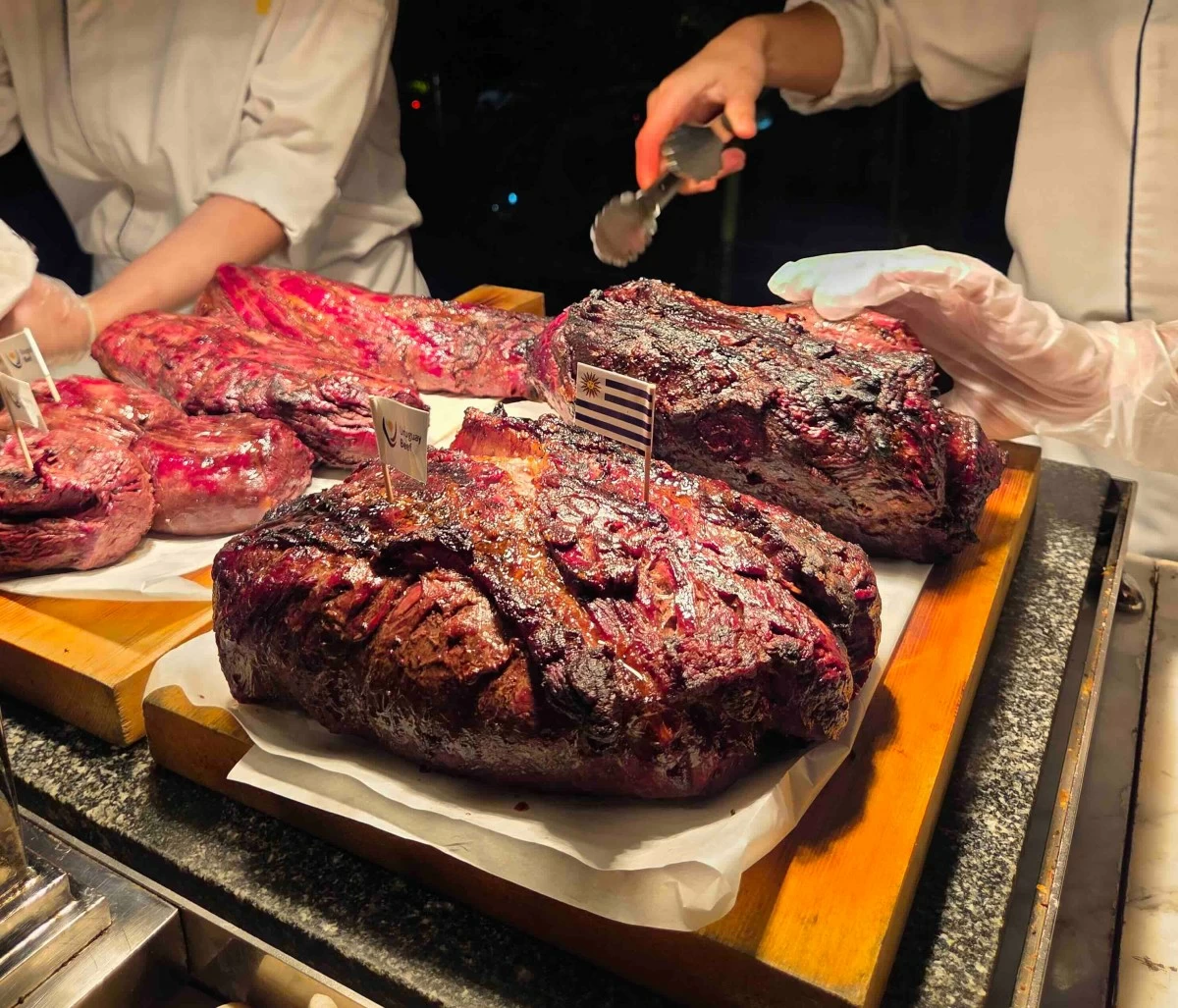
The menu opened with flavorful appetizers such as Beef Empanadas, Chorizo Croquettes, and Spinach Buñuelos, setting the tone for an evening of authentic Uruguayan flavors. The main course showcased Uruguay Angus Beef Ribeye and Angus Beef Tenderloin, paired with Uruguayan wines (Garzon Reserva Albariño 2024, Garzon Reserva Tannat 2022, Garzon Single Vineyard Tannat 2020, Garzon Single Vineyard Merlot 2020) that reflected the country’s rich agricultural heritage and commitment to sustainable, natural farming. The dinner ended on a sweet note with traditional desserts, Postre Chajá and Pionono de Dulce de Leche.
Located between Argentina and Brazil, Uruguay may be one of South America’s smallest nations, but it boasts some of the world’s most favorable natural conditions for cattle-raising. Its temperate climate, fertile soil, and abundant fresh water sources provide the ideal environment. More than 80 percent of Uruguay’s land is for pasture, where animals graze freely, feeding on native grass year round. This pasture-based lifestyle is also a philosophy of respect for nature and animal welfare. The result is beef that is not only flavorful and tender but also healthier, with low levels of saturated fat, an optimal ratio Omega 6 to Omega 3, and high levels of Iron and Vitamin E, nutrients known for their antioxidant and heart-healthy benefits.
Uruguayan beef carries the mark of quality and trust. It is 100 percent grass-fed, hormone-free, raised without antibiotics, and comes primarily from the Angus and Hereford breeds known for their superior marbling and tenderness. Additionally, Uruguay is a trusted source of Halal-certified beef, catering to diverse markets across the globe.
Uruguay is also a global leader in traceability, being one of the few countries where tracking is mandatory for every animal. From birth to table, each cut of beef can be traced back to its origin—ensuring quality, safety, and transparency across the entire supply chain.
The country’s slaughterhouses are equipped with cutting-edge technology, upholding the highest international standards in hygiene, processing, and export readiness. With a proud 400-year history of cattle production, Uruguay exports two-thirds of its meat to some of the world’s most demanding markets.
The Uruguay Beef and Wine Dinner was a gastronomic journey and celebration of heritage, sustainability, and tradition. Guests left with a deeper appreciation of what makes Uruguayan beef a global gold standard.
ADVERTISEMENT
.most-popular .layout-ratio{ padding-bottom: 79.13%; } @media (min-width: 768px) and (max-width: 1024px) { .widget-title { font-size: 15px !important; } }

{{ articles_filter_1561_widget.title }}

.most-popular .layout-ratio{ padding-bottom: 79.13%; } @media (min-width: 768px) and (max-width: 1024px) { .widget-title { font-size: 15px !important; } }

{{ articles_filter_1562_widget.title }}

.most-popular .layout-ratio{ padding-bottom: 79.13%; } @media (min-width: 768px) and (max-width: 1024px) { .widget-title { font-size: 15px !important; } }

{{ articles_filter_1563_widget.title }}

{{ articles_filter_1564_widget.title }}

.mb-article-details { position: relative; } .mb-article-details .article-body-preview, .mb-article-details .article-body-summary{ font-size: 17px; line-height: 30px; font-family: "Libre Caslon Text", serif; color: #000; } .mb-article-details .article-body-preview iframe , .mb-article-details .article-body-summary iframe{ width: 100%; margin: auto; } .read-more-background { background: linear-gradient(180deg, color(display-p3 1.000 1.000 1.000 / 0) 13.75%, color(display-p3 1.000 1.000 1.000 / 0.8) 30.79%, color(display-p3 1.000 1.000 1.000) 72.5%); position: absolute; height: 200px; width: 100%; bottom: 0; display: flex; justify-content: center; align-items: center; padding: 0; } .read-more-background a{ color: #000; } .read-more-btn { padding: 17px 45px; font-family: Inter; font-weight: 700; font-size: 18px; line-height: 16px; text-align: center; vertical-align: middle; border: 1px solid black; background-color: white; } .hidden { display: none; }
function initializeAllSwipers() { // Get all hidden inputs with cms_article_id document.querySelectorAll('[id^="cms_article_id_"]').forEach(function (input) { const cmsArticleId = input.value; const articleSelector = '#article-' + cmsArticleId + ' .body_images'; const swiperElement = document.querySelector(articleSelector); if (swiperElement && !swiperElement.classList.contains('swiper-initialized')) { new Swiper(articleSelector, { loop: true, pagination: false, navigation: { nextEl: '#article-' + cmsArticleId + ' .swiper-button-next', prevEl: '#article-' + cmsArticleId + ' .swiper-button-prev', }, }); } }); } setTimeout(initializeAllSwipers, 3000); const intersectionObserver = new IntersectionObserver( (entries) => { entries.forEach((entry) => { if (entry.isIntersecting) { const newUrl = entry.target.getAttribute("data-url"); if (newUrl) { history.pushState(null, null, newUrl); let article = entry.target; // Extract metadata const author = article.querySelector('.author-section').textContent.replace('By', '').trim(); const section = article.querySelector('.section-info ').textContent.replace(' ', ' '); const title = article.querySelector('.article-title h1').textContent; // Parse URL for Chartbeat path format const parsedUrl = new URL(newUrl, window.location.origin); const cleanUrl = parsedUrl.host + parsedUrl.pathname; // Update Chartbeat configuration if (typeof window._sf_async_config !== 'undefined') { window._sf_async_config.path = cleanUrl; window._sf_async_config.sections = section; window._sf_async_config.authors = author; } // Track virtual page view with Chartbeat if (typeof pSUPERFLY !== 'undefined' && typeof pSUPERFLY.virtualPage === 'function') { try { pSUPERFLY.virtualPage({ path: cleanUrl, title: title, sections: section, authors: author }); } catch (error) { console.error('ping error', error); } } // Optional: Update document title if (title && title !== document.title) { document.title = title; } } } }); }, { threshold: 0.1 } ); function showArticleBody(button) { const article = button.closest("article"); const summary = article.querySelector(".article-body-summary"); const body = article.querySelector(".article-body-preview"); const readMoreSection = article.querySelector(".read-more-background"); // Hide summary and read-more section summary.style.display = "none"; readMoreSection.style.display = "none"; // Show the full article body body.classList.remove("hidden"); } document.addEventListener("DOMContentLoaded", () => { let loadCount = 0; // Track how many times articles are loaded const offset = [1, 2, 3, 4, 5, 6, 7, 8, 9, 10]; // Offset values const currentUrl = window.location.pathname.substring(1); let isLoading = false; // Prevent multiple calls if (!currentUrl) { console.log("Current URL is invalid."); return; } const sentinel = document.getElementById("load-more-sentinel"); if (!sentinel) { console.log("Sentinel element not found."); return; } function isSentinelVisible() { const rect = sentinel.getBoundingClientRect(); return ( rect.top < window.innerHeight && rect.bottom >= 0 ); } function onScroll() { if (isLoading) return; if (isSentinelVisible()) { if (loadCount >= offset.length) { console.log("Maximum load attempts reached."); window.removeEventListener("scroll", onScroll); return; } isLoading = true; const currentOffset = offset[loadCount]; window.loadMoreItems().then(() => { let article = document.querySelector('#widget_1690 > div:nth-last-of-type(2) article'); intersectionObserver.observe(article) loadCount++; }).catch(error => { console.error("Error loading more items:", error); }).finally(() => { isLoading = false; }); } } window.addEventListener("scroll", onScroll); });

Sign up by email to receive news.