







Rev up growth engine despite latest GDP growth decline
Published Nov 10, 2025 12:05 am


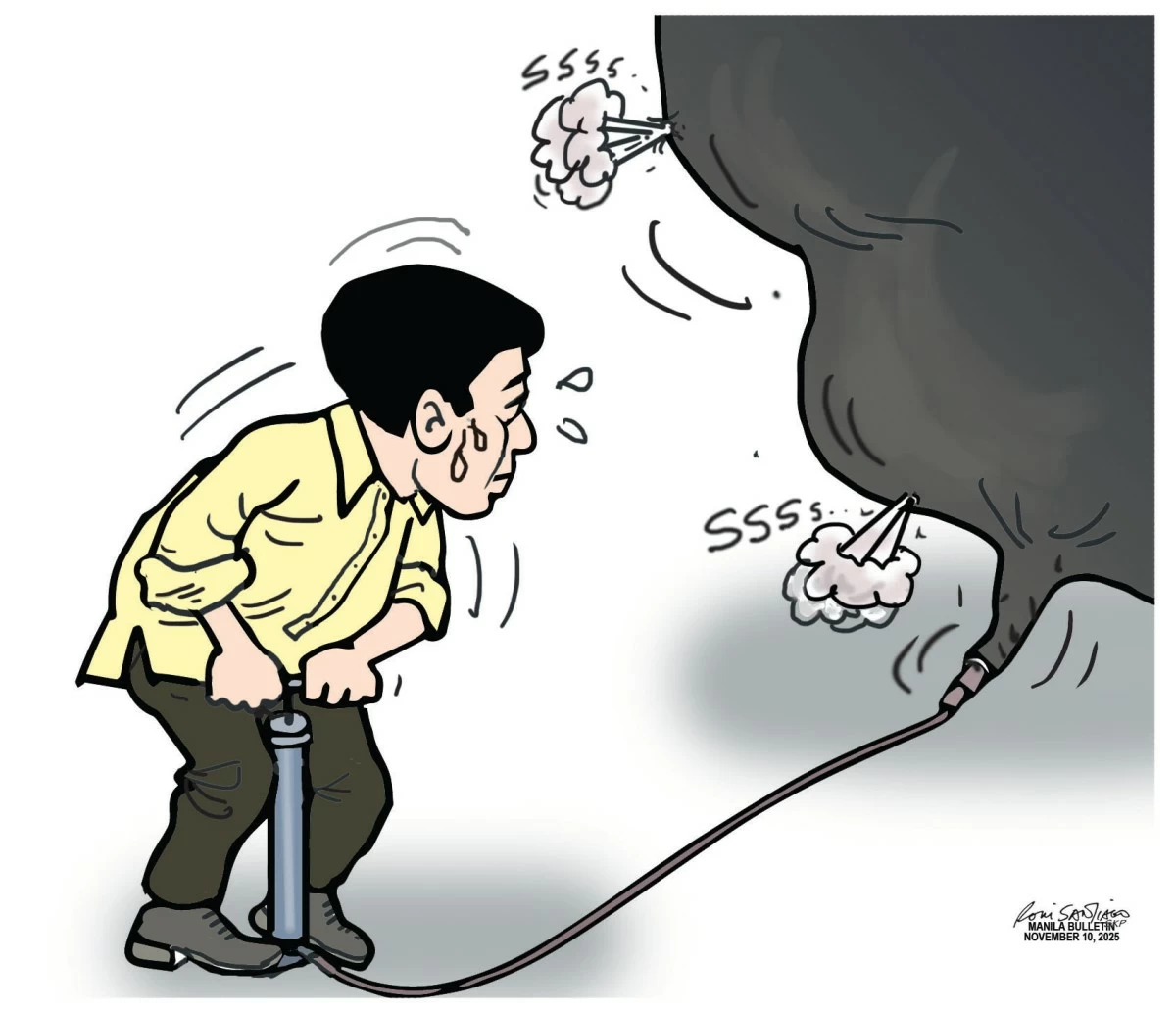
The latest reading from the Philippine economy serves as a cautionary note. In the third quarter the pace of growth has flagged. According to official data, the Philippine real GDP grew by 4.0 percent year-on-year in Q3 2025 — the slowest expansion in more than four years, down from 5.5 percent in Q2. On a quarter-on-quarter, seasonally-adjusted basis, it expanded only 0.4 percent, below forecasts of 0.8 per cent.
This under-performance comes despite one of the few bright spots: the agriculture sector. Earlier in Q2 2025 agriculture, forestry and fishing posted a robust 7.0 percent year-on-year growth, compared with 2.1 per cent for industry and 6.9 per cent for services. That farmers and fishers are doing well is welcome — but it has not been enough to offset the drag emanating from elsewhere in the economy.
What lies behind this growth shortfall?
First, the problem of domestic public investment and government-spending inertia looms large. With the ongoing fallout of the flood-control scandal and consequent political and institutional caution, it appears that budget releases, project roll-outs and infrastructure work have been restrained. The effect: a weaker multiplier from the public sector, fewer contracts for construction, and thus softer demand for suppliers, labor and downstream industries.
Second, industry remains weak. In Q2 the industrial sector’s growth was only 2.1 per cent, a far cry from the double-digit or high-single expansions that would signify a manufacturing-led up-cycle. The lack of strong investment in manufacturing, construction and utilities is stalling catch-up expectations.
Third, external headwinds and structural constraints remain. Slower global demand, supply-chain vulnerabilities, elevated interest rates and inflation all combine to dampen private-sector investment. The effects are magnified when the public-investment engine is on standby.
Fourth, aside from agriculture, household consumption and services are doing okay, but they cannot carry the full growth load. Note that fixed-capital formation was already tepid – it was only 0.6 percent in Q2 2025, according to the PSA.
What does this mean for the rest of the year and full-year performance?
With Q3 already at 4.0 percent, the risk is that full-year growth will settle below the government’s target of 5.5–6.5 percent. Unless we see a rebound in public spending and private investment in Q4, the best-case outcome may now be in the 5.0–5.5 per cent range. On the upside, agriculture remains a buffer and consumer demand remains resilient; if infrastructure roll outs resume and approvals are streamlined, a partial recovery is possible.
What concrete steps should government adopt?
First: Resume and accelerate public-investment disbursements. Speed up the release of funds for infrastructure, flood-control, transport, logistics and agribusiness projects. Delay is growth foregone.
Second: Restore credibility via transparent procurement and oversight. The flood-control scandal has undermined public confidence; publishing project status, clearing backlogs, and strengthening accountability will unlock private-sector follow-through.
Third: Stimulate private-sector investment. Beyond public spending, provide incentives, de-risk investment and streamline approvals especially for manufacturing, logistics and green economy sectors so that the private engine revs up.
Fourth: Leverage agriculture’s strength into broader value chains. With agriculture posting strong growth, the government should invest in farm-to-market infrastructure, processing, cold chains and rural logistics to spread the benefit across regions and stimulate jobs.
Fifth: Maintain fiscal discipline but avoid paralysis. A growth slowdown is not a license for unfettered spending — but neither is it justification for freezing investment. Smart, timely, high-impact spending with good governance is the balance.
The third quarter’s weak showing should impel a revving up of investment engine and across the industrial sector not just to hit a target but to deliver on the national aspiration of “making life better.”