







PBIC reveals roadmap for blockchain infrastructure
Published Nov 10, 2025 01:56 pm


The Philippine Blockchain Infrastructure Council (PBIC) has revealed the roadmap for the country’s blockchain called the Philippine Blockchain Infrastructure Highway.
This project aims to build a framework for digital transparency, accountability, and data sovereignty, where every transaction is “verifiable.” In short, the Philippine Blockchain Infrastructure Highway is being developed with high hopes that it can show funds are going where they are supposed to go.
When we say blockchain, too often the first thing that comes to people’s thoughts is cryptocurrency, and too often, people think cryptocurrency equals scam. That’s a “yes and no” topic that is best discussed in another article. The point is, blockchain is more than cryptocurrency. Blockchain is a platform where things can be built.
A simplified way to explain it is to think of Blockchain as a digital ledger. This means, it’s a record book that people. What makes it potentially better is it's a ledger that's out in the open and people can see.
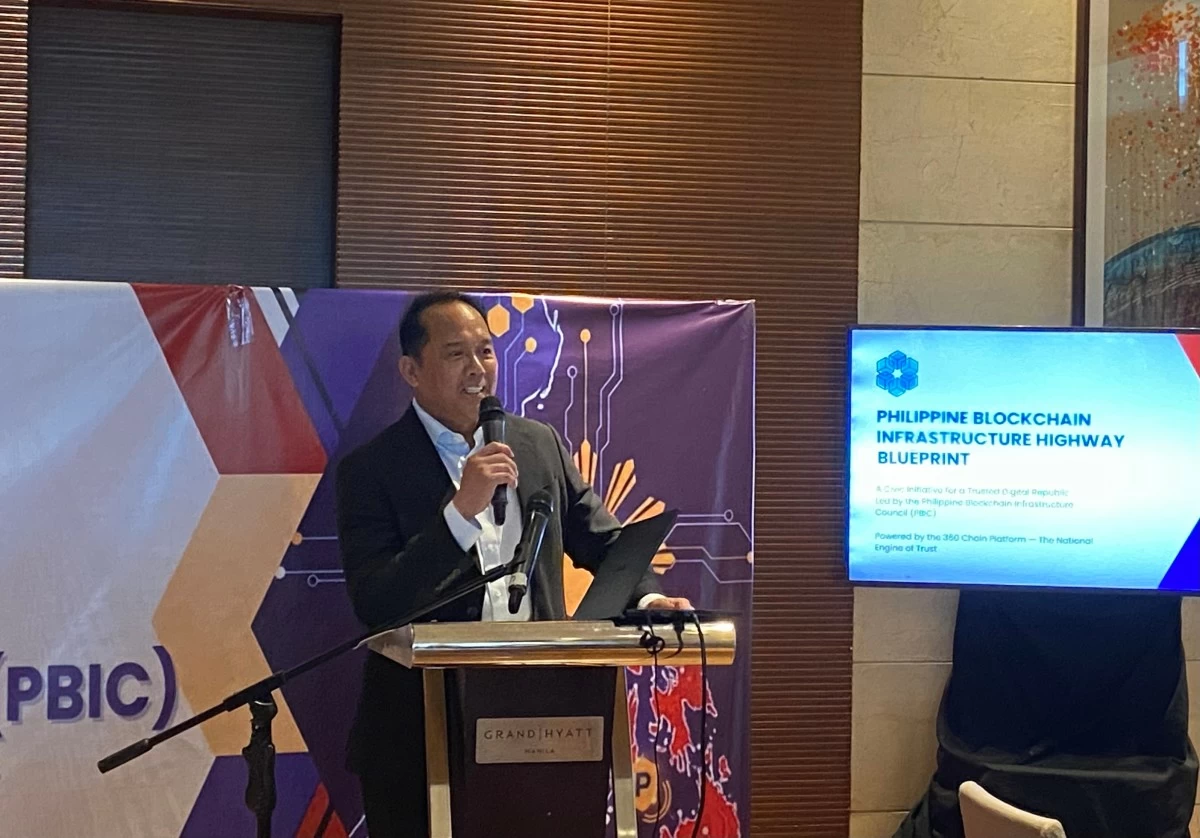
PBIC Chairman, Jonathan Bocaling
The one leading the development is PBIC Chairman, Jonathan Bocaling, who built the Bayad Center, and has worked with US telecoms and police agencies to develop secure communications.
For the Philippine Blockchain Infrastructure Highway, he said: “We are building the national engine of trust, a transparent, digital foundation that will power every Filipino transaction and strengthen the nation’s digital sovereignty. The 360 Chain Validator Platform does not replace existing systems. It verifies and secures them, ensuring that every transaction is truthful, accurate, and protected.”

Retired General Hermogenes Esperon Jr., chairman, Philtrust Bank
Retired General Hermogenes Esperon Jr., who is also the Chairman of Philtrust Bank, said: “It might be a big help to pass this blockchain infrastructure so that it can serve the public and private sector.”
The main goal here is to establish trust. The idea here is that once the technology is trusted, more people will use it. Also, once the law is implemented, the government will have to use it to provide transparency.
“It is very important that we get the support of the government and when you have the law to implement that or to force the government to use it then we are better off,” Retired Gen. Esperon said.
One of the first steps in establishing trust is making sure all validators are local. Validators, or nodes, are the ones who verifies transactions. Validators are part of the chain. Therefore, once a transaction is made, it goes through the chain, being verified by each validator. For instance, there are 100 validators in a blockchain. A transaction will signal all 100 validators and will go through each of them. This is an automated process, so tampering, in theory, is impossible. The transaction is recorded in all 100 validators. This is one of the reasons why it is believed blockchains cannot be tampered with. If one validator has a different record will raise suspicions. Basically, each validator gets to keep a record of that transaction.
Bocaling calls the local validators as the 360 Chain Validator Platform and it will serve as the blockchain overlay and data verification. They are designing the platform to be non-intrusive, so the chain does not alter or intervene with existing systems or integral workflows. Meaning it should work without causing any delays or disruptions.
Here is the implementation roadmap:
November to December 2025 will see the formation of the PBIC, Secretariat, Advisory Board, form governance committees and sectoral clusters for technology, finance, and policy.
January 2026 will be the National Blockchain Infrastructure Summit, where the Philippine Infrastructure Highway Roadmap and the 360 Chain Validator Platform will be presented at PICC to invite government agencies, private corporations, academe, and media.
November up to February 2026 will see the completion of the 360 Chain Validator Platform architecture and validator modules. Conduct DICT-aligned security audits and interoperability testing.
March 2026 is planned for pilot integration and testing. Pilot projects include BIR, DPWH, DepEd, and private fintech partners to validate non-intrusive integration.
April 2026 is for public policy alignment and awareness campaigns.
May 2026 is the projected date to launch the PBIC National Portal and Validator Network, providing access to the Blockchain Infrastructure Highway and the 360 Chain ecosystem.
This is only phase one. The second phase will begin in June 2026 up to June 2027. The PBIC plans this as the year for expansion and institutionalization.
The plan is to integrate additional government departments, LGUs, and enterprises into the validator network. Deploy regional and academic nodes across the country. And explore ASEAN interoperability for cross-border trust and data exchange.