ADVERTISEMENT

Gov't to buy up to 20% of palay, challenge private sector price control

Published Nov 10, 2025 12:00 am
(Dexter Barro II/MANILA BULLETIN)
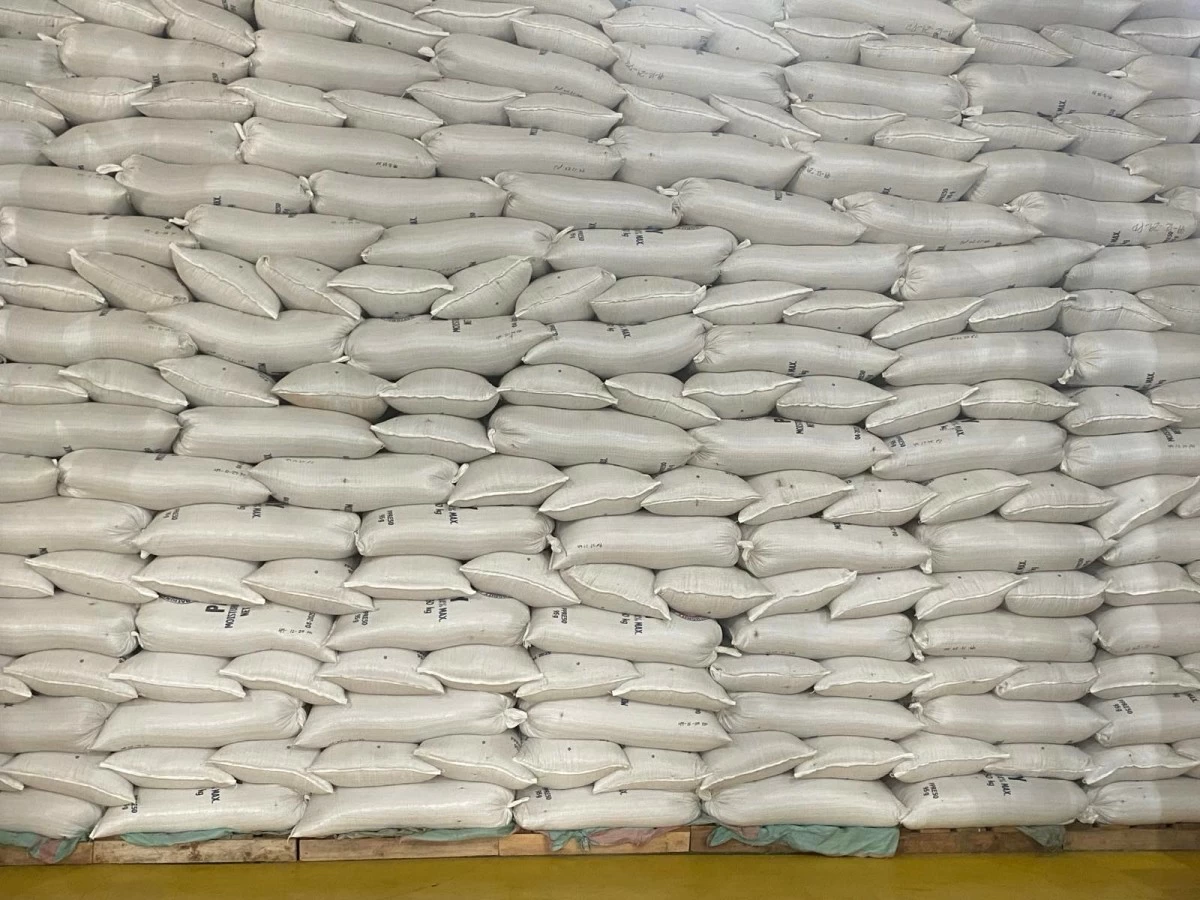
The government could purchase as much as 20 percent of the total palay (unmilled rice) production instead of the current five percent with the implementation of a new policy mandating agencies to procure food directly from farmers.
After many years, the government is still only capable of purchasing around five percent of the country’s entire palay output, primarily through the National Food Authority (NFA), due to restrictions imposed by law and limited procurement budget.
This means that the majority of the supply is bought by traders and the private sector, making farmers vulnerable to lower farmgate prices dictated by external factors rather than the cost of production, according to agriculture groups.
Department of Agriculture (DA) Secretary Francisco Tiu Laurel said the recently issued Executive Order (EO) No. 101, which requires the full implementation of the Sagip Saka Act, would help boost the government’s purchasing power.
Sagip Saka Act allows government agencies to directly purchase palay and other agricultural commodities from accredited farmer and fisherfolk cooperatives and enterprises, but EO No. 101 strengthens this further by making this mandatory for their food procurement.
This policy is complemented by EO No. 100, which mandates the establishment of a regional floor price for palay by an inter-agency steering committee.
While the regional pricing scheme is not yet set, the government has adopted the NFA’s buying price range of ₱17 and ₱23 per kilo for wet palay and between ₱23 to ₱30 per kilo for the clean and dry variety.
Tiu Laurel expects the two policies to increase the government’s share in the purchase of palay output to 10 percent.
Senator Francis Pangilinan, meanwhile, anticipates that the palay purchase could increase by as much as 20 percent.
“With the SAGIP Saka Act, if implemented in full and effectively, the purchasing power can increase to 20 percent,” Pangilinan said in a press briefing last week.
Tiu Laurel said the 20 percent could be realized as early as next year, but this would hinge on the passage of the proposed Rice Industry and Consumer Empowerment Act, otherwise known as the RICE Act.
If enacted, this measure would reinstate the NFA’s power to sell rice directly to the public, among other amendments to the Rice Tariffication Law (RTL).
With a budget of approximately ₱19 billion next year for rice procurement, Tiu Laurel said allowing the rice grains agency to sell would make sure that its warehouses would always have space for new purchases.
“If the RICE Act allows us to sell rice through retail while we buy palay, then the government could achieve purchasing 20 percent of the palay production, which would definitely influence traders’ prices,” the secretary told reporters.
"While it is only part of the solution—there are a myriad of solutions that we need—this is one integral part,” he also said.
The DA earlier estimated that palay production would reach 20.2 million metric tons (MT) this year, surpassing the record high of 20.06 million MT in 2023.
The Samahang Industriya ng Agrikultura (SINAG) said the institutionalization of a palay floor price and a stronger government presence in the market are essential reforms to make palay prices more competitive for local farmers.
The group, however, said this would hinge on the government’s “capacity and commitment to buy directly from farmers at scale, ensuring that state procurement truly sets a price floor rather than a symbolic benchmark.”
SINAG reiterated that the most important measure is to restore the rice import tariffs to 35 percent for ASEAN shipments and 50 percent for non-ASEAN countries.
“The root cause of the current crisis remains the unilateral decision by the economic team to reduce the rice import tariff to 15 percent. This policy continues to suppress palay prices by making cheap imports more attractive to traders and local millers, further undermining local rice producers,” it said in a statement.
Tiu Laurel indicated last week that the government is set to increase the tariff rate to either 20 percent to 25 percent as part of a newly approved policy implementing a more gradual and flexible tariff adjustment on rice shipments.
This, he said, would be in place in January or when the suspension on rice imports would be temporarily lifted.
ADVERTISEMENT
.most-popular .layout-ratio{ padding-bottom: 79.13%; } @media (min-width: 768px) and (max-width: 1024px) { .widget-title { font-size: 15px !important; } }

{{ articles_filter_1561_widget.title }}

.most-popular .layout-ratio{ padding-bottom: 79.13%; } @media (min-width: 768px) and (max-width: 1024px) { .widget-title { font-size: 15px !important; } }

{{ articles_filter_1562_widget.title }}

.most-popular .layout-ratio{ padding-bottom: 79.13%; } @media (min-width: 768px) and (max-width: 1024px) { .widget-title { font-size: 15px !important; } }

{{ articles_filter_1563_widget.title }}

{{ articles_filter_1564_widget.title }}

.mb-article-details { position: relative; } .mb-article-details .article-body-preview, .mb-article-details .article-body-summary{ font-size: 17px; line-height: 30px; font-family: "Libre Caslon Text", serif; color: #000; } .mb-article-details .article-body-preview iframe , .mb-article-details .article-body-summary iframe{ width: 100%; margin: auto; } .read-more-background { background: linear-gradient(180deg, color(display-p3 1.000 1.000 1.000 / 0) 13.75%, color(display-p3 1.000 1.000 1.000 / 0.8) 30.79%, color(display-p3 1.000 1.000 1.000) 72.5%); position: absolute; height: 200px; width: 100%; bottom: 0; display: flex; justify-content: center; align-items: center; padding: 0; } .read-more-background a{ color: #000; } .read-more-btn { padding: 17px 45px; font-family: Inter; font-weight: 700; font-size: 18px; line-height: 16px; text-align: center; vertical-align: middle; border: 1px solid black; background-color: white; } .hidden { display: none; }
function initializeAllSwipers() { // Get all hidden inputs with cms_article_id document.querySelectorAll('[id^="cms_article_id_"]').forEach(function (input) { const cmsArticleId = input.value; const articleSelector = '#article-' + cmsArticleId + ' .body_images'; const swiperElement = document.querySelector(articleSelector); if (swiperElement && !swiperElement.classList.contains('swiper-initialized')) { new Swiper(articleSelector, { loop: true, pagination: false, navigation: { nextEl: '#article-' + cmsArticleId + ' .swiper-button-next', prevEl: '#article-' + cmsArticleId + ' .swiper-button-prev', }, }); } }); } setTimeout(initializeAllSwipers, 3000); const intersectionObserver = new IntersectionObserver( (entries) => { entries.forEach((entry) => { if (entry.isIntersecting) { const newUrl = entry.target.getAttribute("data-url"); if (newUrl) { history.pushState(null, null, newUrl); let article = entry.target; // Extract metadata const author = article.querySelector('.author-section').textContent.replace('By', '').trim(); const section = article.querySelector('.section-info ').textContent.replace(' ', ' '); const title = article.querySelector('.article-title h1').textContent; // Parse URL for Chartbeat path format const parsedUrl = new URL(newUrl, window.location.origin); const cleanUrl = parsedUrl.host + parsedUrl.pathname; // Update Chartbeat configuration if (typeof window._sf_async_config !== 'undefined') { window._sf_async_config.path = cleanUrl; window._sf_async_config.sections = section; window._sf_async_config.authors = author; } // Track virtual page view with Chartbeat if (typeof pSUPERFLY !== 'undefined' && typeof pSUPERFLY.virtualPage === 'function') { try { pSUPERFLY.virtualPage({ path: cleanUrl, title: title, sections: section, authors: author }); } catch (error) { console.error('ping error', error); } } // Optional: Update document title if (title && title !== document.title) { document.title = title; } } } }); }, { threshold: 0.1 } ); function showArticleBody(button) { const article = button.closest("article"); const summary = article.querySelector(".article-body-summary"); const body = article.querySelector(".article-body-preview"); const readMoreSection = article.querySelector(".read-more-background"); // Hide summary and read-more section summary.style.display = "none"; readMoreSection.style.display = "none"; // Show the full article body body.classList.remove("hidden"); } document.addEventListener("DOMContentLoaded", () => { let loadCount = 0; // Track how many times articles are loaded const offset = [1, 2, 3, 4, 5, 6, 7, 8, 9, 10]; // Offset values const currentUrl = window.location.pathname.substring(1); let isLoading = false; // Prevent multiple calls if (!currentUrl) { console.log("Current URL is invalid."); return; } const sentinel = document.getElementById("load-more-sentinel"); if (!sentinel) { console.log("Sentinel element not found."); return; } function isSentinelVisible() { const rect = sentinel.getBoundingClientRect(); return ( rect.top < window.innerHeight && rect.bottom >= 0 ); } function onScroll() { if (isLoading) return; if (isSentinelVisible()) { if (loadCount >= offset.length) { console.log("Maximum load attempts reached."); window.removeEventListener("scroll", onScroll); return; } isLoading = true; const currentOffset = offset[loadCount]; window.loadMoreItems().then(() => { let article = document.querySelector('#widget_1690 > div:nth-last-of-type(2) article'); intersectionObserver.observe(article) loadCount++; }).catch(error => { console.error("Error loading more items:", error); }).finally(() => { isLoading = false; }); } } window.addEventListener("scroll", onScroll); });

Sign up by email to receive news.