

ADVERTISEMENT

Finding meaning in numbers

Why learning mathematics remains essential in the age of technology

Published Nov 10, 2025 12:27 pm
By Ronald G. De Guzman Jr.
On social media, many netizens often poke fun at mathematics. Some are debating with one another about solving math expressions and equations due to the PEMDAS rule. Others use symbols similar to algebra, such as apples and oranges, to solve a math problem.
But what is mathematics, anyway? How do we define and use math?
Many mathematicians are still debating its definition. My working definition, however, is based on the idea in contemporary mathematics, which states: "Mathematics is the systematic study of patterns through deductive reasoning."
There are three elements. First, it is a systematic study, which affirms its confinement to the broad sciences. It is primarily concerned with structures, quantity, shapes, and changes. Second, it deals with patterns—the arrangement of symbols in a particular order. It forms a language of numbers, equations, and logical structures. Lastly, it uses deductive reasoning. Unlike other sciences, which rely on experiments to establish ideas, mathematics seeks to establish—or, in mathematical sense, prove—premises and theorems to arrive at a logical conclusion.

The author
The author
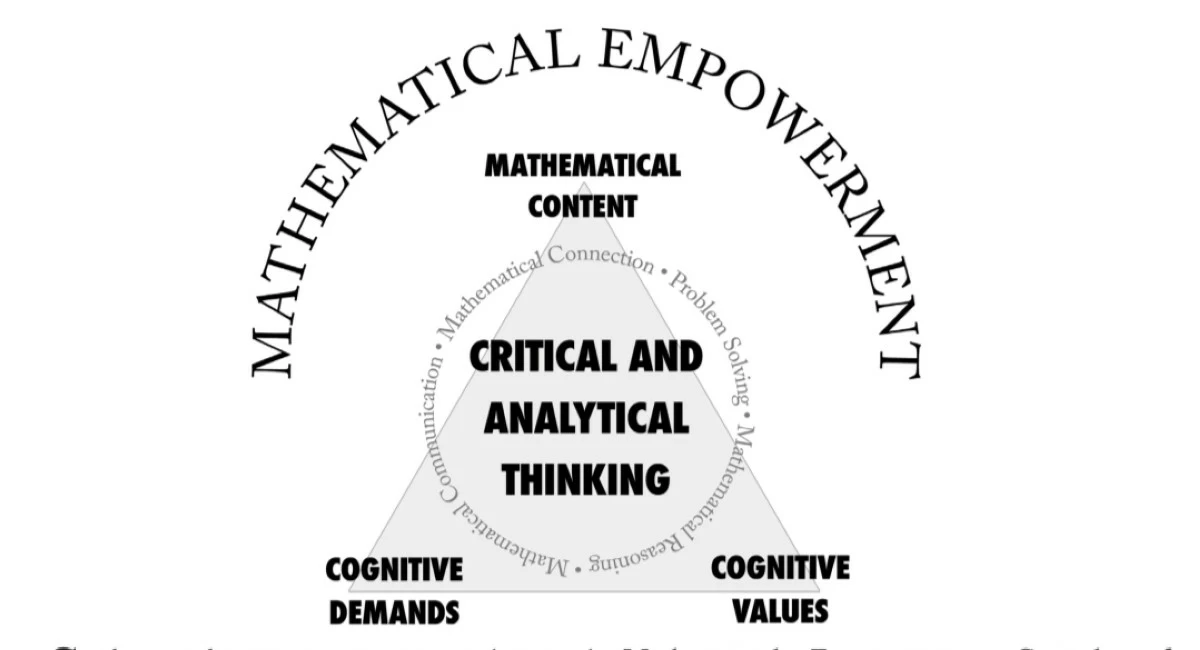
We formally learn mathematics starting in our kindergarten days. Most of us answered basic arithmetic using concrete, pictorial, and abstract methods. As we progress to higher grade levels, the cognitive demands, values, and content also increase.
But even if we finish algebra and trigonometry in high school and college, that does not mean our learning of mathematics is over. In fact, it is a lifelong and continuous process.
We see mathematics everywhere. Whenever we walked along streets lined with trees, we saw their branches forming a never-ending pattern called fractals. When we encounter a snail nearby—unless somebody is not willing to see it out of phobia—we see its shell forming a spiral shape that resembles the Fibonacci sequence. Some of us who encounter Neoclassical buildings may notice their perfectly symmetrical shape, which some associate with the Golden Ratio.
Regardless of its aesthetic nature, why is mathematics still important in our contemporary world? Despite modern technology, should mathematics now be considered irrelevant?
To say that mathematics is irrelevant just because we have modern technology would be a disastrous and dangerous precedent. In fact, mathematics is still used to address today’s societal problems.
For instance, a government agency may be flagged for overspending during procurement. People can easily identify this if the cost and logistics of procuring such an item are significantly larger than the item’s original price. That would raise an eyebrow as a possible sign of corruption, especially during budget hearings.
Aside from organizational concerns, we use mathematics to determine possible outcomes. Weather forecasting agencies such as PAG-ASA, for instance, use mathematics to predict weather patterns in order to help viewers and residents prepare for daily activities.
Lastly, mathematics is important for exercising control and explaining particular phenomena. Scientists and researchers use mathematics to explain contemporary issues such as climate change and poverty incidence. Without mathematics, we would not be able to generalize such issues as important and urgent.
To sum up, mathematics is indispensable. While most of us are afraid of it, we must realize that this is essential for developing critical and analytical skills. This is affirmed by the mathematics framework of the Philippine Council of Mathematics Teacher Educators (MATHTED).
This is a vision that I aspire to as someone who temporarily left my undergraduate studies in mathematics. While I have to care for myself for a while, I hope that those aspiring and committed experts in mathematics, like myself, would use it for the common good.
Ronald G. De Guzman Jr., 24, temporarily left his studies at the University of the Philippines Baguio. He aspires one day to research the interrelation between mathematics, culture, and society.
“Voices” is Manila Bulletin Lifestyle’s dedicated space for young writers and future journalists as they talk about the topics that matter to their generation—from pop culture and social trends to mental health, education, and everything in between.
If you have an article you want to publish, send your submissions to [email protected] with the subject line—Voices: (Article Title)—or send us a DM @manilabulletinlifestyle on Instagram. We can’t wait to read your stories!

Related Tags

Youth Voices
ADVERTISEMENT
.most-popular .layout-ratio{ padding-bottom: 79.13%; } @media (min-width: 768px) and (max-width: 1024px) { .widget-title { font-size: 15px !important; } }

{{ articles_filter_1561_widget.title }}

.most-popular .layout-ratio{ padding-bottom: 79.13%; } @media (min-width: 768px) and (max-width: 1024px) { .widget-title { font-size: 15px !important; } }

{{ articles_filter_1562_widget.title }}

.most-popular .layout-ratio{ padding-bottom: 79.13%; } @media (min-width: 768px) and (max-width: 1024px) { .widget-title { font-size: 15px !important; } }

{{ articles_filter_1563_widget.title }}

{{ articles_filter_1564_widget.title }}

.mb-article-details { position: relative; } .mb-article-details .article-body-preview, .mb-article-details .article-body-summary{ font-size: 17px; line-height: 30px; font-family: "Libre Caslon Text", serif; color: #000; } .mb-article-details .article-body-preview iframe , .mb-article-details .article-body-summary iframe{ width: 100%; margin: auto; } .read-more-background { background: linear-gradient(180deg, color(display-p3 1.000 1.000 1.000 / 0) 13.75%, color(display-p3 1.000 1.000 1.000 / 0.8) 30.79%, color(display-p3 1.000 1.000 1.000) 72.5%); position: absolute; height: 200px; width: 100%; bottom: 0; display: flex; justify-content: center; align-items: center; padding: 0; } .read-more-background a{ color: #000; } .read-more-btn { padding: 17px 45px; font-family: Inter; font-weight: 700; font-size: 18px; line-height: 16px; text-align: center; vertical-align: middle; border: 1px solid black; background-color: white; } .hidden { display: none; }
function initializeAllSwipers() { // Get all hidden inputs with cms_article_id document.querySelectorAll('[id^="cms_article_id_"]').forEach(function (input) { const cmsArticleId = input.value; const articleSelector = '#article-' + cmsArticleId + ' .body_images'; const swiperElement = document.querySelector(articleSelector); if (swiperElement && !swiperElement.classList.contains('swiper-initialized')) { new Swiper(articleSelector, { loop: true, pagination: false, navigation: { nextEl: '#article-' + cmsArticleId + ' .swiper-button-next', prevEl: '#article-' + cmsArticleId + ' .swiper-button-prev', }, }); } }); } setTimeout(initializeAllSwipers, 3000); const intersectionObserver = new IntersectionObserver( (entries) => { entries.forEach((entry) => { if (entry.isIntersecting) { const newUrl = entry.target.getAttribute("data-url"); if (newUrl) { history.pushState(null, null, newUrl); let article = entry.target; // Extract metadata const author = article.querySelector('.author-section').textContent.replace('By', '').trim(); const section = article.querySelector('.section-info ').textContent.replace(' ', ' '); const title = article.querySelector('.article-title h1').textContent; // Parse URL for Chartbeat path format const parsedUrl = new URL(newUrl, window.location.origin); const cleanUrl = parsedUrl.host + parsedUrl.pathname; // Update Chartbeat configuration if (typeof window._sf_async_config !== 'undefined') { window._sf_async_config.path = cleanUrl; window._sf_async_config.sections = section; window._sf_async_config.authors = author; } // Track virtual page view with Chartbeat if (typeof pSUPERFLY !== 'undefined' && typeof pSUPERFLY.virtualPage === 'function') { try { pSUPERFLY.virtualPage({ path: cleanUrl, title: title, sections: section, authors: author }); } catch (error) { console.error('ping error', error); } } // Optional: Update document title if (title && title !== document.title) { document.title = title; } } } }); }, { threshold: 0.1 } ); function showArticleBody(button) { const article = button.closest("article"); const summary = article.querySelector(".article-body-summary"); const body = article.querySelector(".article-body-preview"); const readMoreSection = article.querySelector(".read-more-background"); // Hide summary and read-more section summary.style.display = "none"; readMoreSection.style.display = "none"; // Show the full article body body.classList.remove("hidden"); } document.addEventListener("DOMContentLoaded", () => { let loadCount = 0; // Track how many times articles are loaded const offset = [1, 2, 3, 4, 5, 6, 7, 8, 9, 10]; // Offset values const currentUrl = window.location.pathname.substring(1); let isLoading = false; // Prevent multiple calls if (!currentUrl) { console.log("Current URL is invalid."); return; } const sentinel = document.getElementById("load-more-sentinel"); if (!sentinel) { console.log("Sentinel element not found."); return; } function isSentinelVisible() { const rect = sentinel.getBoundingClientRect(); return ( rect.top < window.innerHeight && rect.bottom >= 0 ); } function onScroll() { if (isLoading) return; if (isSentinelVisible()) { if (loadCount >= offset.length) { console.log("Maximum load attempts reached."); window.removeEventListener("scroll", onScroll); return; } isLoading = true; const currentOffset = offset[loadCount]; window.loadMoreItems().then(() => { let article = document.querySelector('#widget_1690 > div:nth-last-of-type(2) article'); intersectionObserver.observe(article) loadCount++; }).catch(error => { console.error("Error loading more items:", error); }).finally(() => { isLoading = false; }); } } window.addEventListener("scroll", onScroll); });

Sign up by email to receive news.