ADVERTISEMENT

Cops clear roads, secure evacuees as gov't starts sending help after 'Uwan' onslaught

Published Nov 10, 2025 09:15 am
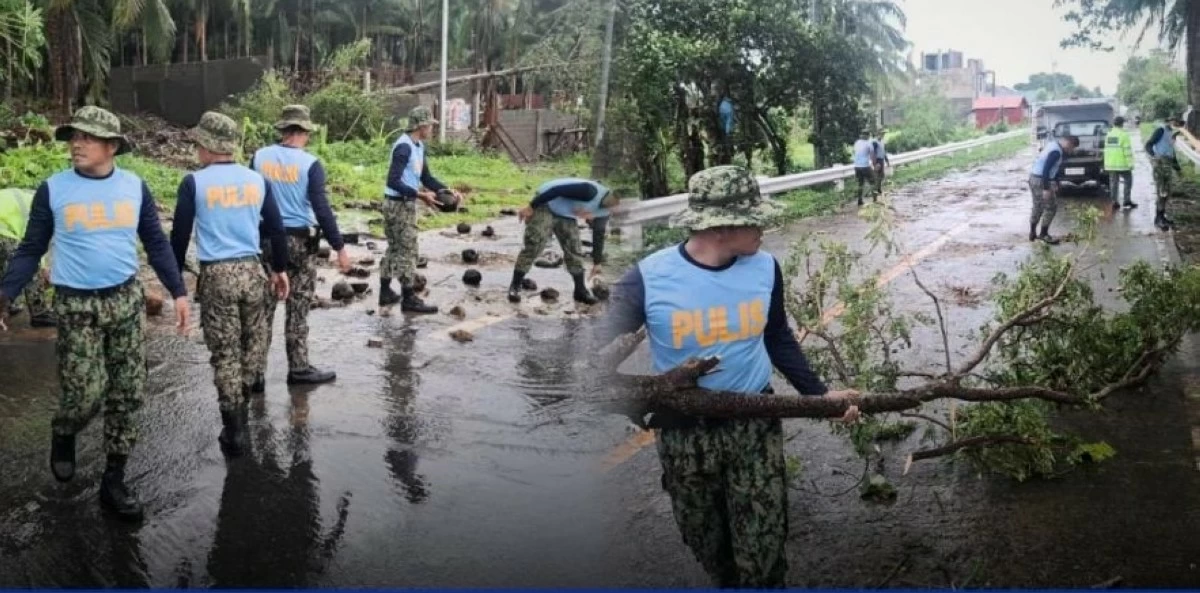
The Philippine National Police (PNP) ordered police commanders in areas devastated by Typhoon “Uwan” to deploy sufficient number of their men to help in road clearing and other responses intended to ensure the fast movement of relief and other assistance from the national government.
Acting PNP chief Lt. Gen. Jose Melencio Nartatez, Jr. said clearing roads of debris and other materials is crucial in every post-disaster response as it is the time when the movement of immediate relief assistance is done.
But Nartatez also directed police commanders to continuously monitor the situation on the ground, including the evacuation centers where over one million sought refuge after preemptive evacuation was ordered over threat of storm surge, widespread flooding and landslides.
More than 2,100 policemen were initially deployed in various evacuation centers from Eastern Visayas and Bicol to the northern parts of Luzon to secure and attend to the needs of the evacuees.
Nartatez said part of those deployed are personnel of the Women and Children Protection Desk (WCPD), adding that he already instructed police commanders to closely monitor the situation in evacuation centers and increase the number of policemen if necessary.
“Policemen are among the symbol of the government and police visibility is crucial in easing fears and panic among the people, whether in communities or evacuation centers. In this time of serious challenge, our kababayan feel safe whenever they see men in uniform, knowing that their safety and protection are assured,” said Nartatez.
Bicol Region and Eastern Visayas were the first areas pounded with heavy rains and strong winds by “Uwan”, with reports of widespread flooding and damaged homes, establishments and infrastructure.
At least 25,878 PNP personnel have been deployed nationwide to assist in disaster preparedness, rescue, and public safety operations. They include officers from the NCRPO and regional police offices across Luzon, Visayas, and Mindanao.
An additional 13,190 members of the Reactionary Standby Support Force (RSSF) are on standby for immediate deployment, with at least 1,219 police vehicles and equipment prepositioned in critical areas.
Meanwhile, the PNP Maritime Group and regional units continue to secure the welfare of stranded passengers in various seaports.
As weather experts warned that the “Uwan” will continue to bring heavy rains in the next few days, Nartatez said police forces will remain on alert to help ensure that those in the danger zones will remain safe.
He added that all PNP field units in the entire Luzon and Visayas will remain on alert to ensure that evacuation and rescue operations are conducted safely and efficiently.
ADVERTISEMENT
.most-popular .layout-ratio{ padding-bottom: 79.13%; } @media (min-width: 768px) and (max-width: 1024px) { .widget-title { font-size: 15px !important; } }

{{ articles_filter_1561_widget.title }}

.most-popular .layout-ratio{ padding-bottom: 79.13%; } @media (min-width: 768px) and (max-width: 1024px) { .widget-title { font-size: 15px !important; } }

{{ articles_filter_1562_widget.title }}

.most-popular .layout-ratio{ padding-bottom: 79.13%; } @media (min-width: 768px) and (max-width: 1024px) { .widget-title { font-size: 15px !important; } }

{{ articles_filter_1563_widget.title }}

{{ articles_filter_1564_widget.title }}

.mb-article-details { position: relative; } .mb-article-details .article-body-preview, .mb-article-details .article-body-summary{ font-size: 17px; line-height: 30px; font-family: "Libre Caslon Text", serif; color: #000; } .mb-article-details .article-body-preview iframe , .mb-article-details .article-body-summary iframe{ width: 100%; margin: auto; } .read-more-background { background: linear-gradient(180deg, color(display-p3 1.000 1.000 1.000 / 0) 13.75%, color(display-p3 1.000 1.000 1.000 / 0.8) 30.79%, color(display-p3 1.000 1.000 1.000) 72.5%); position: absolute; height: 200px; width: 100%; bottom: 0; display: flex; justify-content: center; align-items: center; padding: 0; } .read-more-background a{ color: #000; } .read-more-btn { padding: 17px 45px; font-family: Inter; font-weight: 700; font-size: 18px; line-height: 16px; text-align: center; vertical-align: middle; border: 1px solid black; background-color: white; } .hidden { display: none; }
function initializeAllSwipers() { // Get all hidden inputs with cms_article_id document.querySelectorAll('[id^="cms_article_id_"]').forEach(function (input) { const cmsArticleId = input.value; const articleSelector = '#article-' + cmsArticleId + ' .body_images'; const swiperElement = document.querySelector(articleSelector); if (swiperElement && !swiperElement.classList.contains('swiper-initialized')) { new Swiper(articleSelector, { loop: true, pagination: false, navigation: { nextEl: '#article-' + cmsArticleId + ' .swiper-button-next', prevEl: '#article-' + cmsArticleId + ' .swiper-button-prev', }, }); } }); } setTimeout(initializeAllSwipers, 3000); const intersectionObserver = new IntersectionObserver( (entries) => { entries.forEach((entry) => { if (entry.isIntersecting) { const newUrl = entry.target.getAttribute("data-url"); if (newUrl) { history.pushState(null, null, newUrl); let article = entry.target; // Extract metadata const author = article.querySelector('.author-section').textContent.replace('By', '').trim(); const section = article.querySelector('.section-info ').textContent.replace(' ', ' '); const title = article.querySelector('.article-title h1').textContent; // Parse URL for Chartbeat path format const parsedUrl = new URL(newUrl, window.location.origin); const cleanUrl = parsedUrl.host + parsedUrl.pathname; // Update Chartbeat configuration if (typeof window._sf_async_config !== 'undefined') { window._sf_async_config.path = cleanUrl; window._sf_async_config.sections = section; window._sf_async_config.authors = author; } // Track virtual page view with Chartbeat if (typeof pSUPERFLY !== 'undefined' && typeof pSUPERFLY.virtualPage === 'function') { try { pSUPERFLY.virtualPage({ path: cleanUrl, title: title, sections: section, authors: author }); } catch (error) { console.error('ping error', error); } } // Optional: Update document title if (title && title !== document.title) { document.title = title; } } } }); }, { threshold: 0.1 } ); function showArticleBody(button) { const article = button.closest("article"); const summary = article.querySelector(".article-body-summary"); const body = article.querySelector(".article-body-preview"); const readMoreSection = article.querySelector(".read-more-background"); // Hide summary and read-more section summary.style.display = "none"; readMoreSection.style.display = "none"; // Show the full article body body.classList.remove("hidden"); } document.addEventListener("DOMContentLoaded", () => { let loadCount = 0; // Track how many times articles are loaded const offset = [1, 2, 3, 4, 5, 6, 7, 8, 9, 10]; // Offset values const currentUrl = window.location.pathname.substring(1); let isLoading = false; // Prevent multiple calls if (!currentUrl) { console.log("Current URL is invalid."); return; } const sentinel = document.getElementById("load-more-sentinel"); if (!sentinel) { console.log("Sentinel element not found."); return; } function isSentinelVisible() { const rect = sentinel.getBoundingClientRect(); return ( rect.top < window.innerHeight && rect.bottom >= 0 ); } function onScroll() { if (isLoading) return; if (isSentinelVisible()) { if (loadCount >= offset.length) { console.log("Maximum load attempts reached."); window.removeEventListener("scroll", onScroll); return; } isLoading = true; const currentOffset = offset[loadCount]; window.loadMoreItems().then(() => { let article = document.querySelector('#widget_1690 > div:nth-last-of-type(2) article'); intersectionObserver.observe(article) loadCount++; }).catch(error => { console.error("Error loading more items:", error); }).finally(() => { isLoading = false; }); } } window.addEventListener("scroll", onScroll); });

Sign up by email to receive news.