






Manila Bulletin
 Philippines
National
Typhoon tragedies highlight need for National Land Use Law, says Libanan
Philippines
National
Typhoon tragedies highlight need for National Land Use Law, says Libanan
Philippines
National
Typhoon tragedies highlight need for National Land Use Law, says Libanan
Typhoon tragedies highlight need for National Land Use Law, says Libanan
Published Nov 9, 2025 02:16 pm


At A Glance
- The death and destruction caused by Typhoon "Tino" Central Visayas, particularly in Metro Cebu, should prompt President Marcos to prompt President Marcos to certify as urgent the passage of a National Land-Use Law.
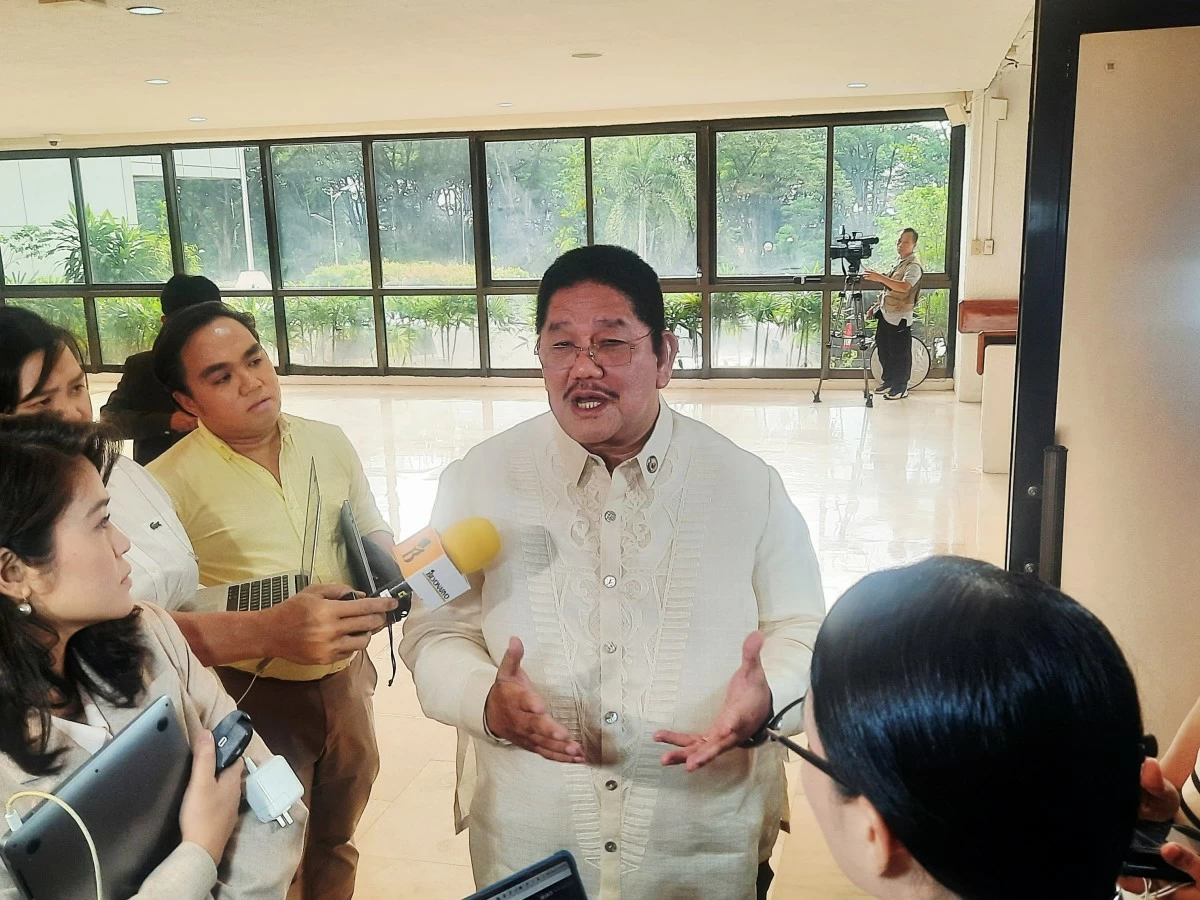
House Minority Leader and 4Ps Party-list Rep. Marcelino “Nonoy” Libanan (Ellson Quismorio/ MANILA BULLETIN)
The death and destruction caused by Typhoon "Tino" Central Visayas, particularly in Metro Cebu, should prompt President Marcos to prompt President Marcos to certify as urgent the passage of a National Land Use Law.
Thus, said House Minority Leader and 4Ps Party-list Rep. Marcelino “Nonoy” Libanan, who noted that Tino exposed gaps in land use planning and disaster risk management in the country.
“The tragic loss of lives and the widespread devastation caused by Typhoon Tino once again expose the severe gaps in our national land use planning and disaster risk management. We are paying the price for decades of policy inaction," Libanan said.
He made these remarks even as the country was being battered by a new typhoon, "Uwan".
According to Libanan, proper land-use planning is absolutely imperative for disaster risk reduction, climate resilience, and environmental integrity.
“Proper land use planning is a matter of survival in this era of brutal climate change. We must put an end to building communities in inherently unsafe areas — those prone to riverine and urban flooding, landslides, and coastal storm surges,” he said.
Libanan explained that the proposed National Land Use Law will serve as the nation’s master framework for the allocation, utilization, management, and development of lands and natural resources.
“This will give the Philippines a coherent strategy to balance human settlement, economic growth, and environmental protection,” he said.
Libanan lamented that Congress has been trying to enact a National Land-Use Law since the 1990s. “In fact, in the 19th Congress, the House passed the National Land-Use Bill on third and final reading."
“Sadly, the Senate was unable to act on the measure,” he said.
The minority leader warned that the Philippines is bound to face stronger typhoons that bring more rainfall in shorter periods, and that new land-use policies are needed to help the country adapt swiftly to such harsh conditions.
“To protect our people, we must put in place forward-looking land use policies that allow us to swiftly adapt to harsher climate conditions while safeguarding our ecological systems — our forests, watersheds, and protected areas that stand as our natural defenses against disaster,” Libanan stressed.
He concluded: “We cannot afford to delay any longer. Every typhoon that ravages our communities underscores the urgent need for a comprehensive national land use policy. Let us act now — before the next storm claims more lives and homes.”
The World Risk Index has consistently ranked the Philippines as the most disaster-prone country in the world, followed by India and Indonesia.
The index ranks the exposure and vulnerability of 193 countries to natural hazards, including typhoons, flooding, sea level rise, droughts, earthquakes, tsunamis, and volcanic eruptions.