ADVERTISEMENT

Pakistan–Afghanistan peace talks in Istanbul fail amid rising border tensions

Published Nov 9, 2025 08:11 am
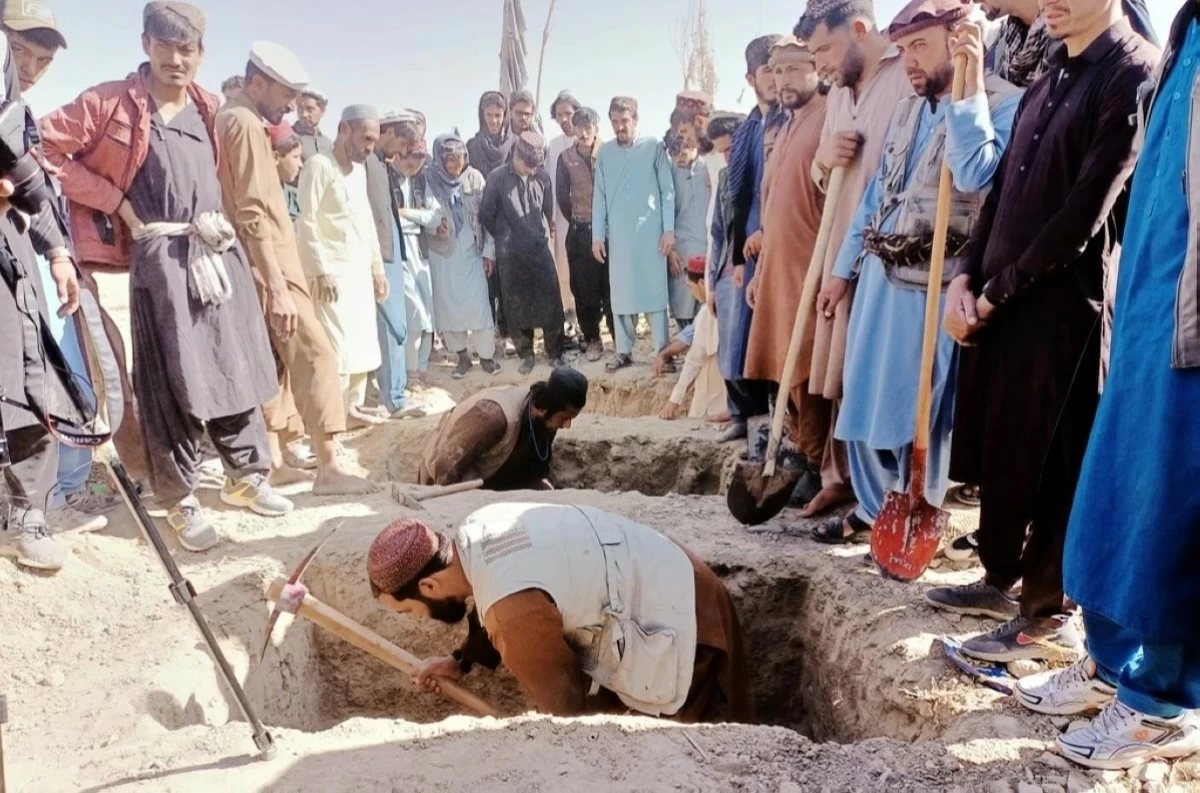
Locals dig graves for people killed in a cross-border airstrike by the Pakistani army in Afghanistan's eastern Paktika province, Saturday, Oct. 18, 2025. (AP Photo/Shafiqullah Mashaal)
ISLAMABAD (AP) — Peace talks between Pakistan and Afghanistan in Istanbul have ended without agreement, with the sides trading blame for the breakdown in negotiations aimed at easing border tensions and upholding a fragile ceasefire, officials said Saturday.
Tensions have escalated in recent weeks following deadly border fighting that killed dozens of soldiers and civilians. The violence erupted after explosions in Kabul on Oct. 9, which Afghanistan's Taliban government said were drone strikes conducted by Pakistan and vowed to avenge. The clashes subsided after Qatar brokered a ceasefire on Oct. 19, which remains tenuously in place.
Afghanistan's government spokesman, Zabiullah Mujahid, blamed Pakistan for the talks' failure, saying that "Pakistan's demands in the negotiations were unreasonable and the talks could not proceed, the meeting ended and the talks are at a standstill for now."
Speaking during a press conference from the southern Afghan city of Kandahar Saturday, Mujahid said Afghanistan "(does) not want insecurity in the region, and entering into war is not our first choice," but he noted that "if war breaks out, we have the right to defend ourselves."
Earlier, he had reiterated in a written statement that Afghanistan "will not allow anyone to use its territory against another country, nor permit actions that undermine its sovereignty or security."
Talks come to an end without progress
The two-day talks in Istanbul, mediated by Turkey and Qatar, were the third round of peace negotiations that were viewed as one of the most significant diplomatic efforts between the two neighbors since the Taliban seized power in Afghanistan 2021. Despite intense back-channel diplomacy, officials said discussions stalled late Friday without tangible progress.
Pakistani Defense Minister Khawaja Asif told the private Geo News channel late Friday that the "talks are over" and that the Pakistani delegation was returning home with "no plan for any future meetings." He added that the ceasefire would remain in place as long as "it is not violated from the Afghan side."
Pakistan has repeatedly accused Afghanistan's Taliban rulers of harboring the Tehreek-e-Taliban Pakistan (TTP), a militant group responsible for a surge in attacks inside Pakistan since 2021. Kabul denies the charge, saying it does not allow its territory to be used against other countries.
Although separate from Afghanistan's ruling Taliban, the TTP is closely allied with it and has been emboldened since the Taliban's 2021 takeover of Kabul.
During his news conference, Mujahid rejected accusations that Afghanistan was responsible for the actions of the TTP, saying the creation of the group had long predated the Taliban's 2021 takeover of Afghanistan.
Clashes continue
The collapse of talks came the night after Afghan officials reported that four civilians were killed and five others wounded in cross-border clashes despite the ongoing negotiations.
Asif said the Afghan delegation came "without any program" and refused to sign a written agreement, insisting only on verbal assurances. "They said they would respect a verbal agreement, but there is no room for that," he said. "There is no plan or hope for any fourth round of talks. Talks have entered an indefinite pause."
Earlier this month, Pakistan's military said it carried out airstrikes on the hideouts of the Pakistani Taliban inside Afghanistan, killing dozens of people it described as insurgents. Afghan officials denied the claim, saying civilians were among the dead, and said Afghan forces had struck Pakistani military posts in retaliation, killing 58 soldiers. Pakistan's military acknowledged losing 23 troops in the fighting.
The violence prompted Qatar to invite delegations from both sides to Doha, where they agreed to a ceasefire on Oct. 19. It was followed by six days of talks in Istanbul, which resulted in an agreement to extend the truce and hold a third round on Nov. 6 and 7 — talks that ultimately failed to produce any breakthrough.
Border closure
Since then, Pakistan has kept all of its border crossings with Afghanistan closed, though it partially reopened the main Torkham crossing last week to allow stranded Afghan refugees to return home.
The closure, imposed on Oct. 12, has disrupted vital trade and transit routes and stranded thousands of people. Hundreds of trucks loaded with goods remain backed up on both sides of the frontier, cutting off one of the busiest economic arteries linking South and Central Asia.
Alongside the border restrictions, Pakistan is pursuing a nationwide campaign to deport undocumented foreigners, the majority of them Afghans. Since 2023, authorities say more than a million Afghan nationals have been sent back as part of the repatriation drive.
Pakistan has also witnessed a surge in militant attacks, many claimed by the TTP, which is designated as a terrorist organization by the United States and the United Nations.

Related Tags

World news
ADVERTISEMENT
.most-popular .layout-ratio{ padding-bottom: 79.13%; } @media (min-width: 768px) and (max-width: 1024px) { .widget-title { font-size: 15px !important; } }

{{ articles_filter_1561_widget.title }}

.most-popular .layout-ratio{ padding-bottom: 79.13%; } @media (min-width: 768px) and (max-width: 1024px) { .widget-title { font-size: 15px !important; } }

{{ articles_filter_1562_widget.title }}

.most-popular .layout-ratio{ padding-bottom: 79.13%; } @media (min-width: 768px) and (max-width: 1024px) { .widget-title { font-size: 15px !important; } }

{{ articles_filter_1563_widget.title }}

{{ articles_filter_1564_widget.title }}

.mb-article-details { position: relative; } .mb-article-details .article-body-preview, .mb-article-details .article-body-summary{ font-size: 17px; line-height: 30px; font-family: "Libre Caslon Text", serif; color: #000; } .mb-article-details .article-body-preview iframe , .mb-article-details .article-body-summary iframe{ width: 100%; margin: auto; } .read-more-background { background: linear-gradient(180deg, color(display-p3 1.000 1.000 1.000 / 0) 13.75%, color(display-p3 1.000 1.000 1.000 / 0.8) 30.79%, color(display-p3 1.000 1.000 1.000) 72.5%); position: absolute; height: 200px; width: 100%; bottom: 0; display: flex; justify-content: center; align-items: center; padding: 0; } .read-more-background a{ color: #000; } .read-more-btn { padding: 17px 45px; font-family: Inter; font-weight: 700; font-size: 18px; line-height: 16px; text-align: center; vertical-align: middle; border: 1px solid black; background-color: white; } .hidden { display: none; }
function initializeAllSwipers() { // Get all hidden inputs with cms_article_id document.querySelectorAll('[id^="cms_article_id_"]').forEach(function (input) { const cmsArticleId = input.value; const articleSelector = '#article-' + cmsArticleId + ' .body_images'; const swiperElement = document.querySelector(articleSelector); if (swiperElement && !swiperElement.classList.contains('swiper-initialized')) { new Swiper(articleSelector, { loop: true, pagination: false, navigation: { nextEl: '#article-' + cmsArticleId + ' .swiper-button-next', prevEl: '#article-' + cmsArticleId + ' .swiper-button-prev', }, }); } }); } setTimeout(initializeAllSwipers, 3000); const intersectionObserver = new IntersectionObserver( (entries) => { entries.forEach((entry) => { if (entry.isIntersecting) { const newUrl = entry.target.getAttribute("data-url"); if (newUrl) { history.pushState(null, null, newUrl); let article = entry.target; // Extract metadata const author = article.querySelector('.author-section').textContent.replace('By', '').trim(); const section = article.querySelector('.section-info ').textContent.replace(' ', ' '); const title = article.querySelector('.article-title h1').textContent; // Parse URL for Chartbeat path format const parsedUrl = new URL(newUrl, window.location.origin); const cleanUrl = parsedUrl.host + parsedUrl.pathname; // Update Chartbeat configuration if (typeof window._sf_async_config !== 'undefined') { window._sf_async_config.path = cleanUrl; window._sf_async_config.sections = section; window._sf_async_config.authors = author; } // Track virtual page view with Chartbeat if (typeof pSUPERFLY !== 'undefined' && typeof pSUPERFLY.virtualPage === 'function') { try { pSUPERFLY.virtualPage({ path: cleanUrl, title: title, sections: section, authors: author }); } catch (error) { console.error('ping error', error); } } // Optional: Update document title if (title && title !== document.title) { document.title = title; } } } }); }, { threshold: 0.1 } ); function showArticleBody(button) { const article = button.closest("article"); const summary = article.querySelector(".article-body-summary"); const body = article.querySelector(".article-body-preview"); const readMoreSection = article.querySelector(".read-more-background"); // Hide summary and read-more section summary.style.display = "none"; readMoreSection.style.display = "none"; // Show the full article body body.classList.remove("hidden"); } document.addEventListener("DOMContentLoaded", () => { let loadCount = 0; // Track how many times articles are loaded const offset = [1, 2, 3, 4, 5, 6, 7, 8, 9, 10]; // Offset values const currentUrl = window.location.pathname.substring(1); let isLoading = false; // Prevent multiple calls if (!currentUrl) { console.log("Current URL is invalid."); return; } const sentinel = document.getElementById("load-more-sentinel"); if (!sentinel) { console.log("Sentinel element not found."); return; } function isSentinelVisible() { const rect = sentinel.getBoundingClientRect(); return ( rect.top < window.innerHeight && rect.bottom >= 0 ); } function onScroll() { if (isLoading) return; if (isSentinelVisible()) { if (loadCount >= offset.length) { console.log("Maximum load attempts reached."); window.removeEventListener("scroll", onScroll); return; } isLoading = true; const currentOffset = offset[loadCount]; window.loadMoreItems().then(() => { let article = document.querySelector('#widget_1690 > div:nth-last-of-type(2) article'); intersectionObserver.observe(article) loadCount++; }).catch(error => { console.error("Error loading more items:", error); }).finally(() => { isLoading = false; }); } } window.addEventListener("scroll", onScroll); });

Sign up by email to receive news.