







Echoes of 1969
Published Nov 9, 2025 12:05 am
|
Updated Nov 8, 2025 05:01 pm


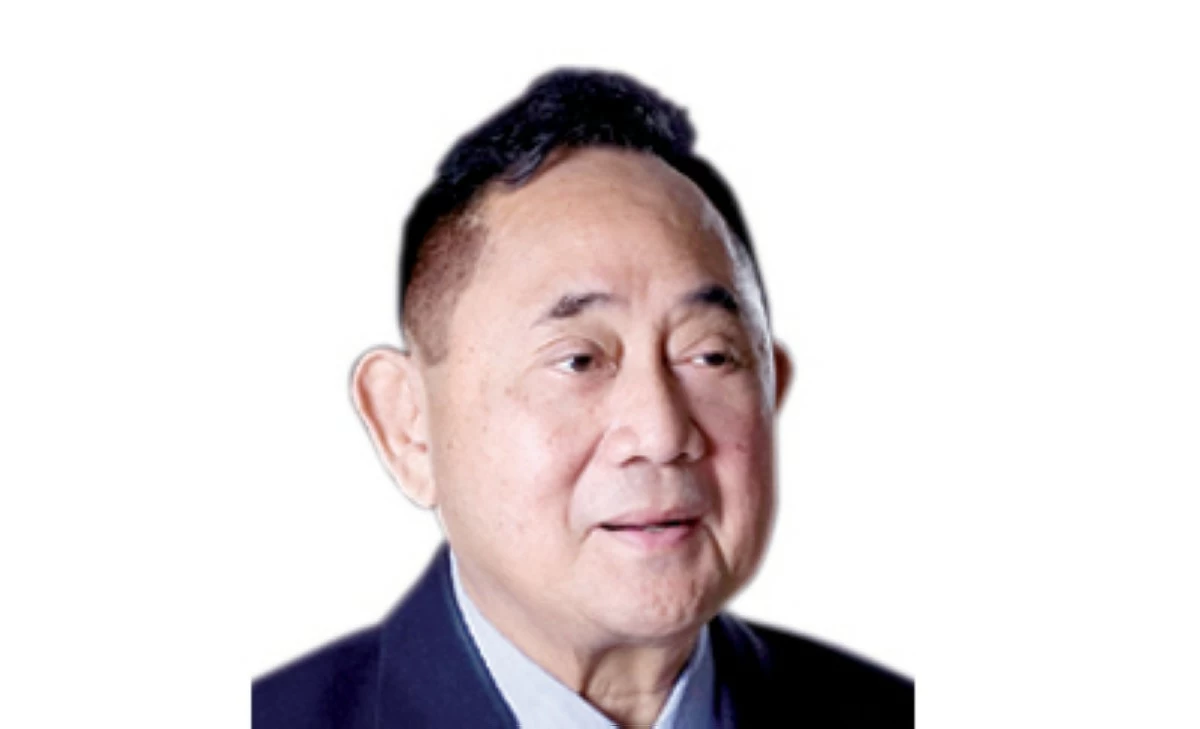
PEACE-MAKER
As the nation once again finds itself in a season of political anticipation and renewed debate on leadership and governance, we find it timely to revisit a column we first wrote in June last year, “Titans of the House.” The memories it holds have grown even more vivid now, as we recall that on Nov. 11, 1969 — 56 years ago — we were first elected to public office as a young congressman from the then second district of Pangasinan. We were only 32 years old, full of youthful optimism, conviction, and the boundless belief that politics, at its best, could still be a noble calling.
We had just returned home after serving from 1966 to 1969 as presidential assistant, economic minister, and press counselor at the Philippine Embassy in Saigon (now Ho Chi Minh City). The Vietnam War was at its height, and the lessons we learned there about diplomacy, willpower, and compromise became lifelong guides as we entered the turbulent arena of Philippine politics.
When we took our oath as a member of the Seventh Congress (1969–1972), we were surrounded by some of the brightest minds and fiercest patriots of our time. Among our colleagues were Nicanor Yniguez of Southern Leyte and Ramon Mitra of Palawan, who would both later rise to become Speakers of the House; Jose Zulueta of Iloilo and Neptali Gonzales Sr. of Rizal, who would go on to lead the Senate; and notable figures such as Roque Ablan, Floro Crisologo, Rodolfo Albano, Eduardo “Danding” Cojuangco, Raul Daza, Justiniano Montano, John Osmeña, and Salipada Pendatun, many of whom would later serve as senators and national leaders.
That Congress opened in the shadow of political rivalry and the dawn of change. The battle for the Speakership then was not just a contest of numbers, it was a clash of intellect, character, and legacy between two titans—Jose B. Laurel Jr. of Batangas and Cornelio “Kune” Villareal of Capiz. Both men had previously held the gavel and both carried the wisdom and weariness of years spent in the rough-and-tumble of public life.
We were still under a two-party system then, the Nacionalista and the Liberal parties. Laurel, of the Nacionalistas, was the son of President Jose P. Laurel and a statesman of quiet dignity and discipline. Villareal, of the Liberals, had the flair and charm of an old-school parliamentarian. Their rivalry had deep roots. Laurel unseated Villareal as Speaker in 1967 after losing to him in 1965, only for Villareal to reclaim the Speakership again in 1971. It was politics at its most dramatic and dynamic, where friendships were tested, alliances shifted, and conviction was measured not by rhetoric but by endurance.
Cornelio Villareal, whom we fondly called Manong Kune, was more than a colleague to us. We served as his chief political adviser in 1962, long before we would later sit side by side as congressmen in 1969 and again in 1987. A delegate to the 1935 Constitutional Convention and one of the longest-serving members of the House, Villareal embodied the rare blend of experience, humility, and humanity. He was a master negotiator who believed in finding common ground amid deep divides, a lesson our current leaders could well learn from.
Jose B. Laurel Jr., on the other hand, represented a tradition of intellectual rigor and moral steadfastness. He was a scholar, a constitutionalist, and a man who never allowed defeat to dull his sense of purpose. He later helped craft the 1987 Constitution, a document that continues to define the spirit of our democracy today.
The Seventh Congress came to an end with the declaration of Martial Law on Sept. 21, 1972, the very day it adjourned. What began as a season of spirited debate and reform gave way to a time of national transition and introspection.
Looking back now, as our nation once again navigates uncertainty, we realize how deeply those early years shaped our own journey. The faces and voices of our colleagues from 1969 remind us that leadership is not about ambition or survival, it is about purpose and faith in the Filipino people.
The politics of 1969 may seem far away, but its echoes are alive in every election that follows. For it was then that we first understood that while power is fleeting, legacy endures. And though the names and parties change with time, the dream that first inspired a young man from Pangasinan to serve his country remains the same—the dream of a Philippines united in vision, justice, and hope.