







When power finally reaches far-flung communities
Davao Light, through the Sitio Electrification Program, lights up Davao's remote villages, turning daily struggles into stories of opportunity and development
Published Nov 8, 2025 08:22 pm


At A Glance
- Davao Light has energized more than 200 remote communities, with only a handful of sitios left before its service area reaches full electrification.
- The stable power supply allows MSMEs to operate crucial electric-powered equipment such as refrigerators, production machines, and lighting systems, ensuring continuous business operations and product quality.
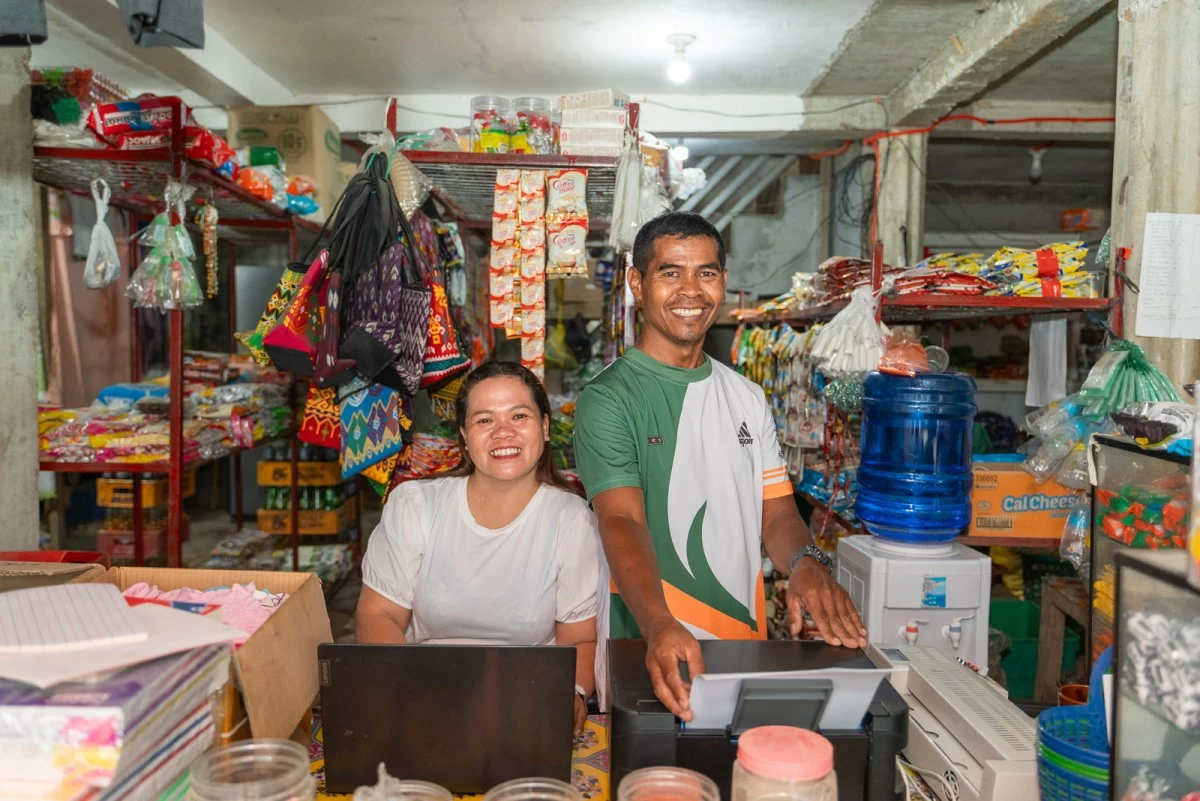
Mary Jane and Boyet Sampiano own a small sari-sari store that grew modestly over the years, now offering piso WiFi and laminating, printing, and photocopying services after the sitio electrification program reached their barangay.
Life without electricity moves on a different clock. In many far-flung barangays in the Philippines, night still comes too soon. Before dusk settles in, communities dim quickly and quietly so children must rush to finish their homework. Stores close early to save on costly generator fuel, and families prepare supper by the weak light of a kerosene lamp. For them, every watt is rationed and every drop of fuel is measured with care.
According to the Department of Energy, over 1.5 million Filipino households remain without electricity as of the latest report early this year. To bridge this divide, the government launched the Sitio Electrification Program (SEP), a national effort to bring the grid to remote communities that are usually the last to receive electricity.
Among those taking the lead is Davao Light and Power Company, an AboitizPower distribution utility serving Davao City and its neighboring areas. Through SEP, Davao Light has energized more than 200 remote communities, with only a handful of sitios left before its service area reaches full electrification. Barangay-level coverage is now at 100 percent, while household electrification stands at 97.61 percent.
Powering and empowering communities
Statistics only tell part of the story. What truly matters is how electricity turns a corner store into a thriving business or a classroom into a space of comfort and possibilities. AboitizPower’s Davao Light has seen changes unfold in its host communities. For families, it has replaced dangerous and dim gas lamps with electric lighting that enables children to study effectively even at night. Beyond that, this support contributes to lower operational expenses and higher profitability for Micro, Small, and Medium Enterprises (MSMEs).
The stable power supply allows MSMEs to operate crucial electric-powered equipment such as refrigerators, production machines, and lighting systems, ensuring continuous business operations and product quality. In 2017, before their community in Sitio Kiman-anao, Barangay Salapawan was electrified, couple Mary Jane and Boyet Sampiano managed a small sari-sari store that earned them less than a hundred pesos a day, relying mostly on flashlights and solar power. After they were relocated, the business grew modestly, and the couple hired their first employee through the compensation that came with the relocation. However, they had to use a power generator, which resulted in a daily fuel cost of ₱325, squeezing their already thin earnings.
After connecting to the grid in February 2025, the power consumption and cost in the sari-sari store improved, further sprucing up the store with electric lights and fans, mobile phones, CCTVs, a refrigerator, a laminating machine, and a printer with a photocopier. This has allowed them to generate around ₱1,000 to ₱2,000 from selling soft drinks and other services like piso WiFi, GCash money transfers, laminating, printing, and photocopying.
For Socorro “Korina” and husband Jojo Masanegra, their private vacation house in Sitio Katandungan, Barangay Baganihan was eventually opened for business in 2021. However, an expensive, unstable power supply stunted its growth. For two years, they depended on a noisy, costly generator that required long trips for fuel, as well as solar panels that failed in foggy weather. Their situation changed in 2023 when Davao Light connected their barangay to the grid. Now having stable electricity, the Masanegras expanded the resort by adding a larger swimming pool and new accommodations, which reduced their operational costs and doubled their income.

Couple Jojo and Socorro “Korina” Masanegra saw their energy costs come down after Davao Light connected their resort to the grid in 2023, enabling them to also expand its accommodations and amenities.
In 2022, Vincent Clark Canlas had a vision of setting up a restaurant in Barangay Baganihan, Davao City. But it was initially blocked by the lack of a grid connection in the Marilog district. It was in April 2023 when this dream finally became a reality after the SEP reached their barangay. The Retro was then born in March 2024, where he serves as owner and executive chef. The restaurant now supports the community by employing ten residents and individuals from Davao City.
Beyond commerce: uplifting education, health, and safety
More than just fostering commerce and jobs, the SEP significantly improves key social areas, including education, health, and peace and order. The program enables local health centers to function efficiently and provides essential lighting for students to learn, directly uplifting the community's social well-being.
In a study by the University of the Philippines Center for Integrative and Development Studies, elementary schools that have enough power supply were found to perform 12 percent better on average in the National Achievement Test compared to unenergized schools. The study also explained that providing electricity in schools provides both direct and indirect benefits, such as improved learning environment through better lighting and access to vital, modern equipment like laptops and projectors. Furthermore, electrified schools in the Philippines attract more teachers, enhancing the quality of teaching and the standard of education.
Enough electricity also lowers the exposure to polluting devices and fuels like kerosene. Kerosene lamps have very high levels of fine particulate matter, and households that lack access to electricity are forced to rely on this, making them vulnerable to respiratory illnesses and indoor air pollution.
Peace and order are also maintained in Barangay Lumiad in Paquibato, Davao City, where crime rates are at an all-time low. In 2023, the Lumiad Barangay Council submitted the resolution for electrification for the remaining nine sitios that have had no access to electricity since the 1990s. The SEP extended the electrification by lighting up the streetlights for the community, where the youth and older residents now enjoy evening games and sports, immensely lowering their crime rates.
These are just a few of the stories now taking shape across Davao’s once off-grid communities. Through the Sitio Electrification Program, the partnership between the national government and distribution utilities like AboitizPower’s Davao Light has brought electricity to places long left in the dark. It shows that where electricity flows, transformation follows, empowering homes and an entire community.
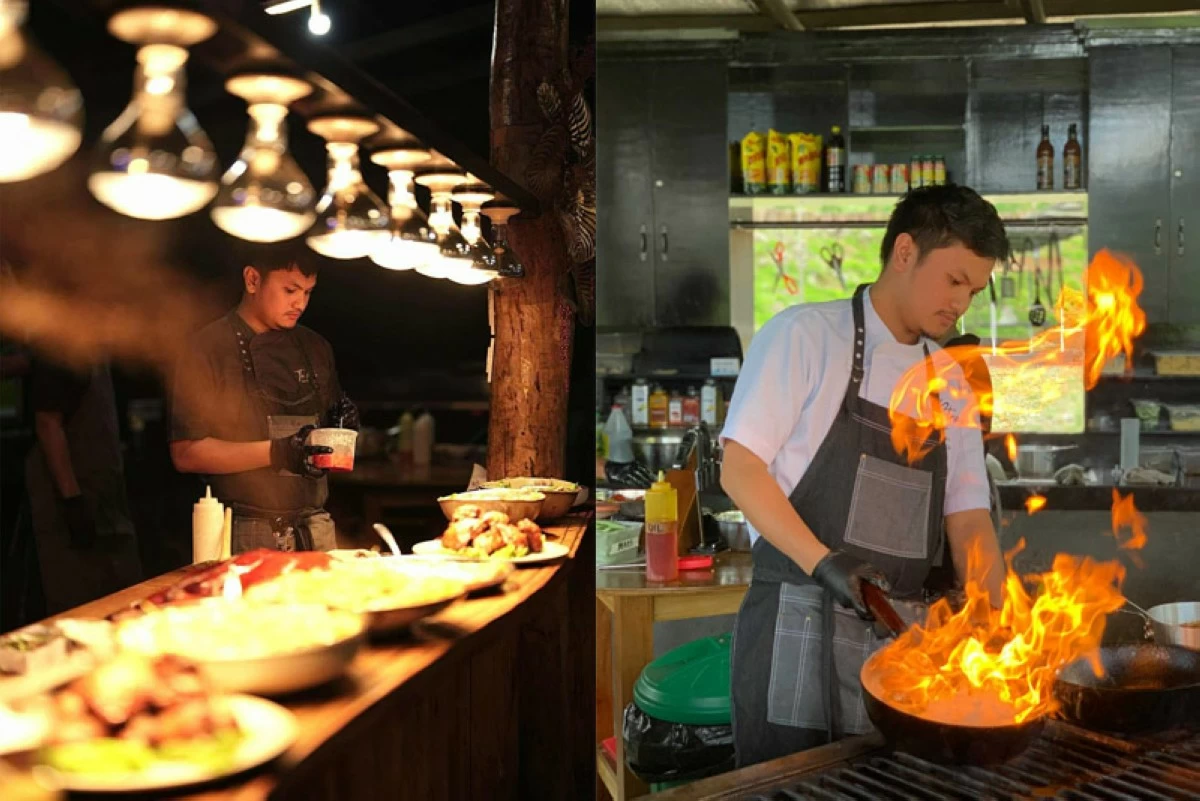
The Retro, a restaurant in Barangay Baganihan, came to life after Vincent Clark Canlas was assured that there would be access to electricity in the area via Davao Light and the sitio electrification program.