ADVERTISEMENT

Poor land use planning, slope development aggravate flooding in Cebu — DENR

Published Nov 8, 2025 12:11 pm
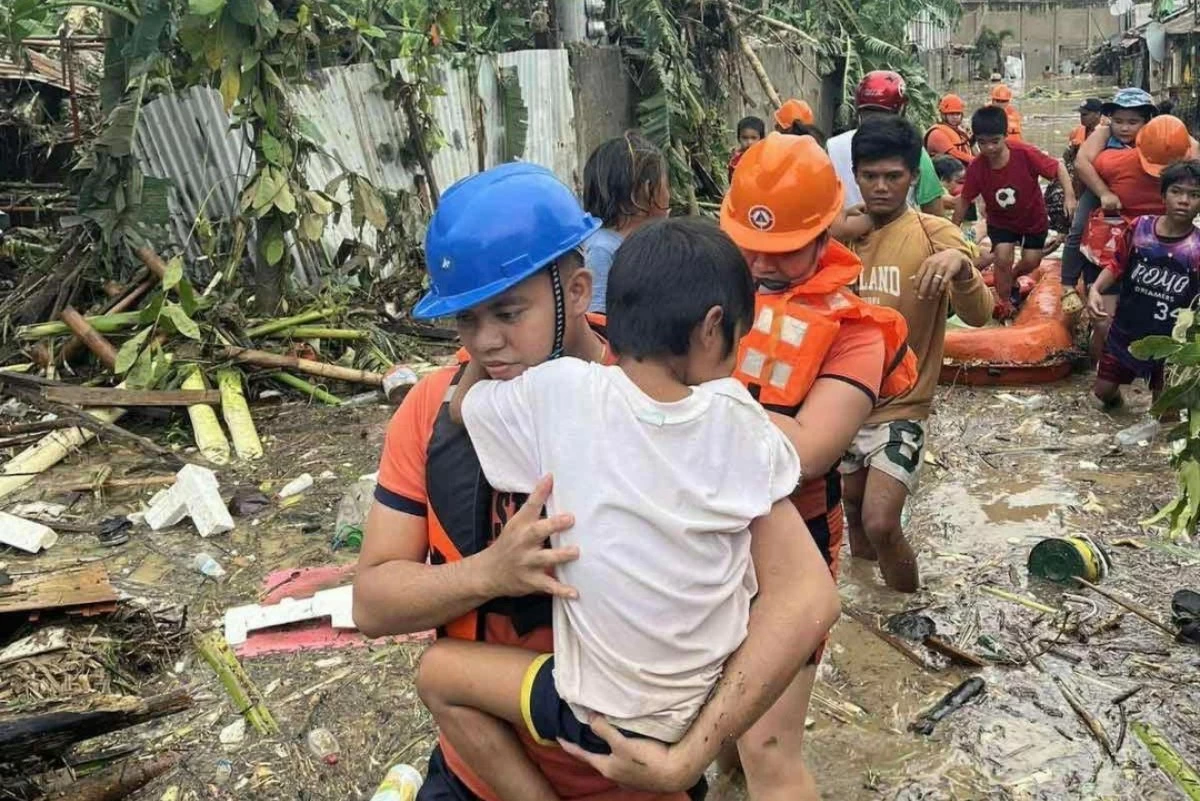
(PHOTO: PCG)
(PHOTO: PCG)
Constructing structures that alter the natural environment inevitably produces consequences, an official of the Department of Environment and Natural Resources (DENR) said as he emphasized that  poor land-use planning and slope developments have aggravated flooding in Cebu following Typhoon “Tino.”
“It would have definitely help some but it’s not the only solution that is required,” DENR Undersecretary Carlos Primo David for Integrated Environmental Science said in a television interview when asked if desilting the Mananga River would have reduced the flooding.
“I think, as mentioned earlier, when we place structures and this is a I keep on harping on this, when we place structures on the natural environment, there are consequences. There are advantages but you also generate disadvantages.”
David explained that every time waterways are diverted or blocked, flooding is merely transferred from one area to another instead of being prevented altogether.
“Case and point, every time that you constrict, divert, block or alter the natural course of a water way a river, for example, you are probably protecting the adjacent community from flooding, but you are simply translocating the problem elsewhere,” he said.
“The water will not disappear just because there’s a wall there it will go down and in places where it’s low lying, where there are no dikes, where people are living closer to the river that is were the disaster occur and this is precisely what we are seeing in Cebu,” he went on.
Meanwhile, the undersecretary said the DENR has launched an investigation into slope developments in Cebu, including the controversial Monterrazas project, following reports of soil erosion and runoff contributing to flooding.
“Nako, I can’t give a a lot of details, but an investigation is being led by the DENR Region 7 which is in Cebu and it’s not only that development that we are looking at but all other similar types of development,” he said. 
“We launched it already and there is an initial report that came to the central office in DENR already but rest assure that this is not that development but more comprehensive assessment of the area.”
Also, the DENR official stressed that the issue involves local governments’ land-use planning.
“Nako, natumbok mo ‘yung isang problema (Oh, you hit the nail on the head about one of the problems) which will involve the LGUs and this is the proper land use planning. We can only do so much in terms of reforestation and that is a I guess maybe a failure of the DENR, kasi kulang ‘yung reforestation efforts natin (because our reforestation efforts are lacking), but the land use planning through the LGU is so critical simply because there are areas that are naturally going to be flooded when extreme events happen like… like in the case of Typhoon Tino, hindi talaga ‘yan maiiwasan,” he said.
According to David, while some developments may have secured Environmental Compliance Certificates (ECCs), the DENR will verify if these projects complied with all conditions specified in their permits.
“There are conditions in the ECC and this is actually we will be checking noh if these conditions were met,” he said. 
“We allow development and the development is definitely not… not bad no we can’t… protect the entire area that… to have nature be intact because development is also important, but we have to balance this in terms of hazards, in terms of environmental protection social equity and so on and these are the things that we will be investigating.”
David added that in light of recent disasters, both national and local governments must work together toward sustainable flood management.
“I hate to be sound like an expert after the fact. But I think we had so many experiences no similar to this that which is have to learn. Ito may bagong bagyo (Now there’s a new typhoon), hopefully we learned our lesson already,” he said.
ADVERTISEMENT
.most-popular .layout-ratio{ padding-bottom: 79.13%; } @media (min-width: 768px) and (max-width: 1024px) { .widget-title { font-size: 15px !important; } }

{{ articles_filter_1561_widget.title }}

.most-popular .layout-ratio{ padding-bottom: 79.13%; } @media (min-width: 768px) and (max-width: 1024px) { .widget-title { font-size: 15px !important; } }

{{ articles_filter_1562_widget.title }}

.most-popular .layout-ratio{ padding-bottom: 79.13%; } @media (min-width: 768px) and (max-width: 1024px) { .widget-title { font-size: 15px !important; } }

{{ articles_filter_1563_widget.title }}

{{ articles_filter_1564_widget.title }}

.mb-article-details { position: relative; } .mb-article-details .article-body-preview, .mb-article-details .article-body-summary{ font-size: 17px; line-height: 30px; font-family: "Libre Caslon Text", serif; color: #000; } .mb-article-details .article-body-preview iframe , .mb-article-details .article-body-summary iframe{ width: 100%; margin: auto; } .read-more-background { background: linear-gradient(180deg, color(display-p3 1.000 1.000 1.000 / 0) 13.75%, color(display-p3 1.000 1.000 1.000 / 0.8) 30.79%, color(display-p3 1.000 1.000 1.000) 72.5%); position: absolute; height: 200px; width: 100%; bottom: 0; display: flex; justify-content: center; align-items: center; padding: 0; } .read-more-background a{ color: #000; } .read-more-btn { padding: 17px 45px; font-family: Inter; font-weight: 700; font-size: 18px; line-height: 16px; text-align: center; vertical-align: middle; border: 1px solid black; background-color: white; } .hidden { display: none; }
function initializeAllSwipers() { // Get all hidden inputs with cms_article_id document.querySelectorAll('[id^="cms_article_id_"]').forEach(function (input) { const cmsArticleId = input.value; const articleSelector = '#article-' + cmsArticleId + ' .body_images'; const swiperElement = document.querySelector(articleSelector); if (swiperElement && !swiperElement.classList.contains('swiper-initialized')) { new Swiper(articleSelector, { loop: true, pagination: false, navigation: { nextEl: '#article-' + cmsArticleId + ' .swiper-button-next', prevEl: '#article-' + cmsArticleId + ' .swiper-button-prev', }, }); } }); } setTimeout(initializeAllSwipers, 3000); const intersectionObserver = new IntersectionObserver( (entries) => { entries.forEach((entry) => { if (entry.isIntersecting) { const newUrl = entry.target.getAttribute("data-url"); if (newUrl) { history.pushState(null, null, newUrl); let article = entry.target; // Extract metadata const author = article.querySelector('.author-section').textContent.replace('By', '').trim(); const section = article.querySelector('.section-info ').textContent.replace(' ', ' '); const title = article.querySelector('.article-title h1').textContent; // Parse URL for Chartbeat path format const parsedUrl = new URL(newUrl, window.location.origin); const cleanUrl = parsedUrl.host + parsedUrl.pathname; // Update Chartbeat configuration if (typeof window._sf_async_config !== 'undefined') { window._sf_async_config.path = cleanUrl; window._sf_async_config.sections = section; window._sf_async_config.authors = author; } // Track virtual page view with Chartbeat if (typeof pSUPERFLY !== 'undefined' && typeof pSUPERFLY.virtualPage === 'function') { try { pSUPERFLY.virtualPage({ path: cleanUrl, title: title, sections: section, authors: author }); } catch (error) { console.error('ping error', error); } } // Optional: Update document title if (title && title !== document.title) { document.title = title; } } } }); }, { threshold: 0.1 } ); function showArticleBody(button) { const article = button.closest("article"); const summary = article.querySelector(".article-body-summary"); const body = article.querySelector(".article-body-preview"); const readMoreSection = article.querySelector(".read-more-background"); // Hide summary and read-more section summary.style.display = "none"; readMoreSection.style.display = "none"; // Show the full article body body.classList.remove("hidden"); } document.addEventListener("DOMContentLoaded", () => { let loadCount = 0; // Track how many times articles are loaded const offset = [1, 2, 3, 4, 5, 6, 7, 8, 9, 10]; // Offset values const currentUrl = window.location.pathname.substring(1); let isLoading = false; // Prevent multiple calls if (!currentUrl) { console.log("Current URL is invalid."); return; } const sentinel = document.getElementById("load-more-sentinel"); if (!sentinel) { console.log("Sentinel element not found."); return; } function isSentinelVisible() { const rect = sentinel.getBoundingClientRect(); return ( rect.top < window.innerHeight && rect.bottom >= 0 ); } function onScroll() { if (isLoading) return; if (isSentinelVisible()) { if (loadCount >= offset.length) { console.log("Maximum load attempts reached."); window.removeEventListener("scroll", onScroll); return; } isLoading = true; const currentOffset = offset[loadCount]; window.loadMoreItems().then(() => { let article = document.querySelector('#widget_1690 > div:nth-last-of-type(2) article'); intersectionObserver.observe(article) loadCount++; }).catch(error => { console.error("Error loading more items:", error); }).finally(() => { isLoading = false; }); } } window.addEventListener("scroll", onScroll); });

Sign up by email to receive news.