

ADVERTISEMENT

For high-tech defense: House prodded to pass proposed P10-B drone program

Published Nov 8, 2025 03:01 pm

At A Glance

  • The House of Representatives can help hasten the Armed Forces of the Philippines (AFP) and Philippine National Police's (PNP) plans to modernize their technology-driven crisis-response and defense capabilities by legislating a P10-billion unmanned aerial systems (UAS) program.
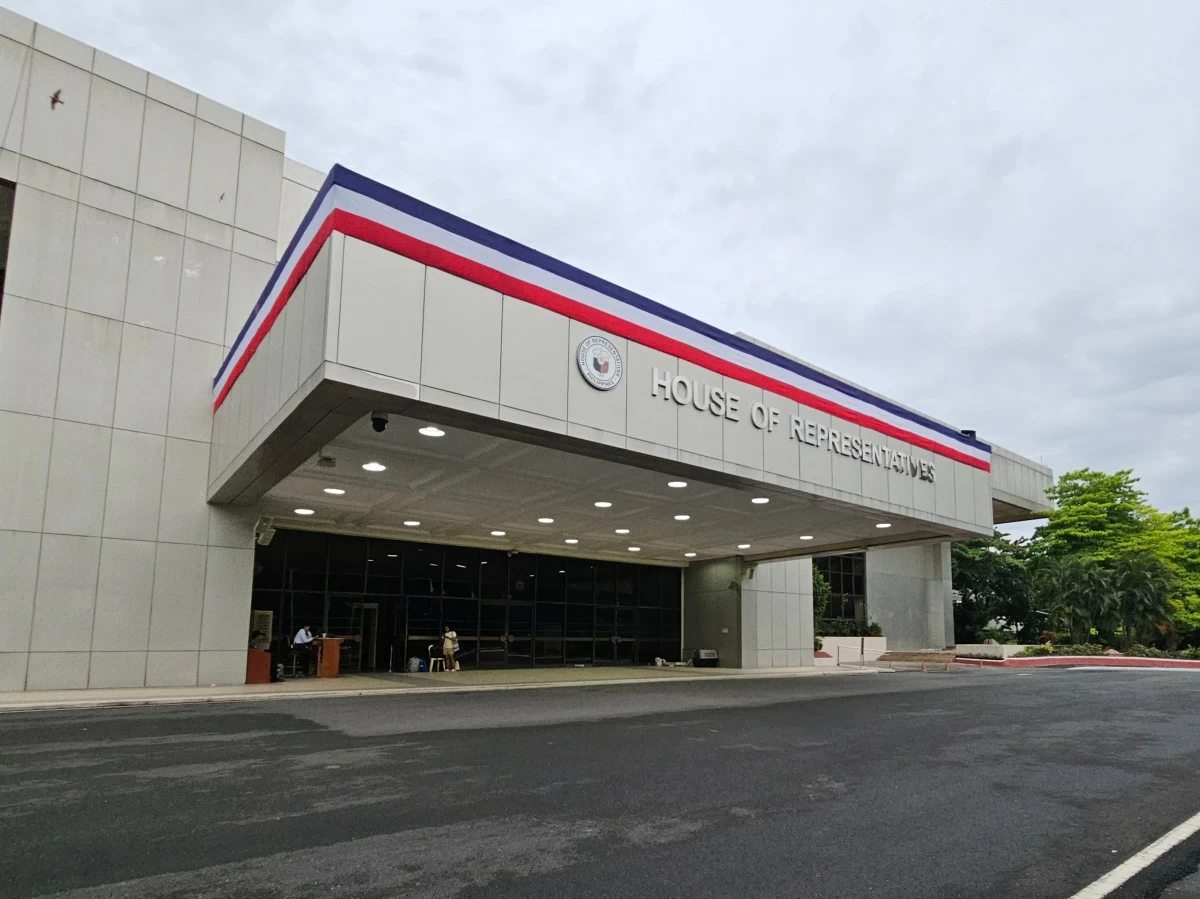
The House of Representatives (Ellson Quismorio/ MANILA BULLETIN)


The House of Representatives can help hasten the Armed Forces of the Philippines (AFP) and Philippine National Police's (PNP) plans to modernize their technology-driven crisis-response and defense capabilities by legislating a P10-billion unmanned aerial systems (UAS) program.
Camarines Sur 2nd district Rep. Luigi Villafuerte said this program on UAS or drones has acquired greater urgency after Department on National Defense (DND) Secretary Gilberto Teodoro and PNP Acting Chief Lt. Gen. Jose Melencio Nartatez, Jr. separately cited in October the need for the respective tech-driven modernization of the AFP and the PNP, including the acquisition—and eventual development of our own—airborne and land-based drone and counter-drone systems.
Villafuerte says that UAS aren't just useful security matters like fighting terrorism, insurgency and other crimes; they are also essential equipment for disaster response, environmental protection, and border patrol and search-and-rescue missions.
The former Camarines Sur governor has also proposed the complementary Philippine Unmanned Aerial System Program (PUASP) and Strategic Defense Technology Transfer Program (SDTTP) for “the acquisition of surveillance, reconnaissance, combat, disaster-response and medical evacuation (medevac) drones, and the establishment of an R&D  (research and development) program to enable the Philippines to build its own UAS in the long run".
“Our military, defense and police establishments should have the wherewithal to acquire, deploy and integrate—and later on build our own— UAVs or drones, to strengthen the combat, surveillance, medivac, patrol and disaster response, among others, of our military and police forces,” said Villafuerte, who principally authored House Bill (HB) No. 1362 creating the PUASP and the SDTTP.
Otherwise known as the “National Defense Drone Act,” HB No.1362 seeks the establishment of the PUASP to oversee the acquisition of drones, deployment of such unmanned vehicles, inter-agency usage protocols, data security compliance and training of drone operators and technicians.
By way of the PUASP, Villafuerte likewise wants the military to pursue R&D (research and development) activities with local universities and colleges as well as tech start-ups to spur the local manufacture and maintenance of drones.
Also,  HB No.1362 proposes the establishment of the SDTTP, as a complement to the PUASP, to provide tax incentives to the private sector to engage in drone development, as a way to encourage local innovation and reduce long-term costs for this drone acquisition program.
Drones are unmanned aircraft that are operated remotely by pilots from a well calculated distance to oversee a wide range of landscape, seascape, riverscape and cityscape, among others, for purposes of aerial photography and aerial videography, surveillance and security, search and rescue, delivery of goods and services, monitoring of climate change and other environmental changes, and military operations. 
The bill proposes an initial amount of P10 billion for the implementation of both PUASP and SDTTP, to be sourced from the national budget and/or AFP modernization fund, and subsequently, with additional funding through the annual General Appropriations Act (GAA) written yearly by the Congress.
Villafuerte sought the prompt legislative approval of HB No.1362 after Teodoro stressed in his keynote speech at the Philippine Navy Drone Warfare Summit 2025 at the Subic Freeport late last month the importance for an archipelagic country like the Philippines to develop and integrate unmanned systems, as a way to leverage emerging technologies to strengthen its domestic and external defense capabilities.
“In times of crisis or conflict, dependence on foreign sources for critical defense equipment can limit our ability to act swiftly and independently,” Teodoro said, in a speech read for him at the three-day Subic event by retired general and Assistant Secretary Augusto Gaite  for defense technology and research industry.
The defense secretary said the Philippines was fast-tracking efforts to develop a manufacturing ecosystem for UAS, a capability that levelled the playing field for countries facing adversaries with better military power.
ADVERTISEMENT
.most-popular .layout-ratio{ padding-bottom: 79.13%; } @media (min-width: 768px) and (max-width: 1024px) { .widget-title { font-size: 15px !important; } }

{{ articles_filter_1561_widget.title }}

.most-popular .layout-ratio{ padding-bottom: 79.13%; } @media (min-width: 768px) and (max-width: 1024px) { .widget-title { font-size: 15px !important; } }

{{ articles_filter_1562_widget.title }}

.most-popular .layout-ratio{ padding-bottom: 79.13%; } @media (min-width: 768px) and (max-width: 1024px) { .widget-title { font-size: 15px !important; } }

{{ articles_filter_1563_widget.title }}

{{ articles_filter_1564_widget.title }}

.mb-article-details { position: relative; } .mb-article-details .article-body-preview, .mb-article-details .article-body-summary{ font-size: 17px; line-height: 30px; font-family: "Libre Caslon Text", serif; color: #000; } .mb-article-details .article-body-preview iframe , .mb-article-details .article-body-summary iframe{ width: 100%; margin: auto; } .read-more-background { background: linear-gradient(180deg, color(display-p3 1.000 1.000 1.000 / 0) 13.75%, color(display-p3 1.000 1.000 1.000 / 0.8) 30.79%, color(display-p3 1.000 1.000 1.000) 72.5%); position: absolute; height: 200px; width: 100%; bottom: 0; display: flex; justify-content: center; align-items: center; padding: 0; } .read-more-background a{ color: #000; } .read-more-btn { padding: 17px 45px; font-family: Inter; font-weight: 700; font-size: 18px; line-height: 16px; text-align: center; vertical-align: middle; border: 1px solid black; background-color: white; } .hidden { display: none; }
function initializeAllSwipers() { // Get all hidden inputs with cms_article_id document.querySelectorAll('[id^="cms_article_id_"]').forEach(function (input) { const cmsArticleId = input.value; const articleSelector = '#article-' + cmsArticleId + ' .body_images'; const swiperElement = document.querySelector(articleSelector); if (swiperElement && !swiperElement.classList.contains('swiper-initialized')) { new Swiper(articleSelector, { loop: true, pagination: false, navigation: { nextEl: '#article-' + cmsArticleId + ' .swiper-button-next', prevEl: '#article-' + cmsArticleId + ' .swiper-button-prev', }, }); } }); } setTimeout(initializeAllSwipers, 3000); const intersectionObserver = new IntersectionObserver( (entries) => { entries.forEach((entry) => { if (entry.isIntersecting) { const newUrl = entry.target.getAttribute("data-url"); if (newUrl) { history.pushState(null, null, newUrl); let article = entry.target; // Extract metadata const author = article.querySelector('.author-section').textContent.replace('By', '').trim(); const section = article.querySelector('.section-info ').textContent.replace(' ', ' '); const title = article.querySelector('.article-title h1').textContent; // Parse URL for Chartbeat path format const parsedUrl = new URL(newUrl, window.location.origin); const cleanUrl = parsedUrl.host + parsedUrl.pathname; // Update Chartbeat configuration if (typeof window._sf_async_config !== 'undefined') { window._sf_async_config.path = cleanUrl; window._sf_async_config.sections = section; window._sf_async_config.authors = author; } // Track virtual page view with Chartbeat if (typeof pSUPERFLY !== 'undefined' && typeof pSUPERFLY.virtualPage === 'function') { try { pSUPERFLY.virtualPage({ path: cleanUrl, title: title, sections: section, authors: author }); } catch (error) { console.error('ping error', error); } } // Optional: Update document title if (title && title !== document.title) { document.title = title; } } } }); }, { threshold: 0.1 } ); function showArticleBody(button) { const article = button.closest("article"); const summary = article.querySelector(".article-body-summary"); const body = article.querySelector(".article-body-preview"); const readMoreSection = article.querySelector(".read-more-background"); // Hide summary and read-more section summary.style.display = "none"; readMoreSection.style.display = "none"; // Show the full article body body.classList.remove("hidden"); } document.addEventListener("DOMContentLoaded", () => { let loadCount = 0; // Track how many times articles are loaded const offset = [1, 2, 3, 4, 5, 6, 7, 8, 9, 10]; // Offset values const currentUrl = window.location.pathname.substring(1); let isLoading = false; // Prevent multiple calls if (!currentUrl) { console.log("Current URL is invalid."); return; } const sentinel = document.getElementById("load-more-sentinel"); if (!sentinel) { console.log("Sentinel element not found."); return; } function isSentinelVisible() { const rect = sentinel.getBoundingClientRect(); return ( rect.top < window.innerHeight && rect.bottom >= 0 ); } function onScroll() { if (isLoading) return; if (isSentinelVisible()) { if (loadCount >= offset.length) { console.log("Maximum load attempts reached."); window.removeEventListener("scroll", onScroll); return; } isLoading = true; const currentOffset = offset[loadCount]; window.loadMoreItems().then(() => { let article = document.querySelector('#widget_1690 > div:nth-last-of-type(2) article'); intersectionObserver.observe(article) loadCount++; }).catch(error => { console.error("Error loading more items:", error); }).finally(() => { isLoading = false; }); } } window.addEventListener("scroll", onScroll); });

Sign up by email to receive news.