







When waste becomes wealth
In the race toward a low-carbon future, the circular economy is no longer an environmental idea but an economic imperative.
Published Nov 7, 2025 02:55 pm


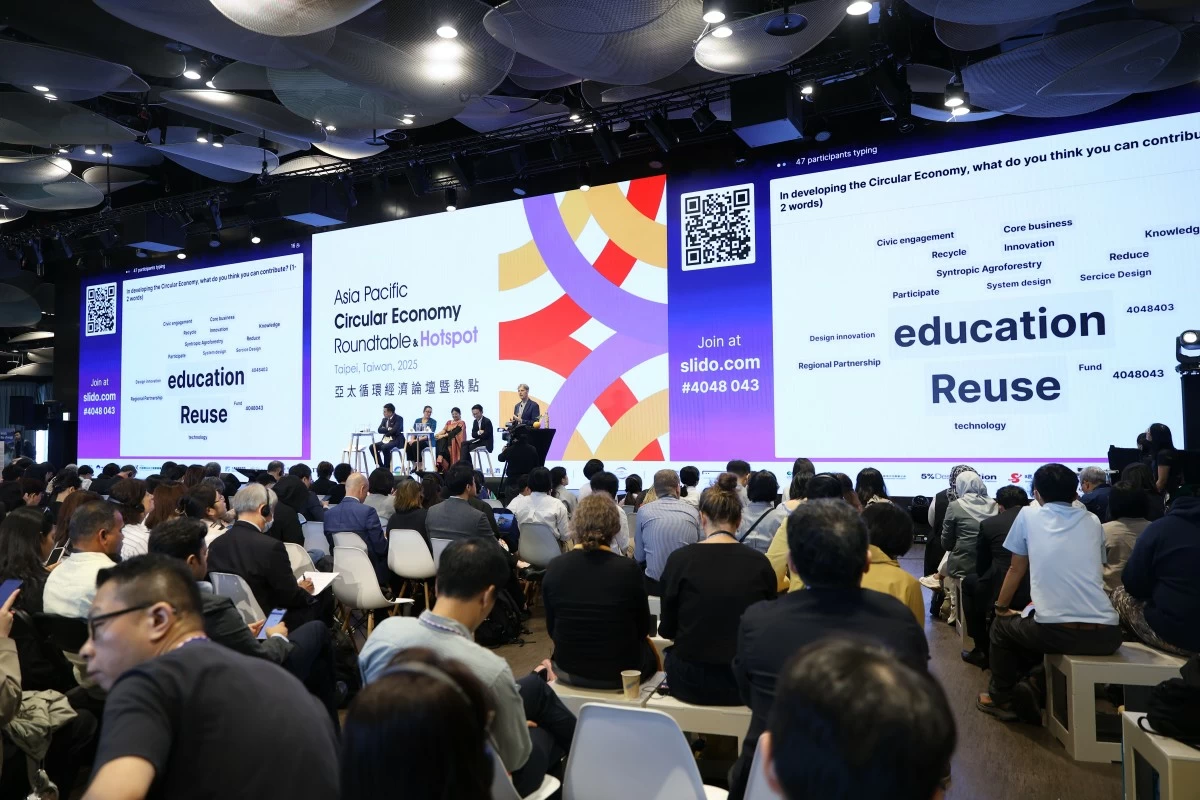
APCER Conference in Taiwan
In a conference with over 500 circular economy experts, many were baffled and unable to identify a shampoo sachet. Yes, the plastic sachet that any Filipino would recognize. After all, 164 million of them are used every single day in the Philippines.
Anna Reyes, my co-founder and executive director at Sustina, brought a plastic sachet to display during her talk for the “Asia’s Voices” session of the Asia Pacific Circular Economy Roundtable & Hotspot (APCER) in Taiwan.
“Is that a free sample?” people asked. “No, this is the product,” Anna replied, to their disbelief.
Doing some quick math: The Philippines has more than 1,600 cities, over 7,000 islands, and only 237 landfills for millions of sachets. Upwards of $890 million is lost each year because recyclable plastic products are discarded in landfills rather than recycled.
During APCER, Taiwanese officials shared that in 2024, the green-technology industry in Taiwan contributed 2 percent of GDP, or approximately $15 billion in added value.
This isn’t just happening in Taiwan. In the Netherlands, the circular economy has contributed over 4 percent of GDP since 2020; a trend mirrored in Germany and Sweden.
“The circular economy is even more important for developing countries, like the Philippines, said Charles Huang, chairperson of the Circular Taiwan Network. “Yes, Taiwan became an ‘economic power.’ However, we [were] the victims of a lot of externalities. Manufacturing creates pollution in the water, the air, and soil. And who is paying for that? It's the people who live on this island. Who benefits from that? Maybe the Americans, Japanese, or Europeans who buy from us. This is very similar to what is happening, or could happen in the Philippines too.”
In the Philippines, plastic regulation remains in its infancy. The most significant policy we have is the Extended Producer Responsibility (EPR) Act of 2022, which places responsibility for a product's entire life cycle on its producers, making those who profit accountable for their waste.
There is still much to be cautious about. “Because there’s no fully integrated accountability system for financing, verifying, or ensuring incentives and repercussions, compliance can still happen only on paper, if it happens at all,” Anna said.
Only around 20 percent of companies complied with the EPR law in 2023. Last year, the number grew to roughly 44 percent.
In a call with Sandy Lin, board member of Da Fon Recycling, she shared that their company receives weekly visits from the Taiwanese government. These visits involve checking random waste bales to ensure all material is genuinely recycled from locally made products.
Da Fon also receives stipends from the government’s recycling fund. This fund is divided among certified processors, sorters, recyclers, and collectors; helping sustain the entire supply chain.
Sandy said that the majority of the company’s clients are still US and European producers based in Asia. “We're not saying that this will be forever the case because we believe that in the future, there will be localization; local waste used by local companies. However, at this time, not every country has the right EPR system to support the entire waste stream.”
When asked if Da Fon has any Philippines-based clients, she said there were—particularly global companies that manufacture in the Philippines but require recycled materials from certified suppliers.
(Imagine: At every turn, we are purchasing plastic, only to discard it.)
Sandy added that being a government-subsidized recycling plant has been incredibly important. “For a recycling company to scale, you'll need government support —unless you can establish a direct waste stream with your clients, such as enterprises or manufacturers.”
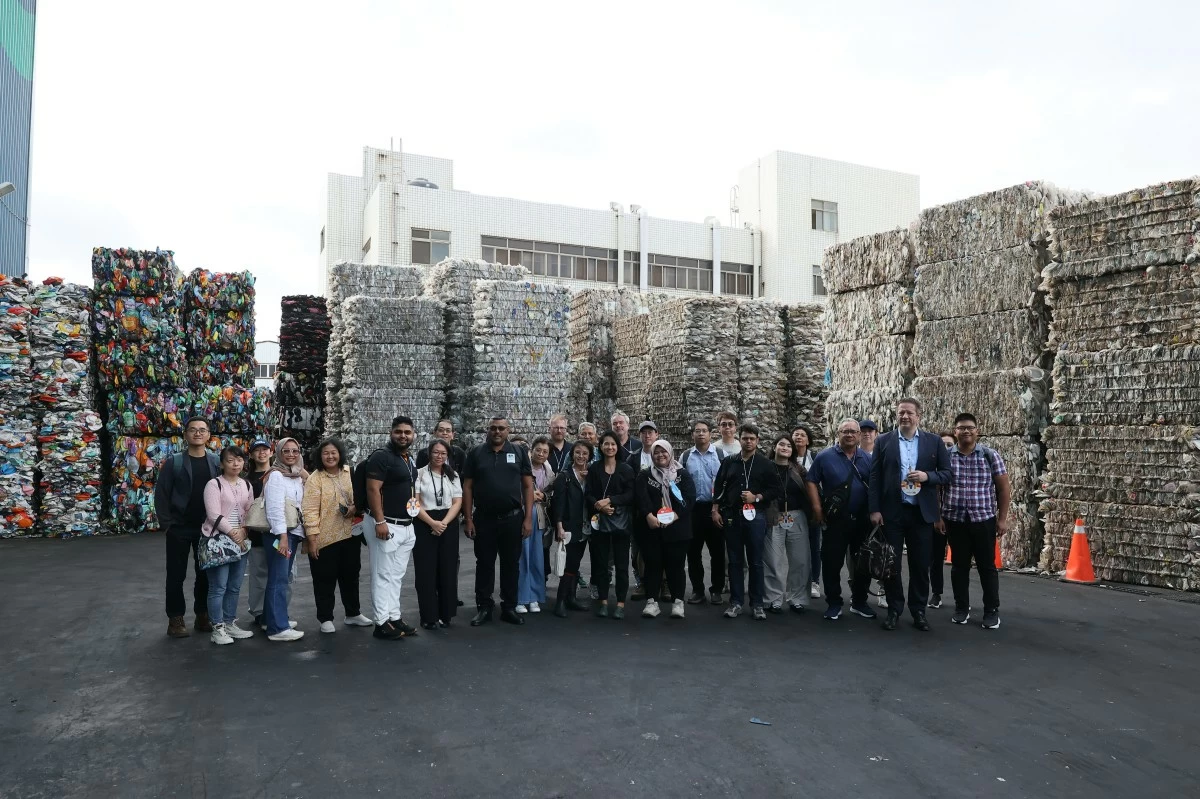
On the first day of APCER, participants from all over the world visited the sites of different circular initiatives. This was taken outside the Da Fon Recycling facility in Taichung, which mainly recycles plastic.

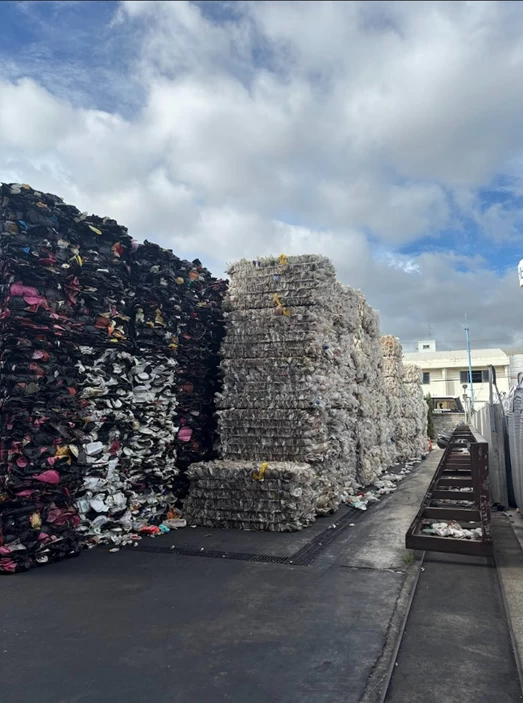
This systemic approach to integration becomes even clearer when we move beyond consumer plastics, into the high-stakes sector of electronics.
E&E Recycling is the living embodiment of Taiwan's EPR law in action, founded not by activists but by 12 major appliance manufacturers in direct response to that policy.
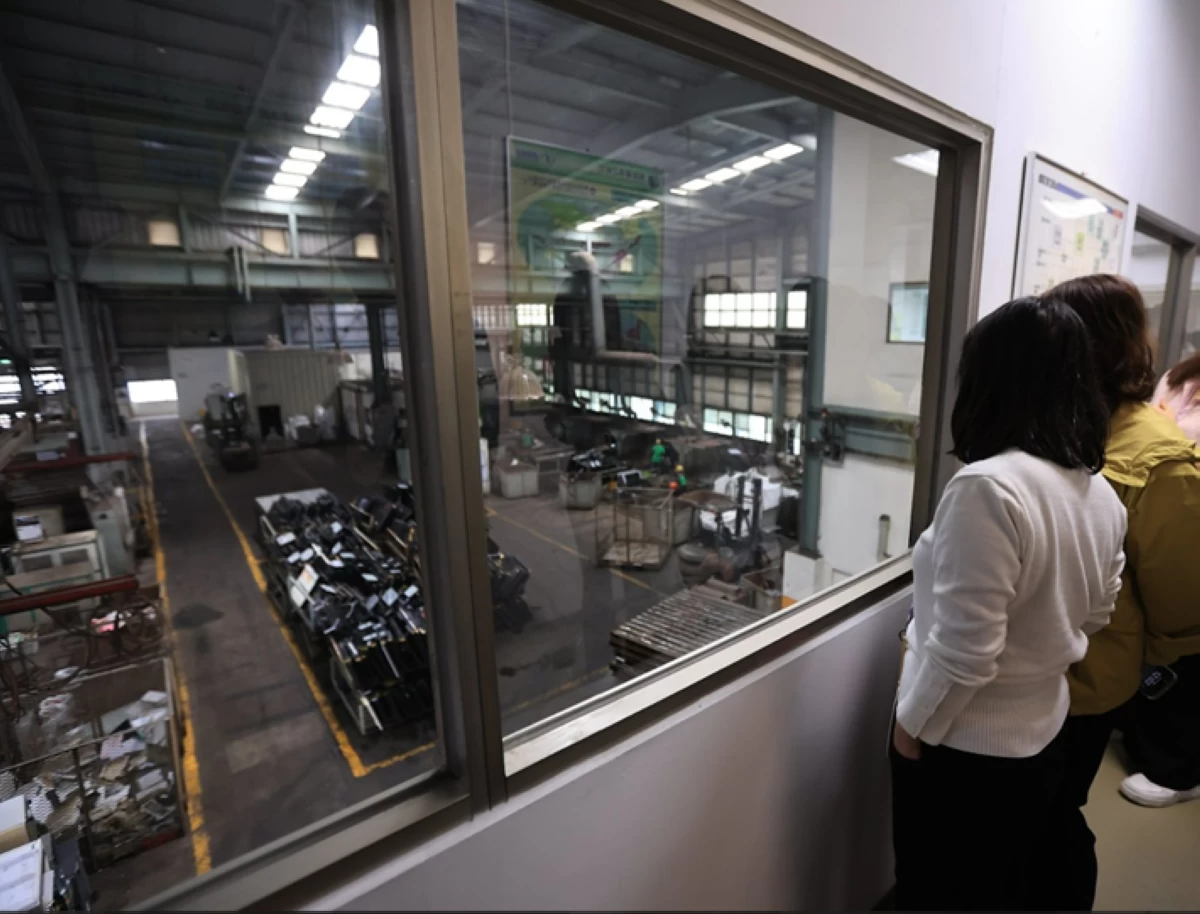
Part of the sorting and dismantling line for discarded televisions at E&E Recycling. These televisions are sorted and recycled into five raw materials: glass, plastic, iron, copper, and aluminum.
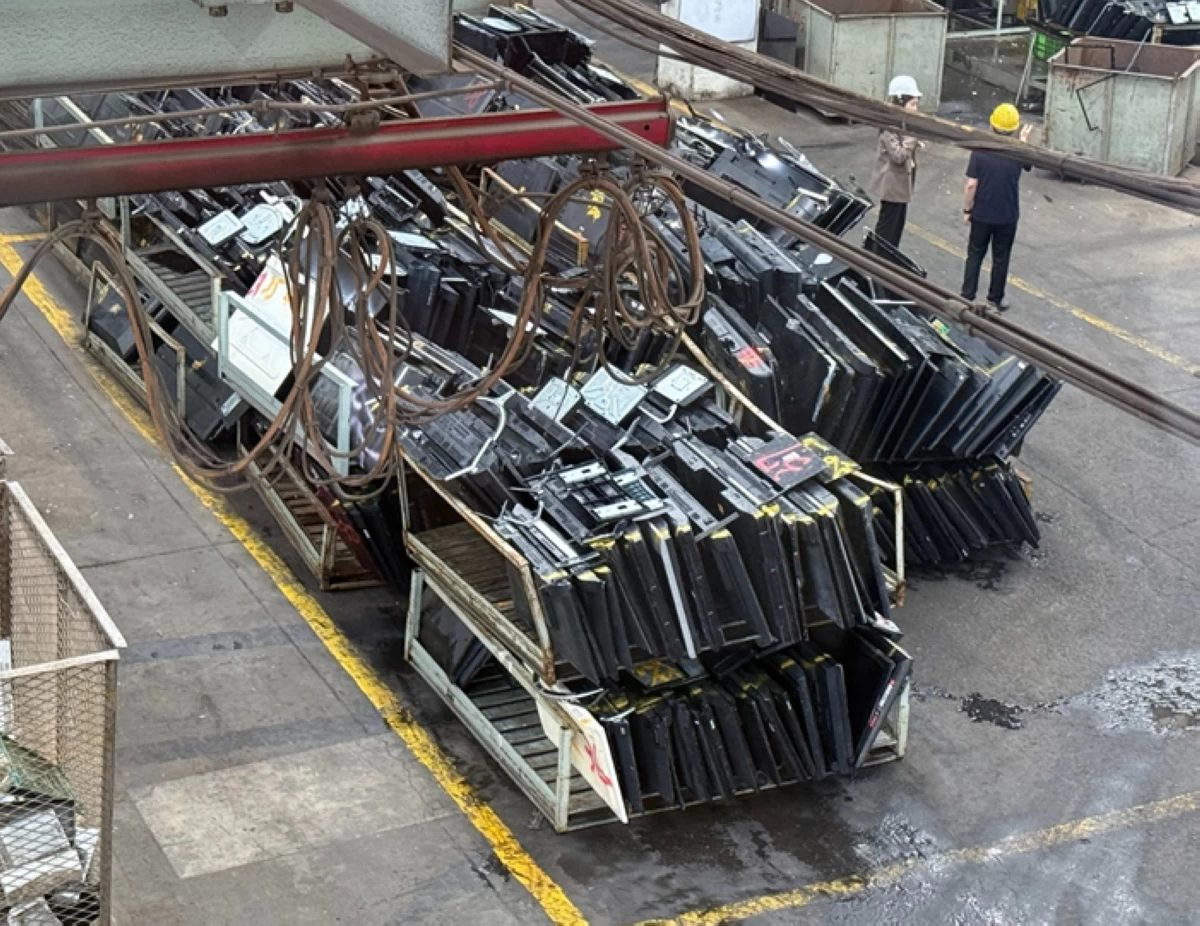
On their factory floor, we saw what that looks like in practice: a parade of familiar electronic junk: battered air conditioners, old televisions, and washing machines, all being systematically dismantled and sorted into clean, commodity-grade streams of iron, copper, and plastic. What enters as household junk emerges as a sellable commodity for global supply chains.
The big lesson—the one that should make Manila’s economic planners sit up and take notice—lies in E&E’s evolution. They have gone beyond simply recovering materials to creating entirely new products from the most challenging waste. Millions of LCD screens contain layers of glass, plastic, and toxic liquid crystals—typically incinerated or landfilled. E&E found a way to transform them into breathable, antibacterial shoe insoles under their own consumer brand.
It is a critical insight for the Philippines: a well-enforced system can transform an industry cost center into a profit center. E&E is a recycling company, but it is also proof that policy can reframe "waste" as an industrial opportunity, not an environmental burden.
This is the circular economy operating at a very sophisticated level. It’s a stark reminder that while the Philippines debates how to manage discarded sachets, others are already building high-value industries that capture the economic potential we continue to bury in landfills. Where we see a landfill problem, they see a product pipeline.
As Charles said: "The first [step] is understanding the problem. And the problem is that the economic model you have today is flawed."
It's worth noting that the circular economy in Taiwan is not managed only by the Ministry of Environment, but also by the Ministry of Economic Affairs. In 2016, the latter created the Circular Economy Promotion Division.
Interestingly, at APCER, the Philippines had one of the largest delegations, with representatives from DTI, DOST, and DENR engaging with global leaders in the circular economy. It's a promising sign. Still, at next year's conference, I hope to see the Department of Finance (DOF) at the table—because we can only take the plastic crisis seriously when we start putting our money where our waste is.
— (Nina Unlay is a co-founder and editorial director of Sustina, a woman-led organization democratizing sustainability intelligence. A graduate of the Erasmus Mundus Masters Program of Media, Journalism, and Globalization, she previously led the award-winning publications GRID and adobo magazine, and served as culture business partner at Publicis Groupe Philippines. She writes about culture, business, and social issues.)