






Manila Bulletin
 Business
The Economy
Think tanks slash Philippine growth forecasts following dismal Q3
Business
The Economy
Think tanks slash Philippine growth forecasts following dismal Q3
Business
The Economy
Think tanks slash Philippine growth forecasts following dismal Q3
Think tanks slash Philippine growth forecasts following dismal Q3
Published Nov 7, 2025 02:54 pm


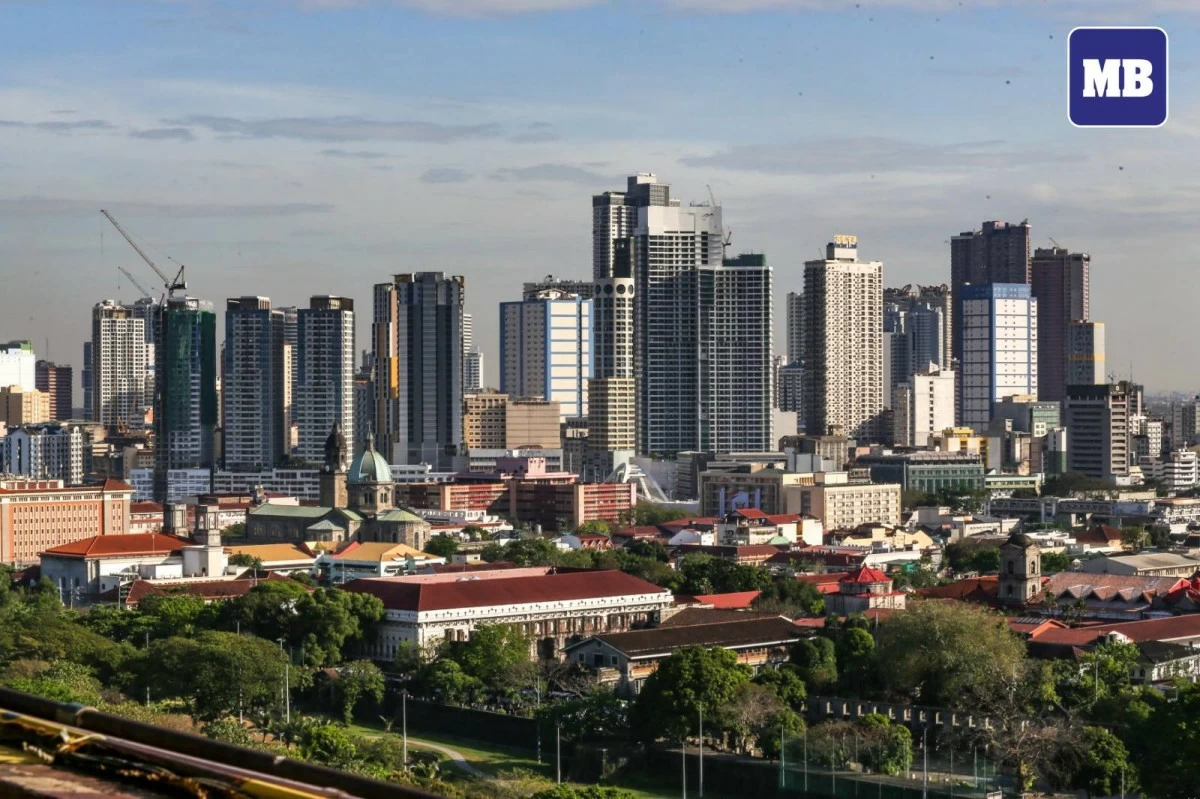
Two United Kingdom (UK)-based think tanks have slashed their 2025 gross domestic product (GDP) growth forecasts for the Philippines to well below the government’s target range, following a 4.5-year low economic expansion in the third quarter.
Capital Economics cut its full-year Philippine growth forecast to five percent from 5.5 percent previously, the think tank’s Asia economist Shivaan Tandon said in a report on Friday, Nov. 7.
“Risks to the outlook remain skewed firmly to the downside with the most immediate risk stemming from the fallout from the anti-corruption protests” in the country, Capital Economics said.
Following the Philippine Statistics Authority (PSA) report showing GDP expansion slowed to four percent in the third quarter, Capital Economics highlighted that domestic demand was the main drag on growth.
It noted that consumer spending growth slowed to 0.5 percent quarter-on-quarter in the third quarter, down from 1.5 percent in the second quarter, while both fixed investment and public consumption contracted for the second consecutive quarter.
Despite this slowdown, Capital Economics emphasized that domestic demand is expected to strengthen in the coming quarters. “GDP growth in the Philippines slowed sharply in the third quarter but we doubt this weakness will persist. Economic activity is set to pick up in the near term as domestic demand strengthens,” the think tank said.
It added that while government spending is likely to continue weighing on economic activity amid tighter fiscal policy, factors such as low inflation, looser monetary policy, rising manufacturing capacity utilization, and a robust pipeline of residential construction projects are expected to support private domestic demand going forward.
Capital Economics also noted that exports rebounded from a contraction, supported by a modest recovery in services exports. “Growth in goods exports eased. Although soft global demand will act as a headwind for the external sector, we suspect the drag will be modest overall given the Philippines is largely a domestically driven economy,” the think tank added.
Meanwhile, Oxford Economics also revised its GDP growth forecast for the Philippines downward to 4.9 percent year-on-year for 2025 and 5.5 percent for 2026, as third-quarter data showed that “momentum has slowed sharply.”
Oxford Economics lead economist Sunny Liu highlighted that the economic slowdown reflects the impact of adverse weather, public unrest over corruption allegations in flood-control projects, and ongoing external uncertainties.
“The deceleration partly reflects the adverse impact of multiple typhoons that struck the country between July and September,” the think tank said.
Oxford Economics also pointed to the erosion of public trust and weaker investment sentiment following corruption allegations in flood-control projects. External uncertainties further weighed on economic activity, resulting in a largely broad-based slowdown, with only a modest recovery in exports, it added.
The think tank said that governance issues linked to alleged corruption in flood-control projects are likely to continue dampening investment sentiment, while ongoing external uncertainties are expected to constrain foreign direct investment (FDI).
Regarding exports, Oxford Economics noted that growth is expected to moderate in the coming quarters, although semiconductor exports are likely to remain strong amid rising demand driven by artificial intelligence (AI) applications.
It did not help that household consumption, which accounted for 70 percent of GDP and is the Philippine economy’s leading growth driver, “lost steam” in the third quarter.
For Oxford Economics, third-quarter GDP data indicated that the “growth momentum has begun to soften.”
As such, “we expect the central bank to maintain an accommodative stance, with a 25-basis point (bp) cut likely at the upcoming meeting” of the Bangko Sentral ng Pilipinas’ policy-making Monetary Board (MB) in December, the think tank added.
Department of Economy, Planning, and Development (DEPDev) Secretary Arsenio M. Balisacan said that despite the third-quarter slowdown, the economy is expected to regain momentum as the government takes steps to recover lost ground. He added that these efforts should be reflected in the fourth-quarter performance.
“I would expect that the fourth-quarter performance will be better than the third quarter and that will enable us at least to hit the fives [five-percent GDP growth level]—I don’t know where in the fives, but definitely we would want to,” he said.
Balisacan added that reaching the upper end of the range appears unlikely. He explained that achieving 6.5 percent would require the economy to expand by around 6.8 to 6.9 percent in the fourth quarter—a challenging feat given the current and lingering economic shocks.
“If we can get at least to the five [percent], that would be a very good achievement, given the shocks that were not anticipated,” he said.
(Ricardo M. Austria)