







Save our planet; go clean energy all the way
Published Nov 7, 2025 12:05 am
|
Updated Nov 6, 2025 05:53 pm


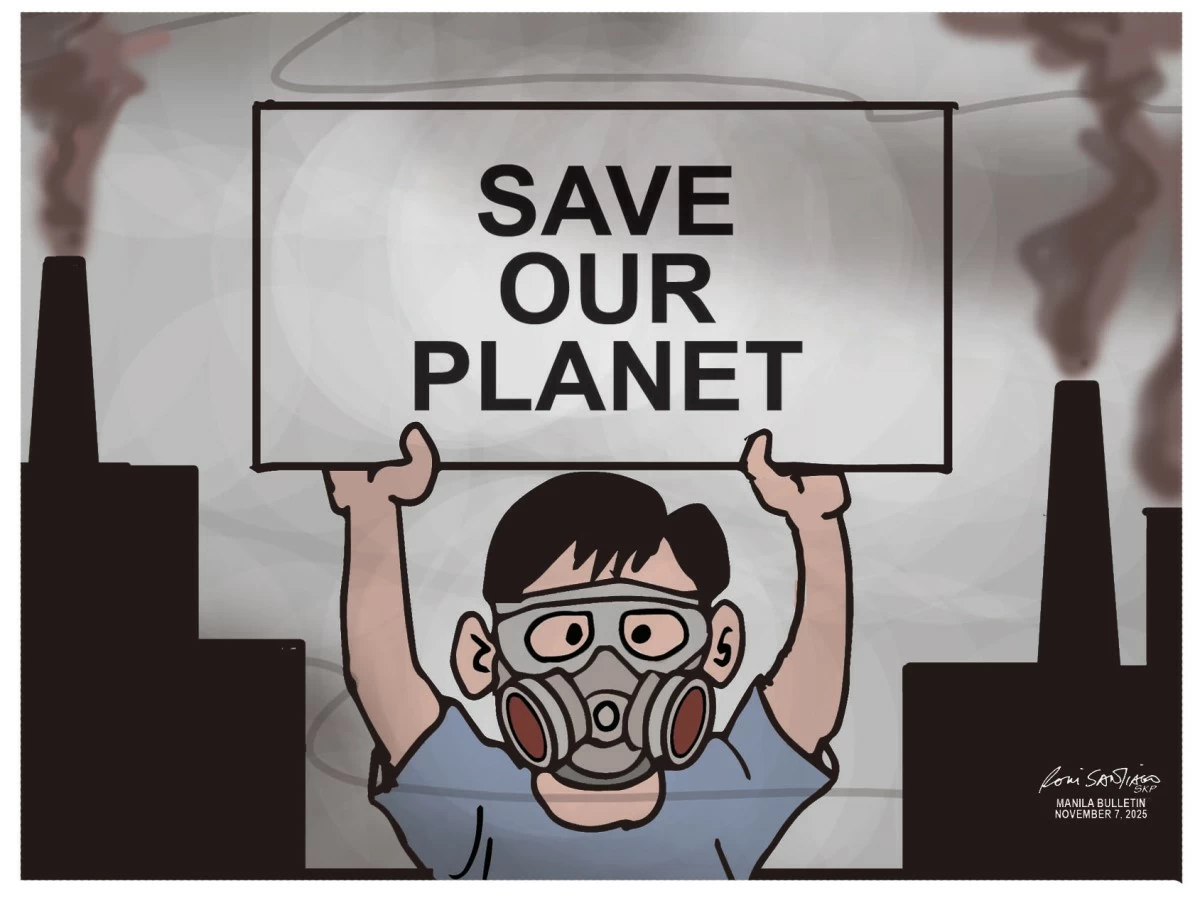
The world is fast reaching a point of no return.
When United Nations Secretary-General António Guterres declared that the goal of capping global warming at 1.5°C is already slipping from reach, we must all listen and start thinking of what’s in store for the future.
And the Philippines, for instance, is facing one hard truth. We pledged our allegiance to the Paris Agreement and submitted our first Nationally Determined Contribution (NDC)—committing to a 75-percent emissions reduction by 2030. But sad to state, the action required to make that promise real has yet to follow in full.
We cannot simply hide behind rhetorics and our promise while our concrete efforts lag. Let’s face it. Our energy mix still leans heavily on coal and gas; our share of renewables sits stubbornly at around 22 percent, far from the 35-percent commitment by 2030 or 50 percent by 2040 targets declared by our government.
While we are missing our deadline, climate-related storms, sea-level rise, bleaching reefs, and floods continue to threaten us.
If the Philippines is to honor its commitments and protect our children’s future, then it must act—swiftly, boldly, and decisively.
It must turn ambition into law-backed mandates, increase the share of renewables in the power mix, and enforce the early retirement of coal plants. It must also secure at least $72 billion and channel it to renewable infrastructure, grid modernization, and community-based micro-grids.
Likewise, it must phase out fossil-fuel dependency, stop approving new coal and gas plants, and accelerate deployment of solar, wind, hydro, and geothermal at scale. Independent analysts already pointed out that without deep cuts in coal, the 1.5°C goal is unachievable.
However, it doesn’t help that the government is allowing the tapping of new natural gas reserves with the dwindling Malampaya supply. It is also considering importation of the product. While liquefied natural gas may be a cleaner fossil fuel, it still emits greenhouse gas and is hazardous to health.
The government must also adopt strong incentives and penalties to ensure compliance. Tax pollution. Reward clean-energy investments. Provide affordable financing for households to shift to electric vehicles, rooftop solar, and efficient appliances. Support communities hit first by climate change with funds and training.
The government should not be left alone to comply. Business must come out clean and become green by design. Corporations should commit to ambitious internal emission targets, switch to renewables, and invest in clean-tech. Financial institutions should prioritize climate-resilient lending, and ESG (environmental-social-governance) practices must guide investment decisions. Public–private partnerships should fast-track renewable energy projects, grid storage, and smart infrastructure. And all companies should adopt circular-economy thinking: less waste, longer life-span for materials, and lower carbon footprint.
And we must keep in mind that everyone is part of this fight.
So, choose energy-efficient appliances, switch off unused lights, ride share or use public transport, bike, plant trees, consume less (especially high-carbon imported goods). Vote for leaders who prioritize climate justice. Support community renewable projects. Speak up when local decisions favor coal over people. As individuals we may feel small—but multiplied by millions, our actions shift markets and mindsets.
The Philippines is no small actor on the global stage when it comes to climate impact—not because it emits the most carbon but because we live among the most vulnerable. The seas rise; storms brutalize our islands; reefs perish; livelihoods vanish. If we fail to act now, we condemn future generations to a harsher fate.
Let’s save ourselves and our planet. Let’s go clean energy all the way—no ifs, no buts.