






Manila Bulletin
 Business
Trade & Industry
Business groups decry corruption's drag on waning Philippine growth
Business
Trade & Industry
Business groups decry corruption's drag on waning Philippine growth
Business
Trade & Industry
Business groups decry corruption's drag on waning Philippine growth
Business groups decry corruption's drag on waning Philippine growth
Published Nov 7, 2025 04:00 pm


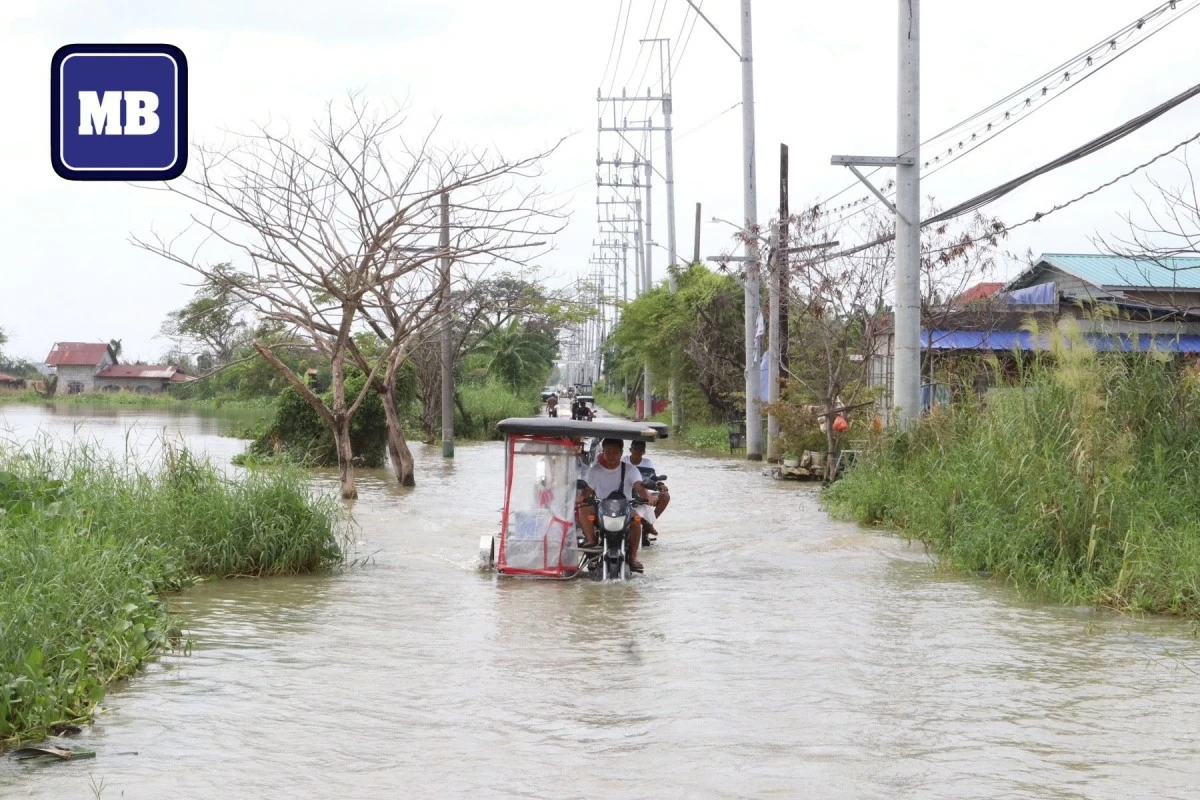
Business groups have called on the Marcos administration to hold public officials involved in the flood control scandal accountable, as economic growth slows to a four-year low amid weakening business sentiment.
In separate statements, the Makati Business Club (MBC) and the Federation of Philippine Industries (FPI) urged the government to ramp up its anti-corruption drive to restore confidence in the economy.
This comes as the country’s gross domestic product (GDP) growth slowed to four percent in the July-to-September period, well below the 5.5 percent recorded in the second quarter.
The MBC, comprising the country's leading business executives, said the subpar growth in the third quarter reflects how corruption in the public works sector is now affecting the overall macroeconomic performance.
MBC Executive Director Rafael Ongpin said that while the corruption scandal did not directly slow down economic growth, it still had a consequential indirect effect.
While investigations are still underway, government spending plummeted as many planned infrastructure projects are on hold or even in limbo.
Ongpin noted that government spending is an important driver of economic growth.
FPI Chairperson Elizabeth Lee added that domestic and foreign investments eased as businesses opted to be more cautious due to uncertainties stemming from corruption issues.
“People are spending less as prices bite and confidence dips,” said Lee. “On top of that, typhoons disrupted farms and factories, while global pressures added even more weight.”
“Put together, it’s no surprise growth came in at its weakest pace in years,” she stressed.
According to Lee, this makes it more critical that the government exact accountability from all those involved in the scandal—whether government officials, engineers, or contractors.
“What is still front and center is the anti-corruption drive. We must take the bitter pill of anti-corruption reforms to get better and move forward—anchored on transparent infrastructure spending,” she said.
Ongpin said the government must uphold justice, noting that “good governance is good economics.”
“Public officials must be held accountable, in order for the country to encourage both domestic and foreign investment,” he said.
Both MBC and FPI joined 32 other business groups last month in a rare joint statement to urge President Marcos to take a more decisive action against corruption by beefing up the Independent Commission for Infrastructure (ICI).
Unsatisfied with the ongoing probe, the groups said the ICI should be empowered with full legal authority and independence to conduct the investigation.
The groups stated that the public funds squandered on anomalous and non-existent flood control projects are more than a financial loss, but a “fatal breach of public trust that leaves our people vulnerable and outraged.”