







A journey through Bali's temples, tradition, and timeless beauty
By John Legaspi
Published Nov 7, 2025 07:34 am
|
Updated Nov 10, 2025 10:11 am


For cinephiles, Bali is the very definition of paradise, with its pristine mountains and beaches providing the perfect backdrop to its island culture. But for its locals, Bali is one of the places where Indonesia’s Hindu culture shines brightest. Touted as the “Island of the Gods,” it is home to over 20,000 Hindu temples, or pura, each serving a specific function and ritual.
During a recent trip organized by the Indonesian Embassy in Manila in October, Manila Bulletin Lifestyle visited some of Bali’s major temples. What struck us most is that these temples are often established near or on bodies of water—a testament to Bali’s Hindu Dharma, a way of life that teaches people to live in harmony with the universe and to respect both the seen and unseen worlds.
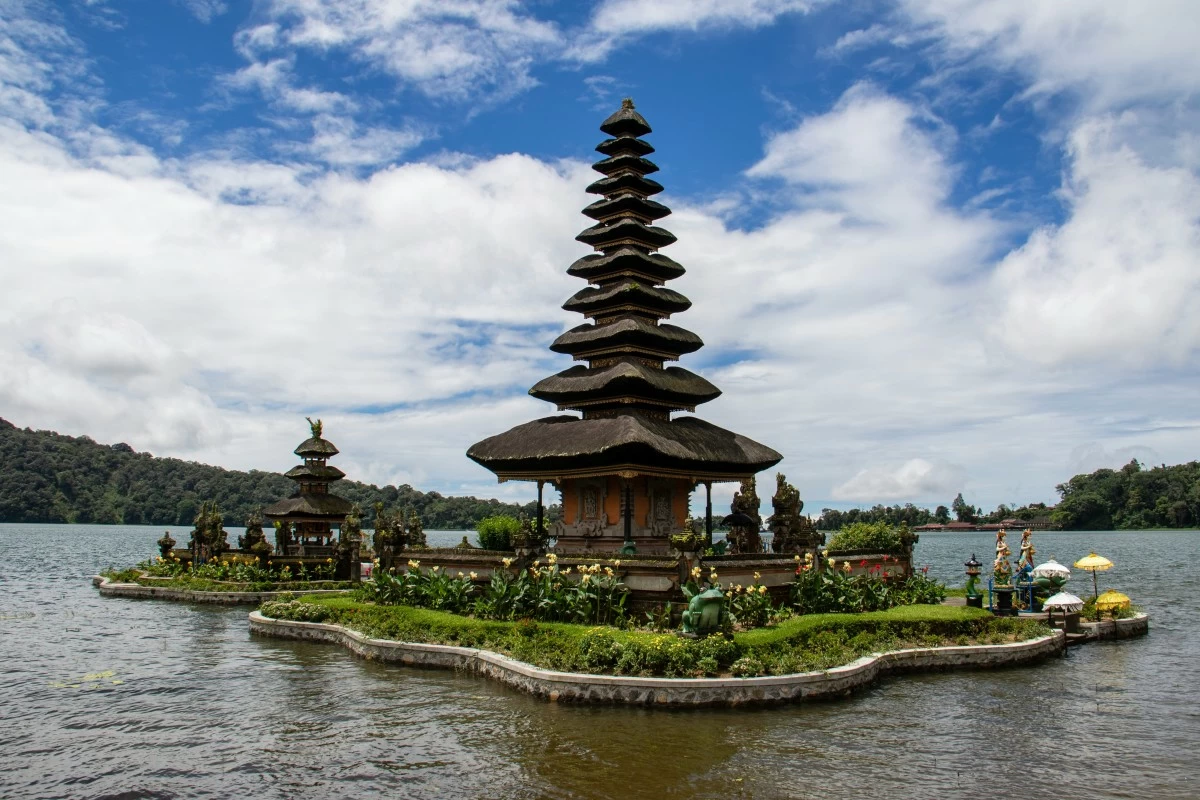
Ulun Danu Temple (Photo by Nick Fewings/Unsplash)
Ulun Danu Beratan Temple
We began our soulful journey in Bedugul, Central Bali, home to Ulun Danu Beratan Temple. Dedicated to Dewi Danu, goddess of lakes and rivers, the temple was built around the 17th century by the King of Mengwi. According to our guide, locals visit the temple to honor the goddess, seeking her blessings for irrigation and fertility.
It is one of the most photographed temples in Bali—so much so that its beauty was immortalized on the Indonesian 50,000 rupiah banknote. What makes it charming, even magical, is that the temple sits on a small island, giving the impression that it is floating on Beratan Lake. Adding to its serene beauty is the view of Mount Catur, which on some days appears misty and mystical.
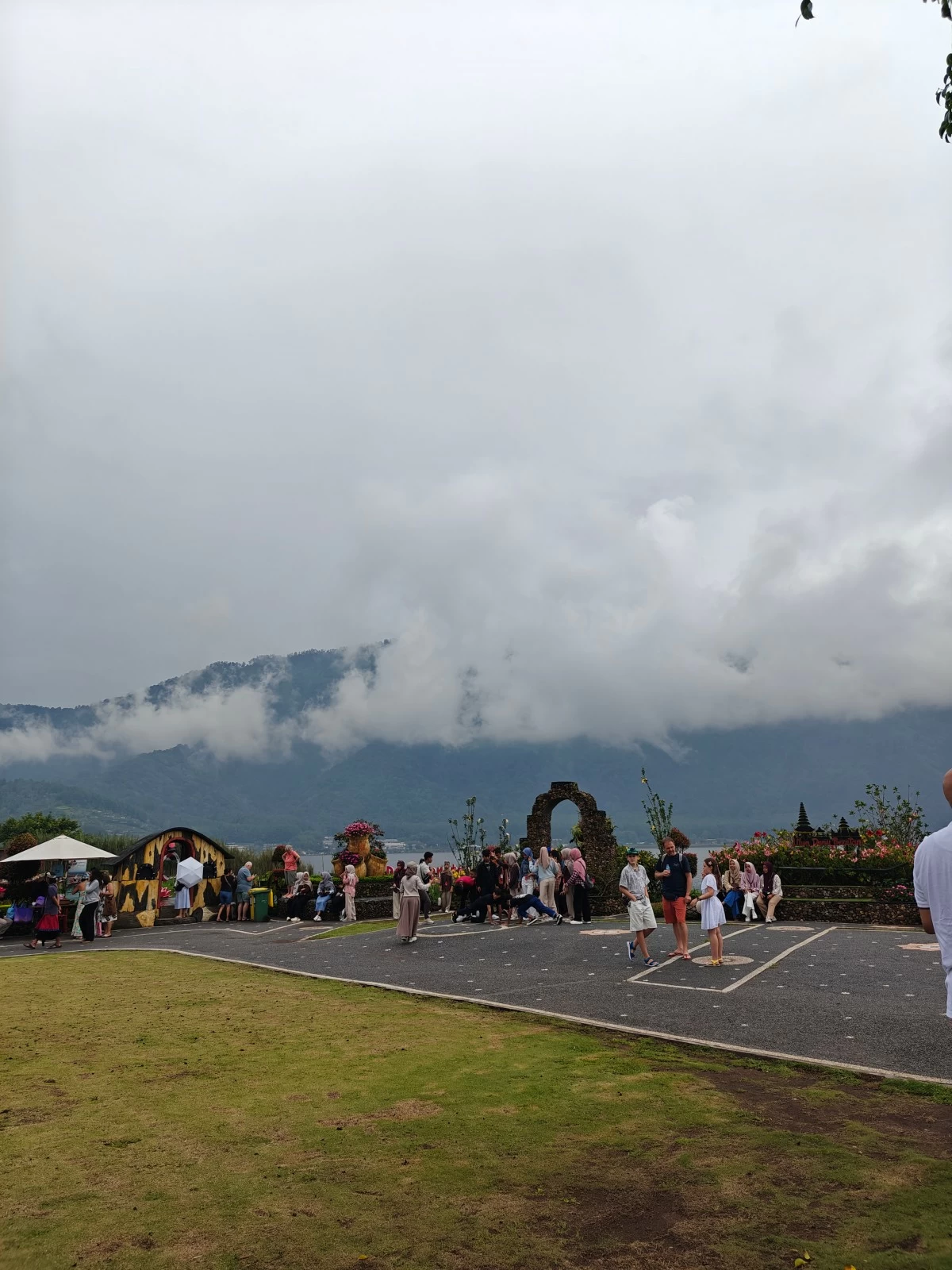
A cloudy view of Mt. Catur
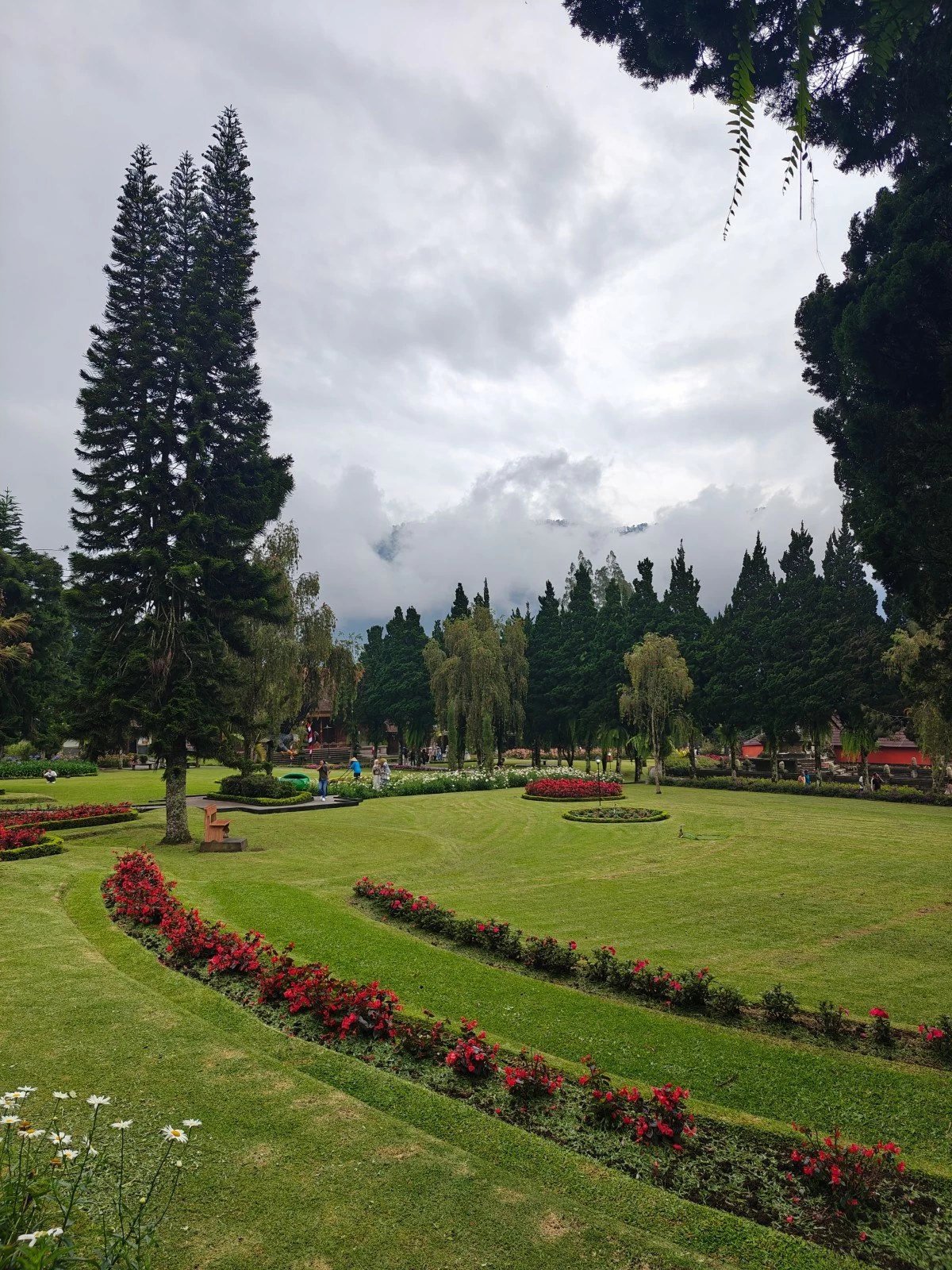
Botanical garden at Ulun Danu Temple

Cultural display at Ulun Danu Temple
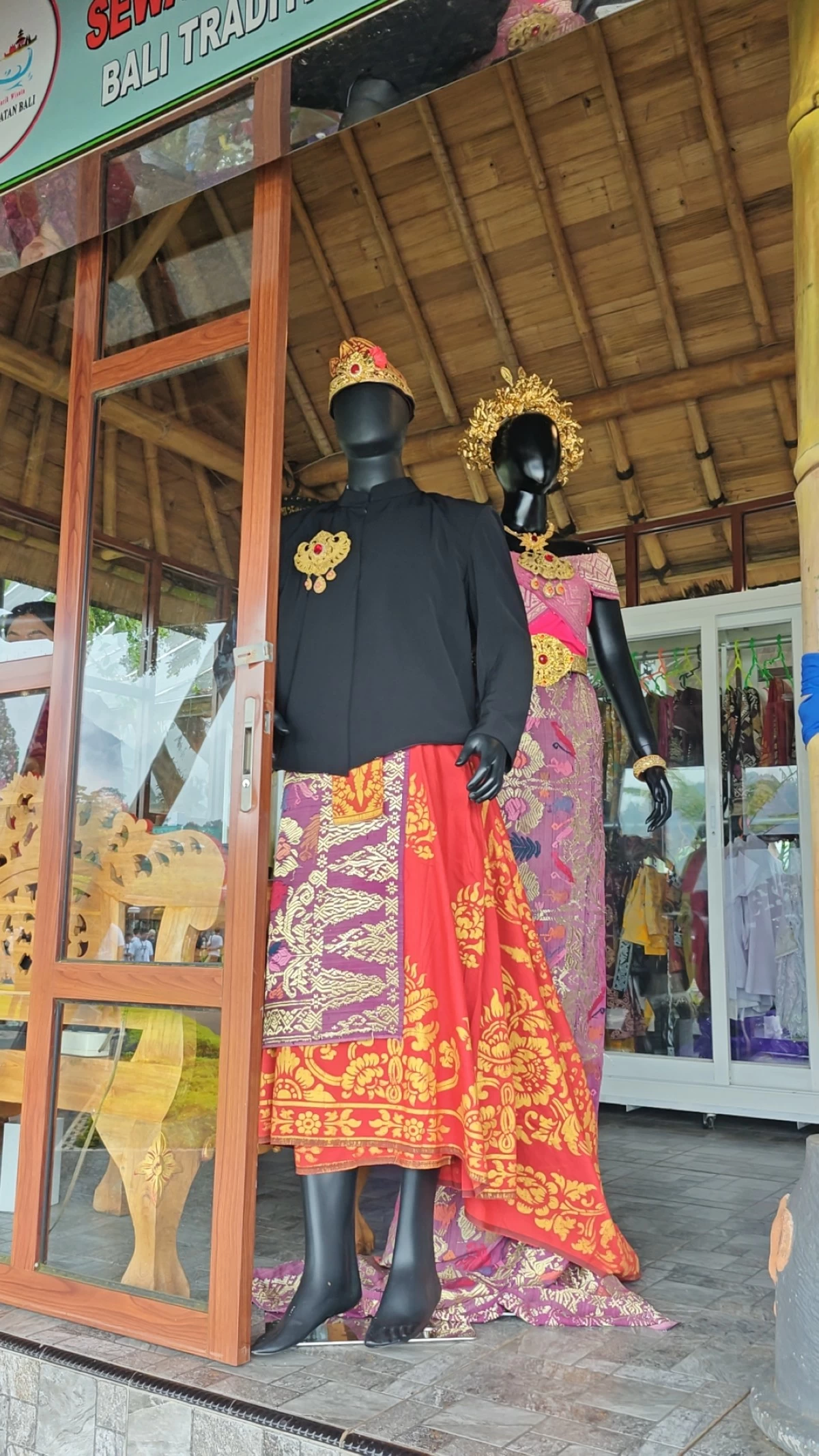
Visitors can rent traditional garbs as they roam around Ulun Danu Temple.
Beyond the “floating” pura, the temple is surrounded by a vast botanical garden, cafés and restaurants, and cultural establishments where tourists can rent traditional garb or learn gamelan music. Many, however, prefer to explore the lake by renting a small paddle boat or motorboat.
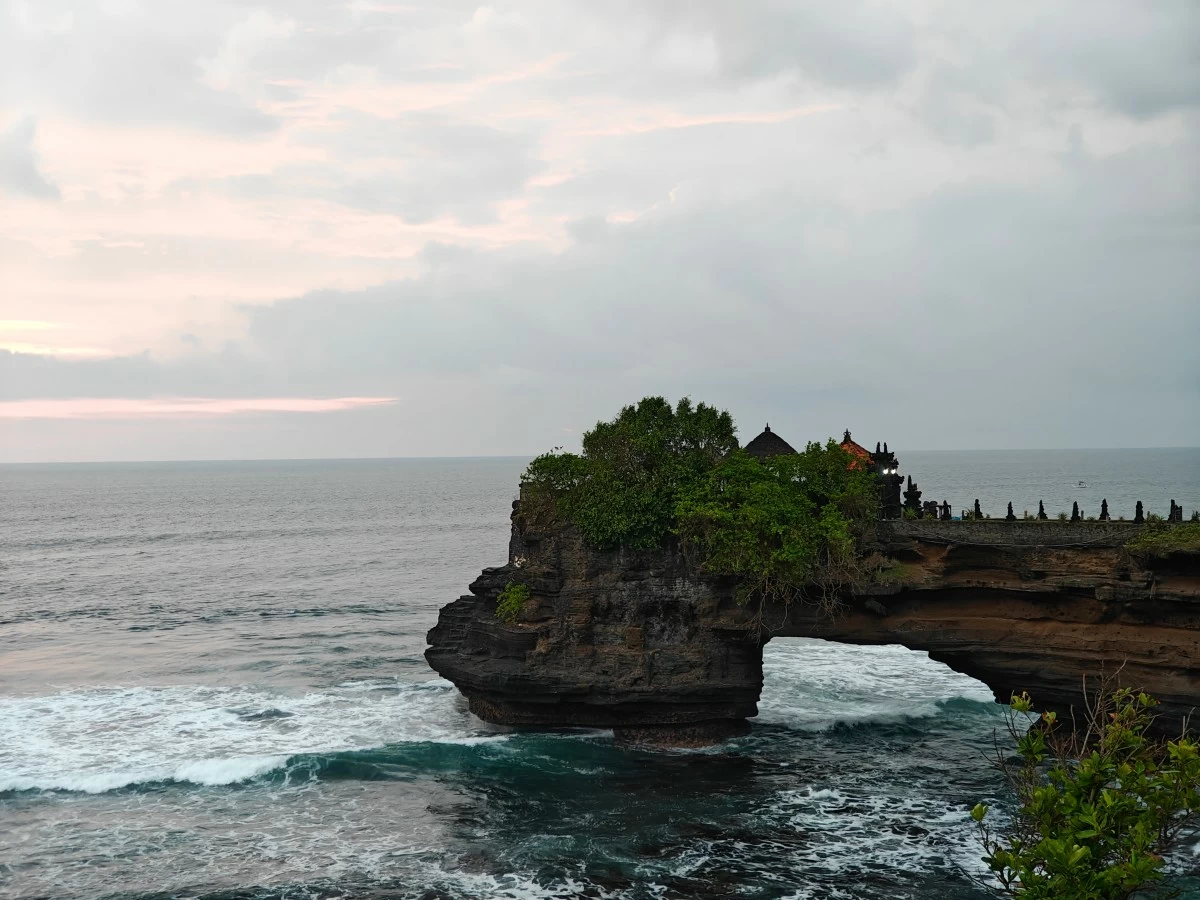
Tanah Lot
Tanah Lot
While Ulun Danu Beratan Temple is best explored in the morning, if you are chasing sunsets, the place to be is Tanah Lot. Located in Beraban Village, Tabanan, on Bali’s west coast, Tanah Lot stands out as a sea temple perched on a rock formation in the ocean, making it one of the island’s most famous sunset viewpoints.
It is dedicated to Dewa Baruna, the Hindu god of the sea, and is one of the seven temples that dot Bali’s coastline, forming a near-continuous protective chain for the island. Apart from the temple, Tanah Lot features a local market offering souvenirs, crafts, and snacks. One of the best stops is de Orange, a one-stop shop for Balinese crafts. Shoppers can find art, clothes with Indonesian batik, and, as this writer did, a sarong—essential for visiting temples in Bali.
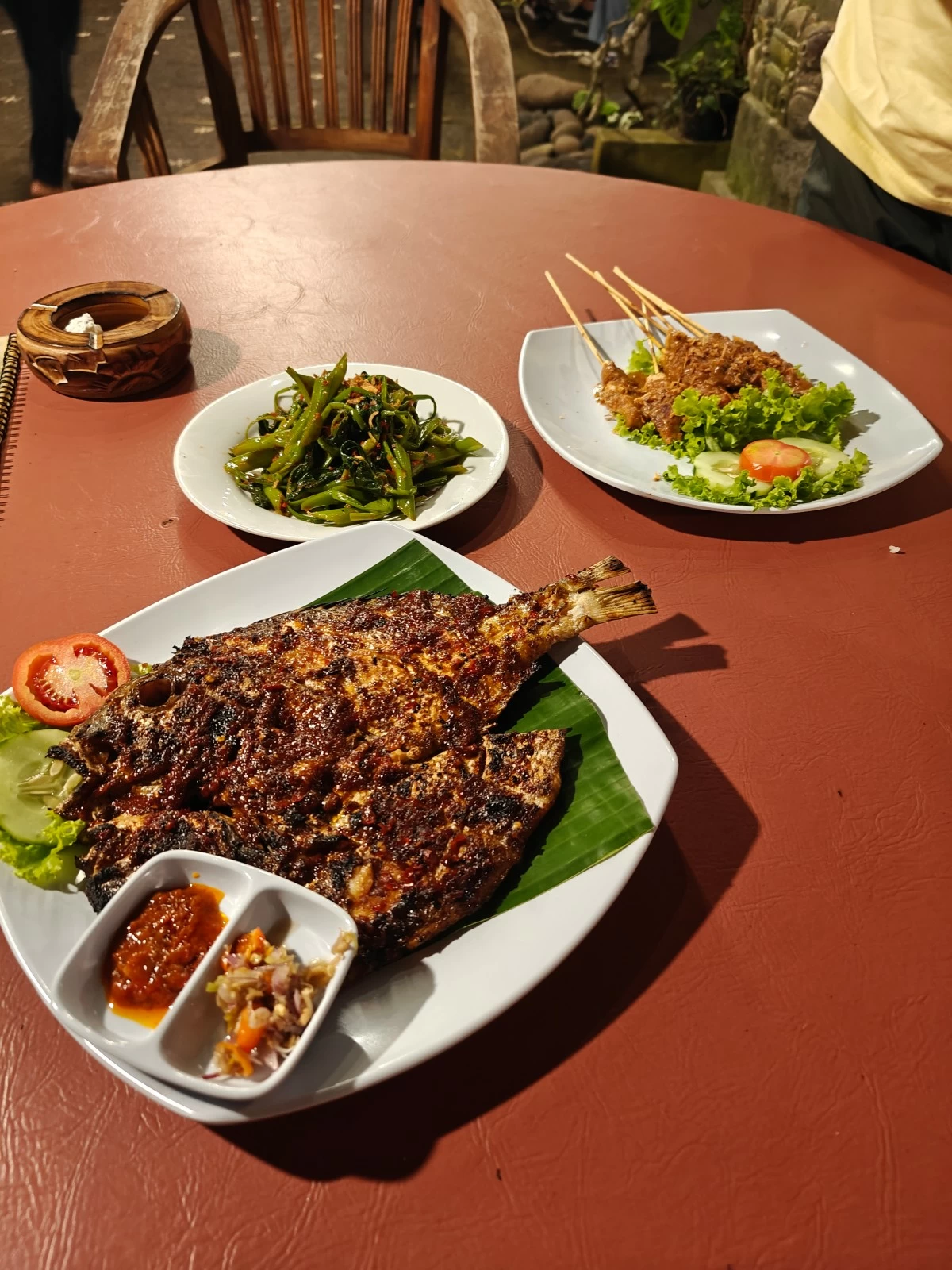
Grilled eats at Warung Made restaurant
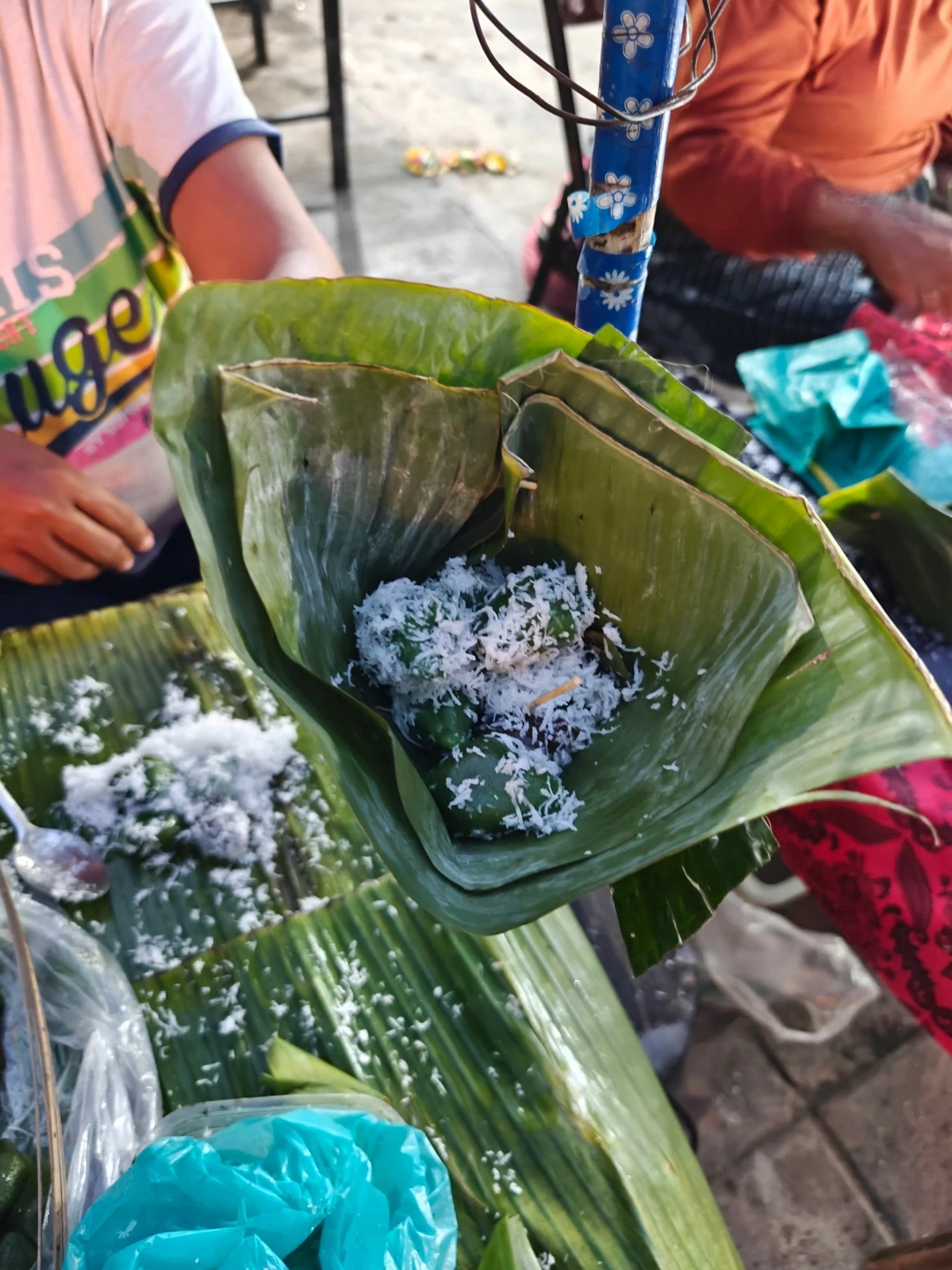
Klepon, a handy snack whole at Tanah Lot
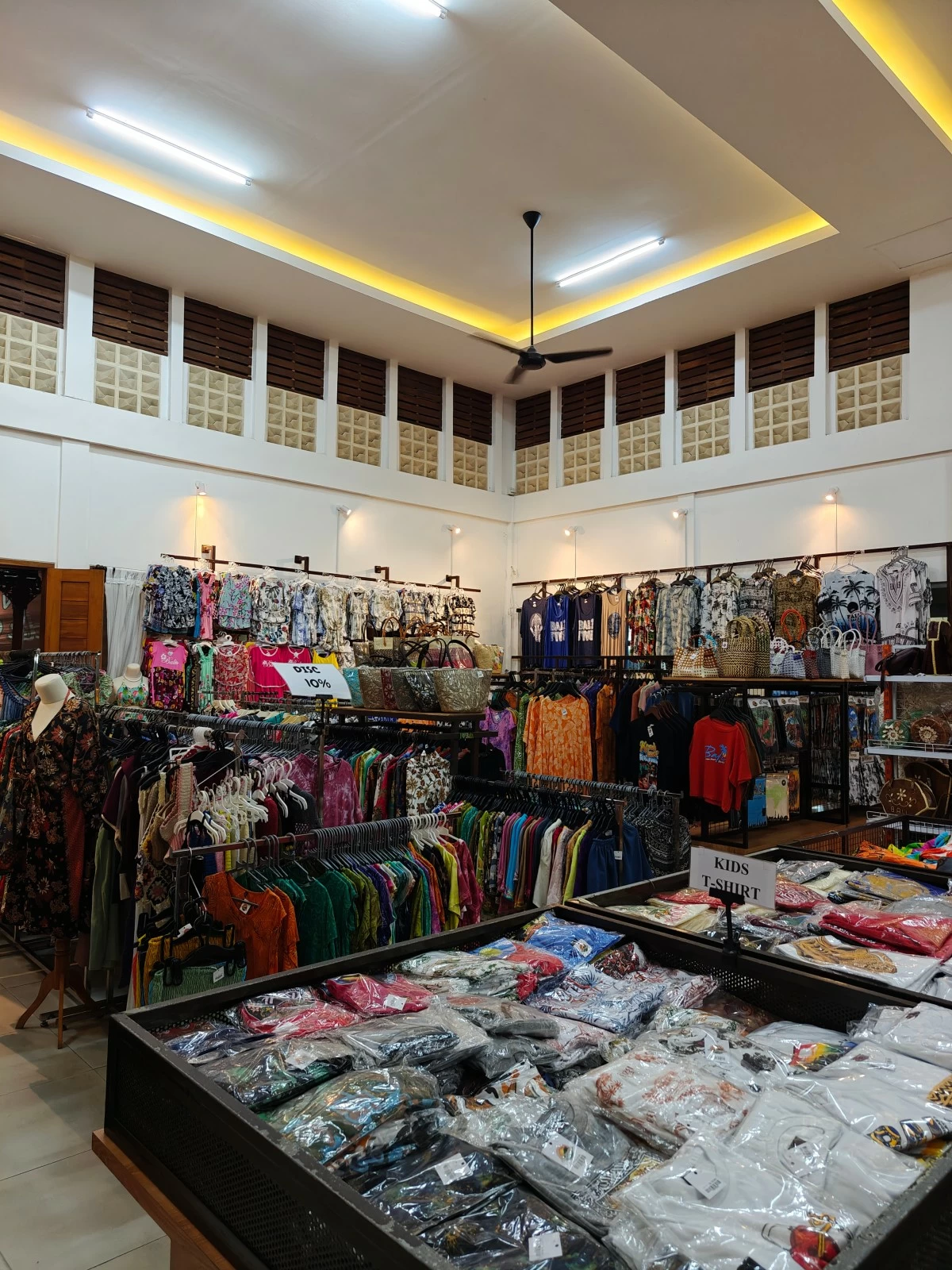
Inside de Orange store
Tanah Lot is also great for dining, with a variety of food options. Ideal for groups is Warung Made restaurant, which offers grilled dishes to be enjoyed with the cool evening coastal breeze. For those who prefer eating while exploring, handy treats like sweet klepon and coconut juice will satisfy both hunger and tired feet.
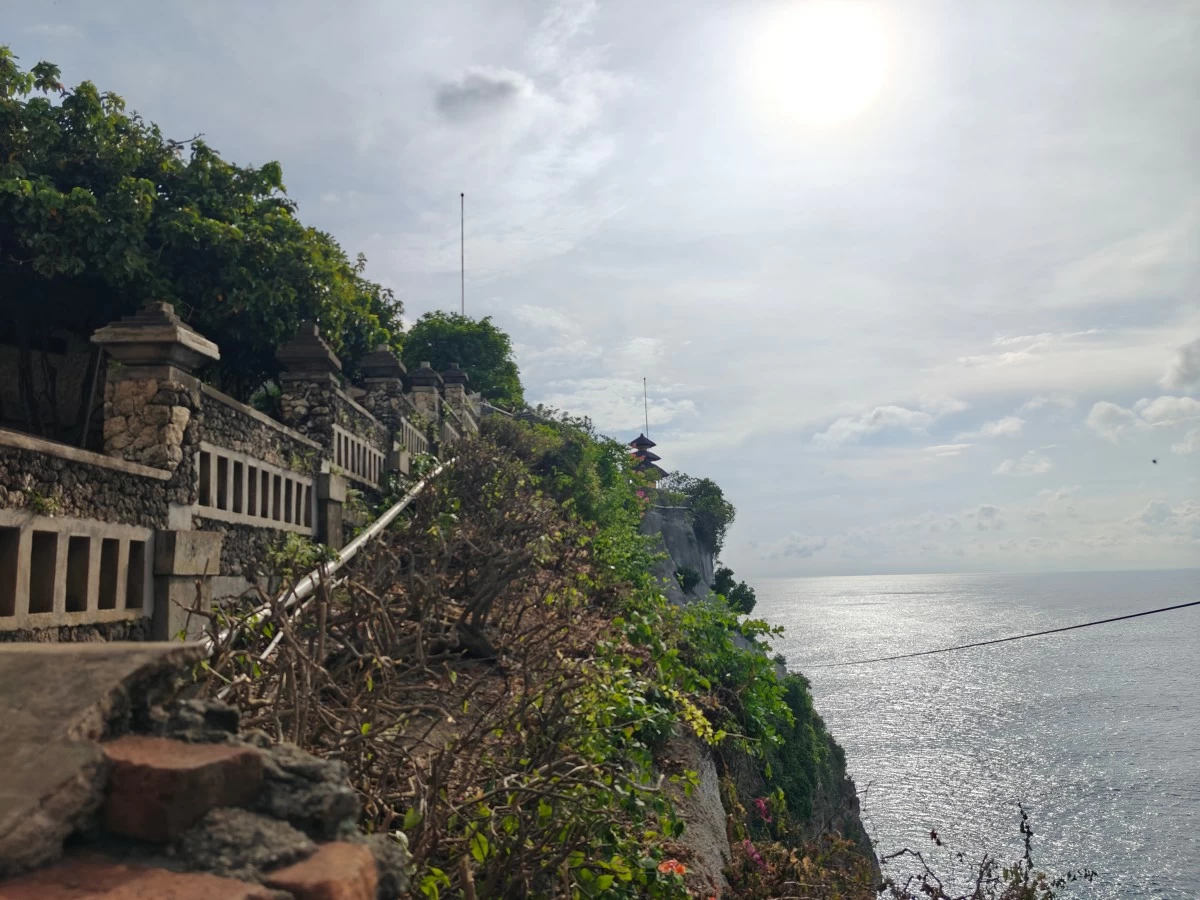
Uluwatu Temple
Located on the Bukit Peninsula in South Bali, Uluwatu Temple is famous for many reasons. Perched on a cliff overlooking the Indian Ocean, it serves to protect Bali from evil spirits while offering panoramic ocean views. Surrounded by lush greenery, it provides visitors with a rounded experience of the island’s natural wonders. The temple is also home to Balinese long-tailed macaques, so visitors should be mindful of their belongings.
To enter Uluwatu Temple, visitors must dress appropriately. The temple provides purple sarongs and orange sashes for guests to wear within the premises. Among its unique inhabitants is Monyet Putih, or the White Monkey, an albino macaque first spotted in 2019 at Selonding Temple and injured, presumably in a fight with other monkeys.

Visitors must wear a sarong or an orange belt while at Uluwatu Temple.
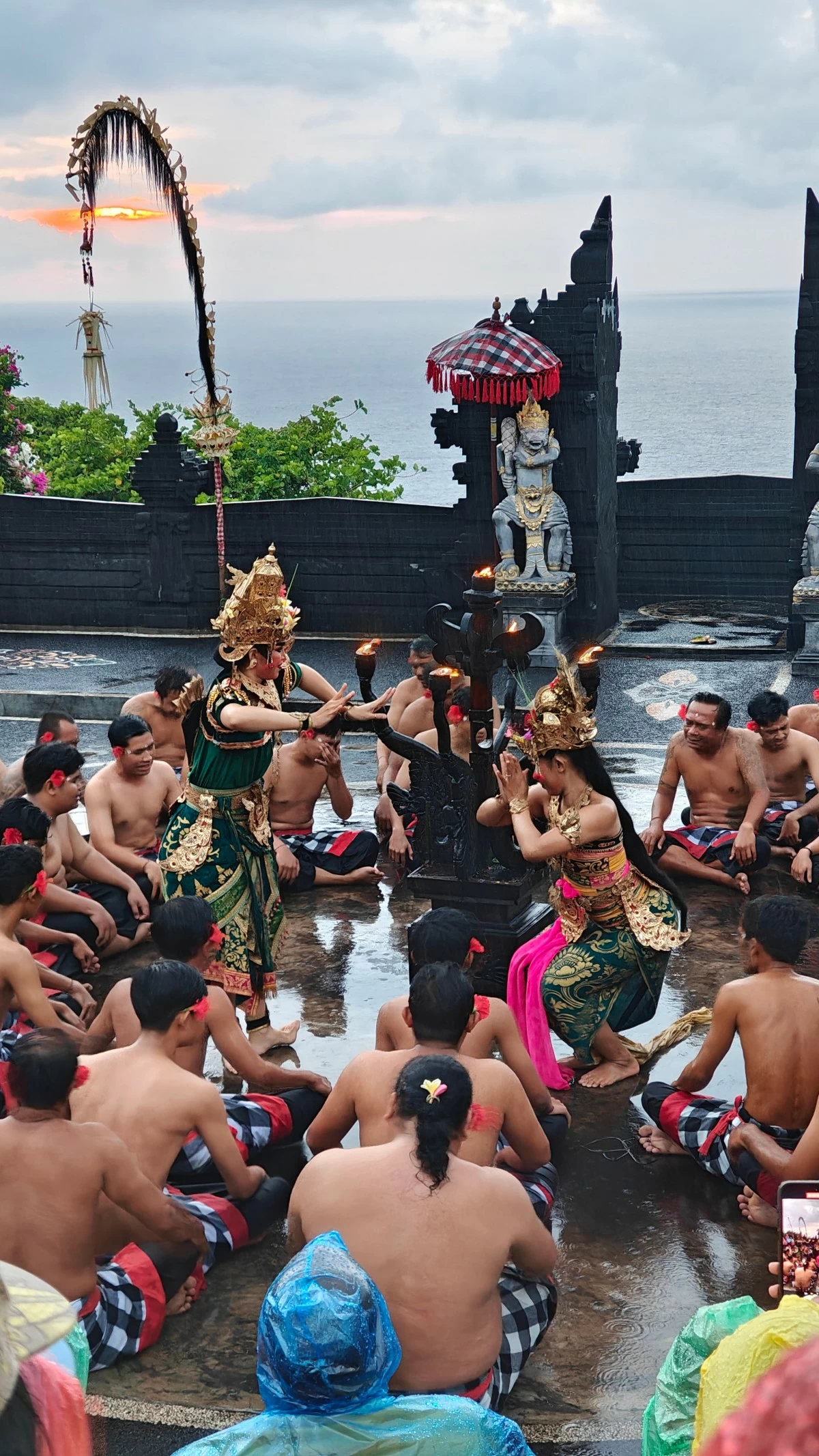
Watching a Kecak performance is a perfect way to end the day at Uluwatu Temple.
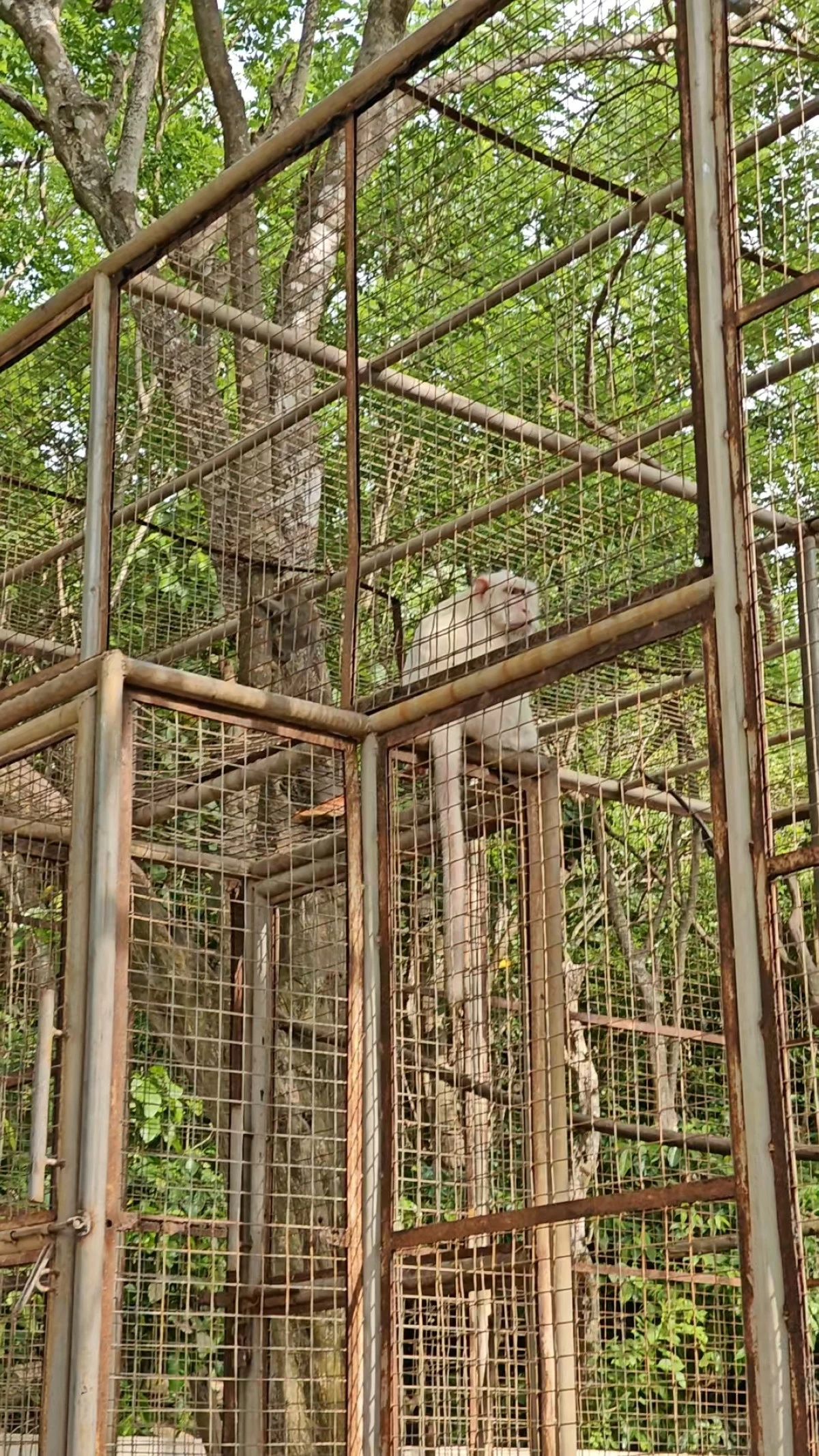
The White Moneky or Monyet Putih
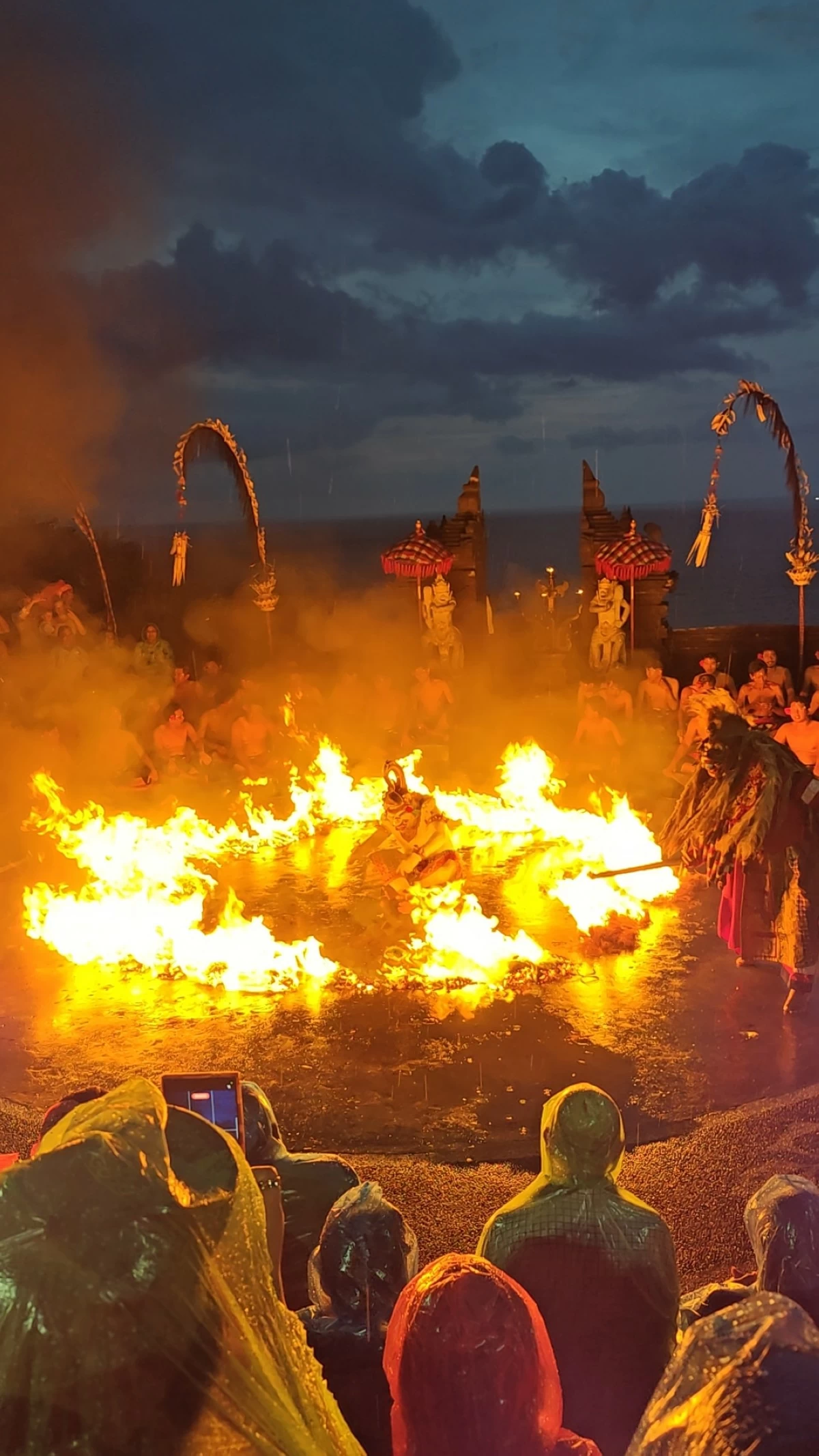
A dancer lit up the early night sky with his fire dance performance.
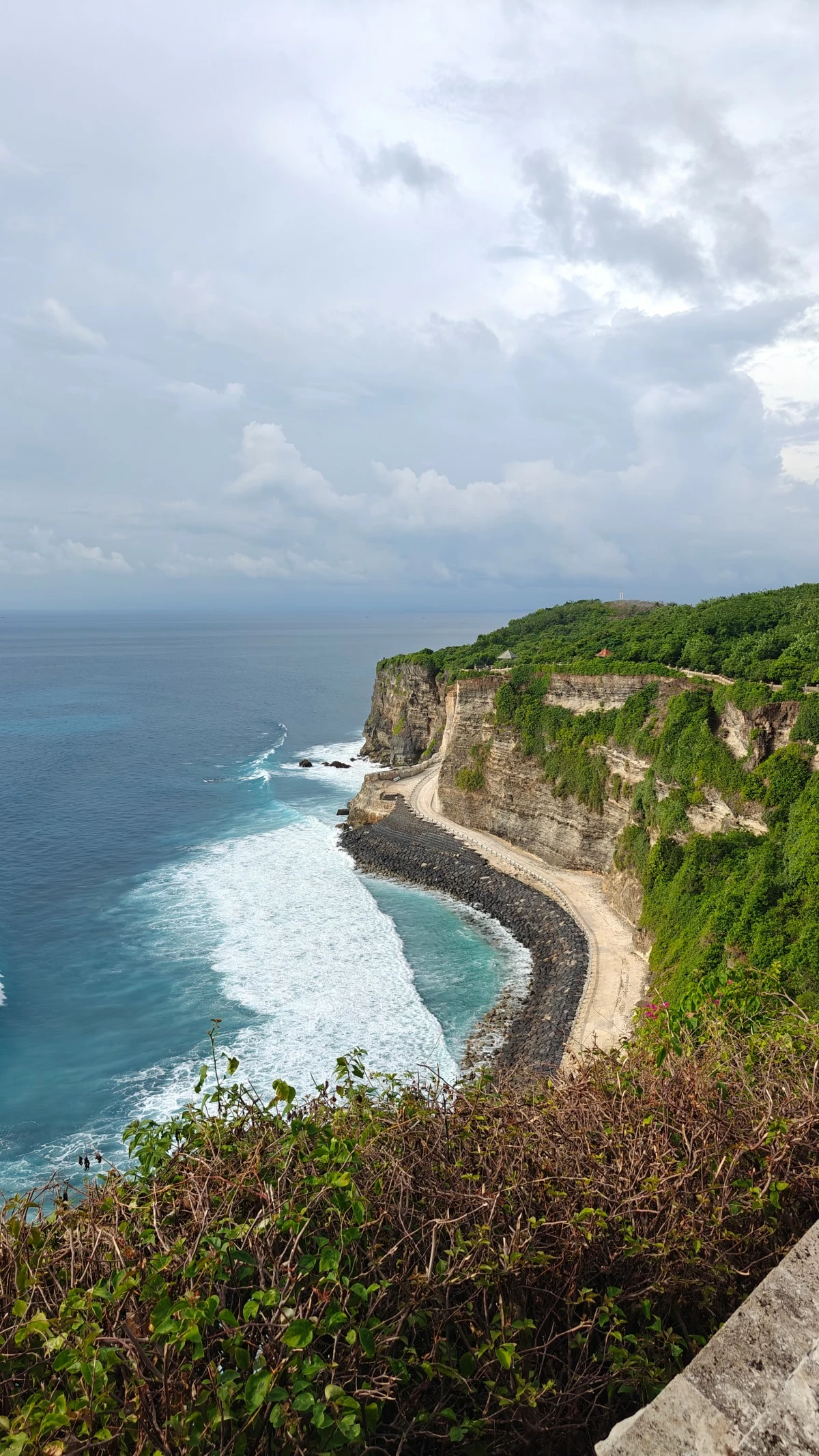
A stunning view of the coast from Uluwatu Temple.
Apart from its ancient structures and monkey inhabitants, Uluwatu Temple is renowned for its sunset views, made even more enchanting by the performance of the traditional Kecak and Fire Dance. For a more convenient experience, it is best to book tickets for the show in advance online. Witnessing the show was a memorable way to end our temple run in Bali, as we experienced heat and rain, culture and spirituality, natural beauty and local traditions—all blending into an unforgettable finale atop the cliffs overlooking the vast Indian Ocean.