






Manila Bulletin
 Philippines
National
Typhoon Tino dumps rare 1-in-20-year rainfall across Visayas, PAGASA says
Philippines
National
Typhoon Tino dumps rare 1-in-20-year rainfall across Visayas, PAGASA says
Philippines
National
Typhoon Tino dumps rare 1-in-20-year rainfall across Visayas, PAGASA says
Typhoon Tino dumps rare 1-in-20-year rainfall across Visayas, PAGASA says
Published Nov 6, 2025 10:04 am


PAGASA
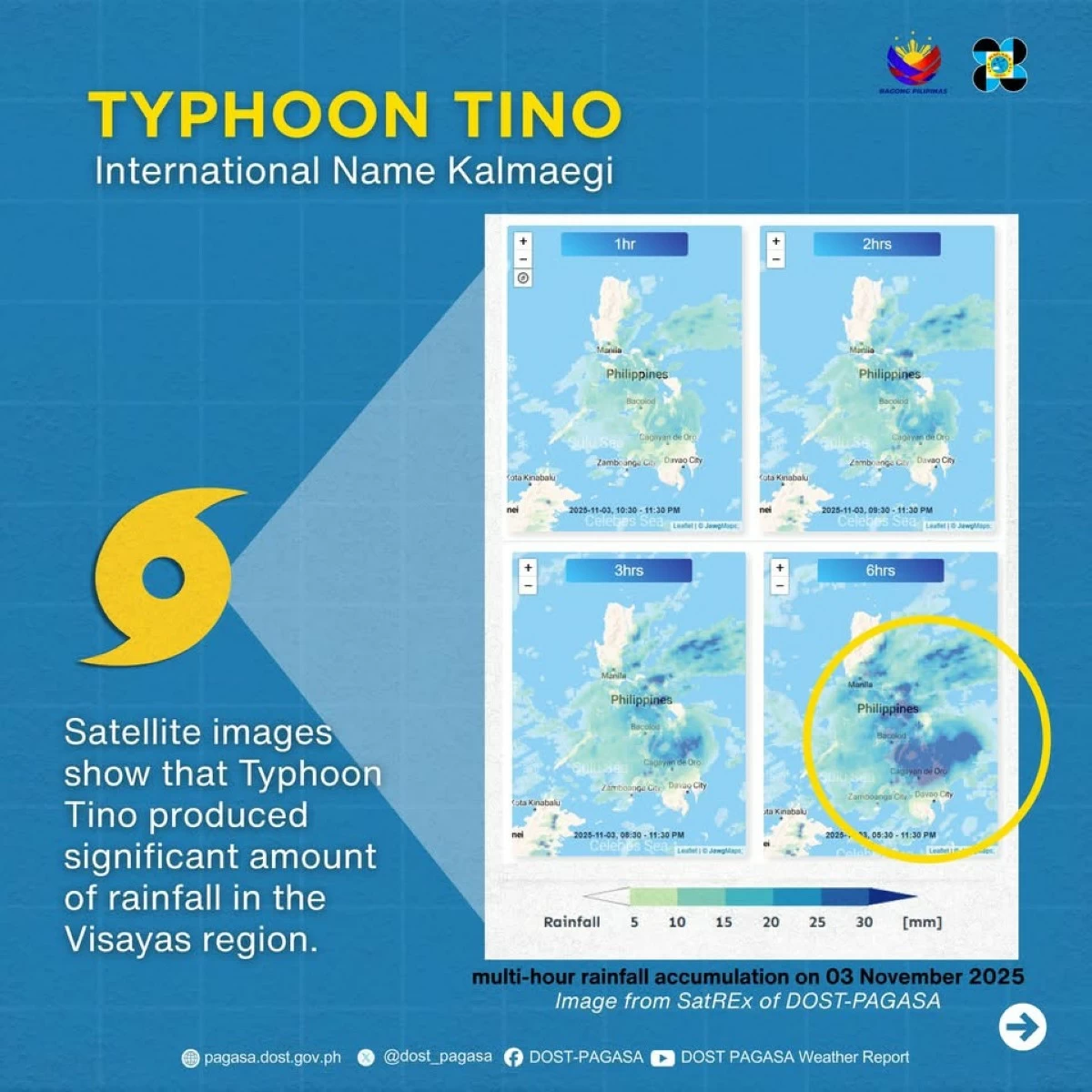
Parts of the Visayas were hit by unusually heavy rainfall during Typhoon Tino (international name: Kalmaegi), causing severe flooding and damaging homes, property, and livelihoods, the Philippine Atmospheric, Geophysical and Astronomical Services Administration (PAGASA) said.
PAGASA said that in many areas, the rainfall exceeded the 20-year return period, meaning there is only a five percent, or 1-in-20, chance of such extreme rain occurring in any given year.
Ground-based measurements on Nov. 3 showed critically high water levels in some automatic rainfall gauges and synoptic station in Cebu province:
* Bagakay, Toledo: 428 mm
* Ilihan, Toledo: 300 mm
* Danao: 183 mm
* Mactan Synoptic Station: 183 mm
Tino made a total of eight landfalls in the Philippines. The typhoon first struck Silago, Southern Leyte at 12:00 a.m. on Nov. 4, followed by Borbon, Cebu at 5:10 a.m., Sagay City, Negros Occidental at 6:40 a.m., San Lorenzo, Guimaras at 11:10 a.m., Iloilo City, Iloilo at 1:20 p.m., Cuyo Islands, Palawan at 7:30 p.m., and Batas Island, Taytay, Palawan at 4:10 a.m. on Nov. 5. Its eighth landfall was over El Nido, Palawan at 4:40 a.m. on Nov. 5.
The heavy rainfall quickly led to widespread flooding in low-lying areas of Central Visayas on Nov. 4, just hours after Tino made its first landfall in Southern Leyte.
The floods destroyed homes and property, affected livelihoods, and caused the loss of livestock and, tragically, some lives.
PAGASA emphasized that the event highlights the vulnerability of flood-prone communities and the importance of monitoring water levels and preparing ahead of extreme weather events.