






Manila Bulletin
 Philippines
National
2025 Ramon Magsaysay awardee Fr. Flavie Villanueva, who stood with drug war victims: 'Healing without truth is incomplete'
Philippines
National
2025 Ramon Magsaysay awardee Fr. Flavie Villanueva, who stood with drug war victims: 'Healing without truth is incomplete'
Philippines
National
2025 Ramon Magsaysay awardee Fr. Flavie Villanueva, who stood with drug war victims: 'Healing without truth is incomplete'
2025 Ramon Magsaysay awardee Fr. Flavie Villanueva, who stood with drug war victims: 'Healing without truth is incomplete'
The priest's ministry for victims of Duterte's 'drug war' reminds the Philippines that true healing demands truth, memory, and justice
By Jel Santos
Published Nov 6, 2025 03:31 pm


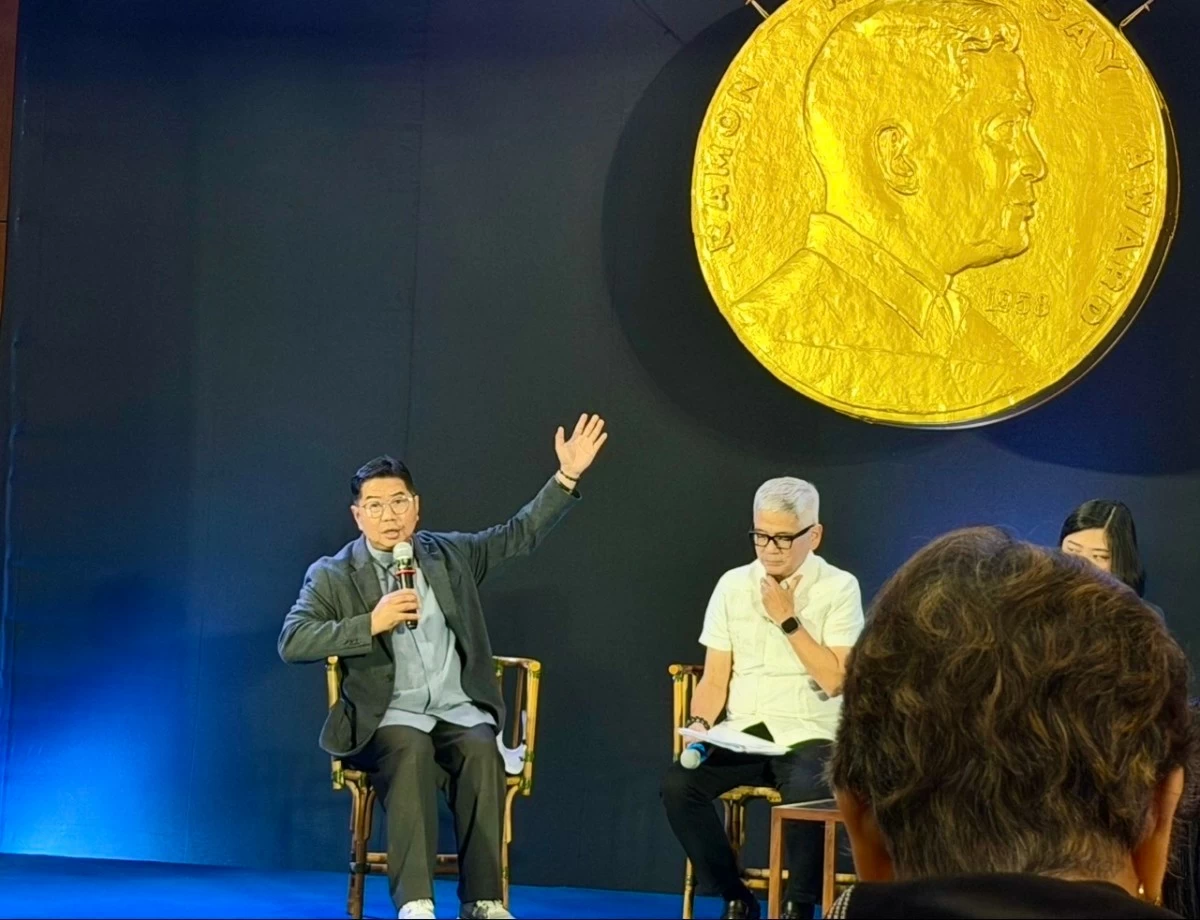
(JEL SANTOS/MB PHOTO)
“Healing without truth is incomplete.”
These words from Ramon Magsaysay awardee Fr. Flaviano “Flavie” Villanueva cut through the quiet hall at the Ramon Magsaysay Center in Malate, Manila, on Thursday, Nov. 6, as he reflected on years of accompanying families of victims of the Duterte administration’s controversial “war on drugs.”
In August, Villanueva was named a 2025 Ramon Magsaysay awardee for his work in restoring dignity to the poor and homeless.
From the pulpit to the pavements, Villanueva has long stood beside those who were left behind—widows, orphans, and the homeless—through the programs Kalinga and Paghilom.
In 2015, he founded the Arnold Janssen Kalinga Center in Tayuman, Manila, to provide what he called “dignified care and service” to indigent Filipinos. Its flagship programs reflect his integrated approach: KALINGA (Kain-Aral-LIgo-naNG-umAyos, meaning Eat, Learn, Bathe, to be Well) offers meals, shelter, and hygiene facilities.
“Silence would have been complicity,” he said, recalling the fear that gripped communities during those years.
“The streets we once walked to serve food and offer baths had been turned into streets of blood baths.”
The need to stand for truth, according to Villanueva, emerged as a moral duty when the killings reached their height.
“Healing without truth is incomplete,” he stated, explaining that for families to recover, the facts must surface.
“The facts are far different from what the Philippine National Police have shoved in their throats with fake news and fake identities. For society to heal, the lies must end.”
From the pain of these families rose Program Paghilom, a ministry for those “widowed, orphaned, and traumatized” by the violence.
Paghilom provides emotional healing, restoring dignity, and helping families rebuild their lives. It follows a seven-phase journey of accompaniment—from listening and counseling to documentation, livelihood, education, and leadership formation.
“A mother, a widow once told me, ‘Father, they took my husband, but they cannot take away my hope,’” Villanueva recalled.
“Eventually, I found a friend, I found a new family—and with that, hope became a seed for the community.”
In 2019, the Dambana ng Paghilom was built inside the La Loma Catholic Cemetery in Caloocan.
Each urn, he said, contains the remains of victims who have been identified, exhumed, and named—what he calls “the skeletons of truth.”
Villanueva said they erected it “so that the dead can be named, mourned, and remembered.”
“Each urn tells a story that power and tyranny tried to erase—a story of a father, a story of a brother, a story of a breadwinner unable to become a source of love to his family because they have been silenced,” he said.
(JEL SANTOS/MB PHOTO)
For Villanueva, healing and justice go hand in hand, noting that true healing demands honesty, remembrance, and accountability.
“The arrest of one principal figure may feel like vindication,” he stated.
“But arrests alone do not restore a nation’s soul. It is not enough that we arrest the architect because the architect is just one of those who built the house,” he went on.
He said he continues to cooperate with investigators before the International Criminal Court (ICC) in pursuit of justice for those whose lives were taken in Duterte’s “war on drugs.”
“Networks of impunity remain and so our work continues—to speak, to accompany, to tell the truth—until justice and mercy meet again.”
At the heart of his ministry lies what he calls the “Word made flesh.”
“The Word who became flesh did not come to the tidy and the safe,” Villanueva said.
“He came to the streets, to the broken bodies, to those the world called unworthy.”
Each time they wash a homeless man, bury an abandoned dead, or listen to a mother grieve, Villanueva said, “the gospels take flesh.”
“Radical compassion is not charity. It is courage, it is the audacity to believe that love can still redeem what violence has broken,” he stressed.
“We will never tire of loving, never tire of serving, never tire of standing for truth and justice,” he added.