






Manila Bulletin
 Business
Trade & Industry
Philippines formally applies to join Trans-Pacific trade pact to expand market access
Business
Trade & Industry
Philippines formally applies to join Trans-Pacific trade pact to expand market access
Business
Trade & Industry
Philippines formally applies to join Trans-Pacific trade pact to expand market access
Philippines formally applies to join Trans-Pacific trade pact to expand market access
Published Nov 5, 2025 04:32 pm


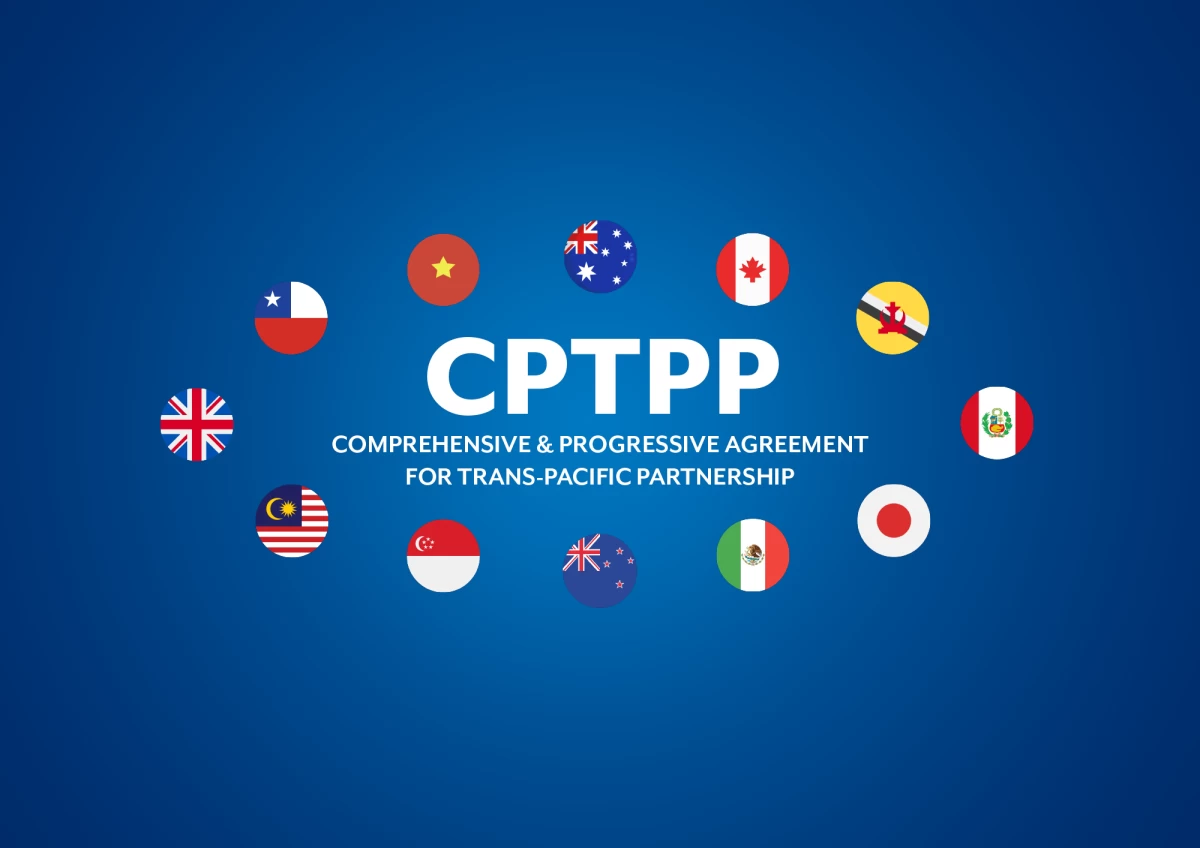
The Philippines has submitted its application to become a member of the Comprehensive and Progressive Agreement for Trans-Pacific Partnership (CPTPP) as part of the government’s efforts to widen market access for local industries amid potential headwinds.
According to a recent report by Nikkei, citing Japanese government officials, the Philippines has formally submitted its application documents to New Zealand, which serves as CPTPP’s depository.
Sought for comment, Department of Trade and Industry (DTI) Undersecretary Allan Gepty confirmed to Manila Bulletin on Wednesday, Nov. 5, that the government submitted its application to join the 12-member bloc back in August.
Asked about the Philippines’ potential timeline for negotiations and inclusion in the ambitious free-trade agreement (FTA), Gepty said he has no idea since “it really depends.”
CPTPP is one of the world’s largest free-trade areas, representing a combined population of over 500 million and gross domestic product (GDP) of $13.5 trillion.
Under CPTPP, member countries can enjoy more liberalized trade, zero tariffs on a wide range of goods, and improved investment facilitation.
CPTPP is composed of Australia, Brunei, Canada, Chile, Japan, Malaysia, Mexico, New Zealand, Peru, Singapore, Vietnam, and the United Kingdom (UK).
In July, DTI Secretary Cristina Roque said the Philippines is eager to join CPTPP to open new markets for the country’s goods and services.
Roque said expanding market access would shield domestic industries, particularly exporters, from headwinds caused by the imposition of reciprocal tariffs by the United States (US).
Barring exceptions on certain products, most of the country’s shipments to America face a 19-percent tariff rate.
The Philippine Exporters Confederation Inc. (Philexport) earlier estimated that exports of goods and services will reach only between $105 billion and $110 billion this year due to higher taxes.
This estimate falls below the government’s 2025 target of $113.42 billion under the Philippine Development Plan (PDP) 2023-2028 and $163.6 billion under the Philippine Export Development Plan (PEDP) 2023-2028.
The latest Philippine Statistics Authority (PSA) data showed that end-September merchandise exports rose by 13 percent to reach a nine-month record high of $63.02 billion, compared to $55.71 billion in the same period last year.
Goods exports in September reached $7.25 billion, with the US as the top market at $1.11 billion.
The Philippine Chamber of Commerce and Industry (PCCI) previously stated that entry into CPTPP would enable the country to “integrate deeper with a bloc of dynamic economies committed to open markets.”
“It will attract high-quality investments in the country, create jobs, and provide our businesses with the platform they need to thrive in an increasingly competitive and protectionist global environment,” PCCI said in a statement last September.
“We urge the government to pursue this accession with urgency and look forward to supporting the process,” it stressed.
Based on CPTPP’s membership policy, applicants must first secure the unanimous approval of all member nations before proceeding to a lengthy negotiation process, which includes domestic policy adjustments.
In the case of the UK, CPTPP’s newest member, negotiations to join the agreement lasted for around two years.