







Pangilinan won't rule out Smart Money revival
Published Nov 5, 2025 07:55 pm


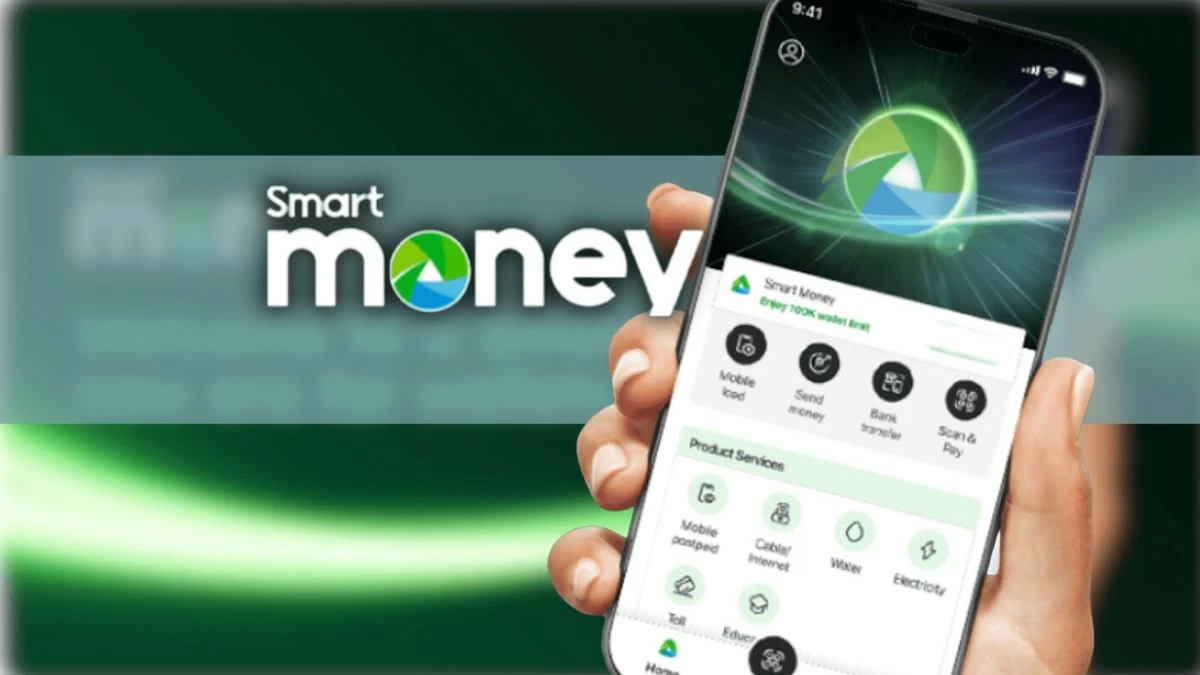
Tycoon Manuel V. Pangilinan is not ruling out plans to revive Smart Money, a pioneer in the mobile wallet space, despite the executive leading its comeback having since stepped down.
Pangilinan, chairman and chief executive officer (CEO) of Smart Communications Inc., said the company still envisions a future for Smart Money.
“Yes, either by itself or in conjunction with Maya,” he said, when asked about the current fate of the e-wallet.
Talks to revive Smart Money emerged following the return of Anastacio Martirez to Smart in September last year, who served as the company’s chief operating officer.
During Martirez’s first stint at the company years ago, Smart introduced innovative offerings such as Smart Money, as the company fought tooth and nail to secure dominance in the era of text and calls.
Launched in the early 2000s, Smart Money enabled users to make cashless transactions via SMS or text messages.
It was considered the world’s first reloadable cash payment card linked to a mobile phone, competing head-to-head with GCash offered by rival Globe Telecom Inc., which is now the dominant player.
Smart Money was decommissioned in 2016 in favor of PayMaya, which has since been rebranded to Maya—now also a digital bank licensed by the Bangko Sentral ng Pilipinas (BSP).
Earlier this year, Martirez said Smart Money was being pilot-tested among employees of Pangilinan-led companies to help fine-tune its features ahead of its return to the spotlight.
Martirez said the vision is to restore the mobile wallet industry leadership, which he repeatedly emphasized as the “legacy” of Smart.
The executive has since made an abrupt exit from Smart, with the company claiming that he intends to “pursue his original entrepreneurial ventures,” based on a statement sent to the media.
Reports, however, suggest the contrary as Martirez supposedly vacated his post following an internal investigation involving employees’ complaints against him.
Yet, Pangilinan is still keen on pushing Martirez’s “legacy” project, with the intent of heating up the competition in an industry dominated by GCash.
The business mogul earlier acknowledged that Maya, the digital banking arm of PLDT Inc., has fallen “so far behind” GCash—as he stressed that the company’s target is to match the latter’s success.
PLDT currently holds a nearly 40 percent stake in Maya. Pangilinan previously bared that the
the company is interested in increasing its stake, but there has been no concrete decision yet.
From January to June, Maya contributed ₱406 million in PLDT’s core income, a ₱1.1 billion reversal from a net loss a year ago.
Globe, meanwhile, reported that its share in equity earnings from GCash operator Mynt surged to ₱3.8 billion in the first half.
Pangilinan said in February that if Smart Money were to return to the market, it would either be that or Maya.
“You cannot have two wallets,” he was quoted as saying. “You can only have one.”
Flash forward to November, he now indicates that Smart Money could operate “in conjunction” with Maya.
As of end-June, Maya’s bank customer base reached 8.2 million, with deposits rising to ₱50.4 billion and loan disbursals reaching ₱152 billion.
Meanwhile, Pangilinan said he is still not close to appointing an executive to fill the post vacated by Martirez. However, he said he will likely choose someone from outside the company and on the younger side.
“I wish it were a Gen Z, a younger fellow, or even a millennial. Because the future belongs to them, and PLDT has got to shift in that direction already,” he said.
Smart is currently headed by officers-in-charge Lloyd Manaloto and Marjorie Garrovillo.