






Manila Bulletin
 Philippines
Metro Manila
Metro Manila mayors, MMDA approve national gov't infra audit for disaster preparations
Philippines
Metro Manila
Metro Manila mayors, MMDA approve national gov't infra audit for disaster preparations
Philippines
Metro Manila
Metro Manila mayors, MMDA approve national gov't infra audit for disaster preparations
Metro Manila mayors, MMDA approve national gov't infra audit for disaster preparations
Published Nov 5, 2025 12:46 pm


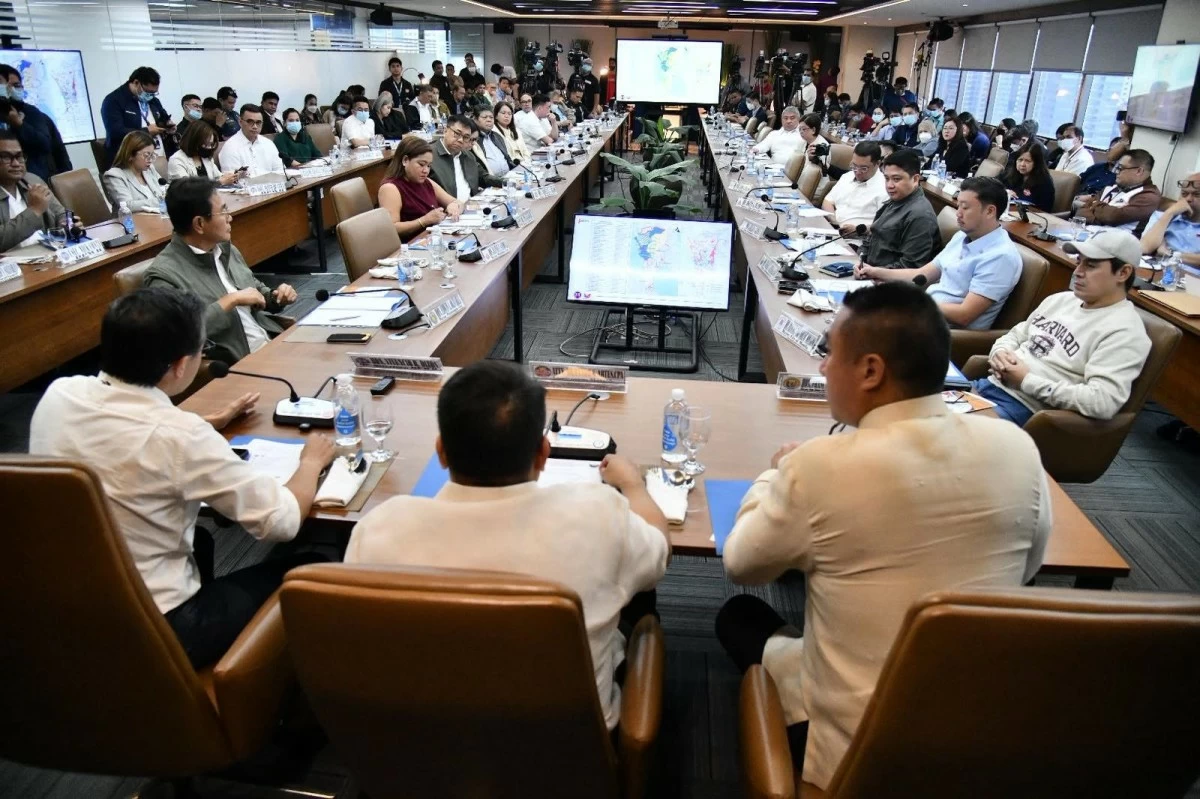
The Metro Manila Council (MMC), Metropolitan Manila Development Authority (MMDA), and Department of Public Works and Highways (DPWH) hold a joint meeting on Tuesday, Nov. 4, to discuss various concerns in the National Capital Region (NCR). (Photo from MMDA)
The officials of the Metro Manila Council (MMC) and the Metropolitan Manila Development Authority (MMDA) on Tuesday, Nov. 4, said they will adhere to the Department of the Interior and Local Government's (DILG) infrastructure audit on both public and private buildings in their respective localities as part of the national government's preparations for disasters and calamities.
They made the statement during their joint meeting with the Department of Public Works and Highways (DPWH) where they tackled various topics concerning the National Capital Region (NCR).
These include the President's directive to clear waterways and mitigate flooding in Greater Metro Manila, support for the Paleng-QR PH Plus Program of the DILG and Bangko Sentral ng Pilipinas (BSP), and coordination and implementation of Waste-to-Energy (WTE) projects of the Department of Energy (DOE) to address waste management and flooding issues.
"The council likewise approved the DILG’s infrastructure audit, which requires local government units (LGUs) to review and assess public infrastructure, particularly vertical structures and lifeline structures such as hospitals to ensure readiness for a possible major earthquake," MMC President and San Juan City Mayor Francis Zamora said.
According to the DILG, the infrastructure audit aims to help communities prepare for the threat of high-magnitude earthquakes, particularly "The Big One."
"Assessing the structural integrity of buildings is crucial to ensure public safety and reduce the risk of casualties and damage during major seismic events. Beyond auditing key public facilities such as hospitals, schools, government offices, and emergency response centers, the DILG aims to expand the infrastructure audit to include privately owned structures. With the increasing frequency and intensity of earthquakes, proactive preparedness is our best defense. Through harmonized audits, stronger partnerships, and evidence-based planning, we can build safer, more resilient communities across the country," the DILG said.
The agency explained it had partnered with government agencies and stakeholders, including the Association of Structural Engineers of the Philippines and the Philippine Institute of Civil Engineers, to develop the Harmonized Infrastructure Audit Tool (HIAT) in 2024.
The HIAT provides a standardized framework for evaluating building resilience and identifying potential vulnerabilities before seismic disasters.
"As part of the national roll-out, the Department has also developed a corps of trained coaches composed of technical experts from professional organizations, academic institutions, the DILG, and local government functionaries from 74 LGUs nationwide. These coaches are equipped to mentor local audit teams and cascade the use of HIAT across their respective regions," the DILG said, urging the private sector to partner with regional government agencies, engineering associations, and academic institutions through the Local Infrastructure Learning Hubs which will be established by the Department’s regional offices.
"These hubs will support local audit teams chaired by local chief executives and composed of building and disaster management officers," it noted.
Whole-of-nation approach
Zamora had earlier urged all local governments in the country to diligently prepare for disasters and calamities as he underscored the importance of preparation and cooperation between the government and the public.
"In light of the recent earthquakes that have struck our nation, concerns continue to grow that the “Big One” could hit Metro Manila at any time. I urge all our citizens—not only those from the National Capital Region (NCR) but also from all regions across our country—to recognize their crucial role in disaster preparedness. Your vigilance and active participation can greatly help save lives and minimize property damage. To this end, I encourage my fellow mayors to continue strengthening capacity-building programs for disaster management officers, staff, and our citizens. I also urge our local officials to ensure that all local government units are adequately equipped with emergency vehicles, equipment, and supplies to enable a prompt and effective response in the event of a disaster," Zamora, who also serves as the national president of the League of Cities of the Phiippines (LCP), said.
"Furthermore, I recommend the strict and continuous monitoring by the Offices of the Building Official (OBO) of both government buildings and private establishments, to certify the structural integrity of these infrastructures and ensure public safety," he added.
The mayor also appealed for the public's continued vigilance and disaster preparedness, saying that it is a shared responsibility to always be ready.
"During an earthquake, remain calm, take cover under a sturdy object, stay away from glass windows and unstable structures, and move to open areas when it is safe to do so. Familiarize yourselves with the designated evacuation sites near your homes, schools, and workplaces. Your local governments stand ready to assist you, but your immediate response in the crucial first hours after a disaster can make a significant difference in ensuring your safety and that of your loved ones," he stressed.