






Manila Bulletin
 Philippines
Metro Manila
Metro Manila Council hails DOE's waste-to-energy plan, negotiations underway
Philippines
Metro Manila
Metro Manila Council hails DOE's waste-to-energy plan, negotiations underway
Philippines
Metro Manila
Metro Manila Council hails DOE's waste-to-energy plan, negotiations underway
Metro Manila Council hails DOE's waste-to-energy plan, negotiations underway
Published Nov 5, 2025 11:08 am


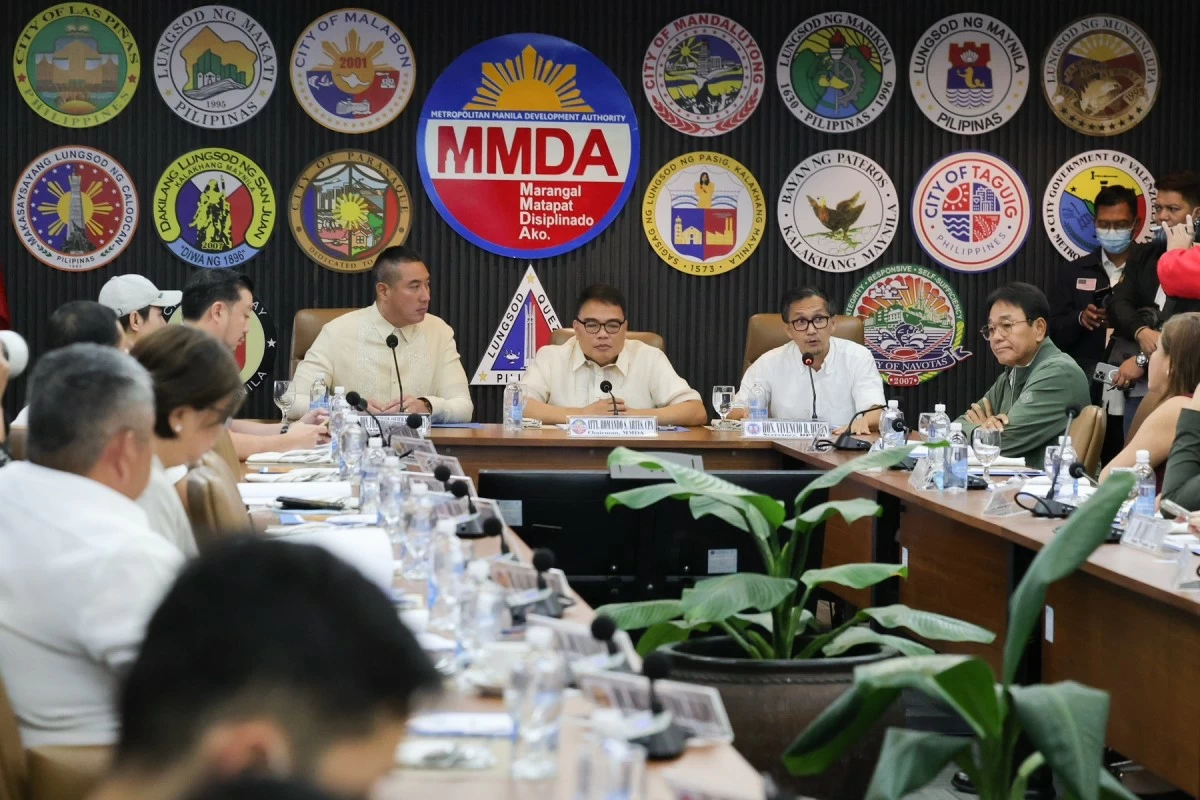
Metropolitan Manila Development Authority (MMDA) Chairman Atty. Don Artes, together with Metro Manila Council (MMC) President and San Juan City Mayor Francis Zamora and Department of Public Works and Highways (DPWH) Secretary Vince Dizon, presides over the Metro Manila Council meeting held at the MMDA head office in Pasig City on Tuesday, Nov. 4. (Photo by Santi San Juan)
The Metro Manila Council (MMC) expressed its support for the Department of Energy's (DOE) waste-to-energy plan aimed at converting the cities' garbage into fuel, ushering in a new dawn of renewable energy in the National Capital Region (NCR).
During a meeting at the Metropolitan Manila Development Authority (MMDA) head office in Pasig City on Tuesday, Nov. 4, MMC President and San Juan City Mayor Francis Zamora said the council had already passed a resolution for the project's negotiation.
"The Metro Manila Council passed a resolution authorizing MMDA Chairman Don Artes to negotiate the terms and conditions already because our mayors have concerns, just like what I and Mayor Francisco "Isko Moreno" Domagoso said earlier. We just don't want to incur additional expenses for the LGUs because we already have a set budget for garbage hauling," Zamora said.
"The garbage is being transported now to Rizal. If it will be transported farther from Rizal, it means we will spend more just to transport the garbage. If that is the situation, it will be a big problem for us," he added.
In August, the MMDA advised the Manila city government to redirect its waste to the New San Mateo Sanitary Landfill in Rizal, following the permanent closure of the Navotas Sanitary Landfill, where many cities in NCR previously disposed of their waste.
The MMC president stressed that if the cities' waste will just be transported within Metro Manila, then it will be better for local government units (LGUs) as they can save more funds and the project will be more feasible.
Under the Energy Department's waste-to-energy system, solid waste will be converted into fuel to generate energy similar to what is being done in Sweden.
This will reduce dependence on landfills by up to 90 percent, officials said.
Landfills are not enough
In an interview with Manila Bulletin last October, President Ferdinand "Bongbong" Marcos Jr. said the national government must give serious consideration to adopting modern waste-to-energy technologies, starting in Metro Manila, to address the worsening garbage and flooding problems in the capital region.
According to him, waste-to-energy has emerged as a key legislative and environmental priority due to the country’s growing solid waste crisis and the limitations of existing landfill systems.
“In our consultation with the legislature, the Waste-to-Energy Bill is one of the priorities because I think the technology has become so advanced that we can now adopt many waste-to-energy technologies that are being used around the world,” Marcos said.
Marcos explained the initiative will focus first on NCR, where overflowing landfills and clogged drainage systems have worsened flooding and sanitation concerns.
“I think everyone will agree that the garbage problem in NCR needs a solution. Landfills just don't do it anymore,” he noted.
The Waste-to-Energy Bill is among the 44 priority measures under the Common Legislative Agenda (CLA) of the 20th Congress, as discussed during the Legislative-Executive Development Advisory Council (LEDAC) meeting last Sept. 30.
The bill aims to promote the use of waste-to-energy technologies that convert solid waste into electricity, heat, or fuel, while ensuring environmental safeguards and compliance with emission standards.