






 Business
Trade & Industry
DOTr eyes Marcos' approval of Metro Manila ferry system next year
Business
Trade & Industry
DOTr eyes Marcos' approval of Metro Manila ferry system next year
DOTr eyes Marcos' approval of Metro Manila ferry system next year


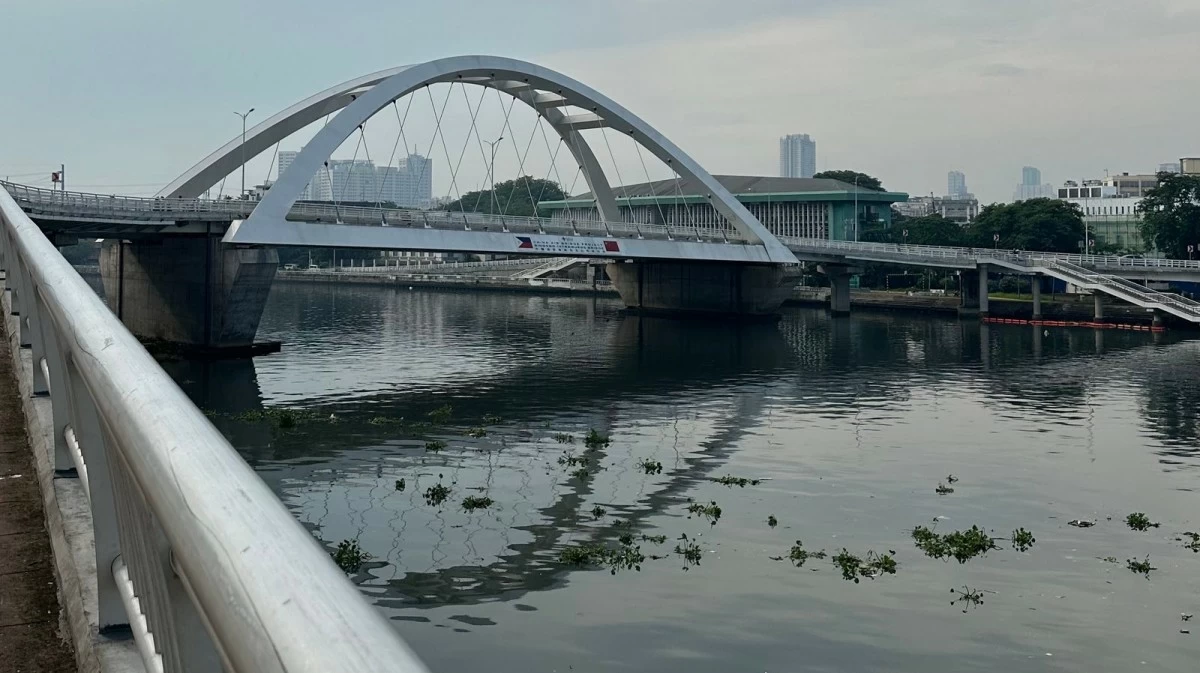
The Department of Transportation (DOTr) aims to kickstart the development of a proposed ferry system spanning Metro Manila by next year with the completion of a feasibility study, as potential funders and private sector partners are already lining up.
The DOTr is still finalizing the feasibility study for Manila Bay-Pasig River-Laguna Lake (MAPALLA) Ferry System, which has been ongoing for around two years now.
The study was initially targeted for completion within the first half of the year but has since been delayed as the agency sought to incorporate new inputs from private sector and government partners, among other details.
The delay prompted the Philippine Ports Authority (PPA) to propose the Pasig River Intermodal Transportation Project, which has already been given the go-ahead to begin development.
DOTr chief communications development officer John Patrick Dayao said this project will be taken into consideration in the feasibility study for MAPALLA Ferry System.
“It needs to be aligned with the project of the PPA... to finalize the actual scope of the project,” Dayao said on the sidelines of Norway-Philippines Electric Ferries Conference 2025.
The DOTr earlier tapped the Public-Private Partnership (PPP) Center, through the project development and monitoring facility (PDMF) of the Asian Development Bank (ADB), to develop the study.
Once the study is completed, the DOTr will be able to submit the project for the approval of the Economy and Development (ED) Council.
The ED Council, chaired by President Ferdinand R. Marcos Jr., is responsible for overseeing the government’s policy direction on economic matters, including proposed PPP arrangements.
Based on the DOTr’s initial plans, the vessels as well as the operations and maintenance (O&M) of MAPALLA Ferry System would be bundled and bid out through PPP as a single contract.
There is also an option for the DOTr to award the contracts for the vessels and O&M to two different companies, according to Dayao.
The ferry system is expected to be built in phases, starting with the first package covering a 30-kilometer (km) stretch of Marikina River and Pasig River.
With an estimated cost of ₱32.8 billion, this part of the project will feature at least 29 ferry stations and a total fleet of 75 all-electric ferries.
The DOTr is targeting to start construction work in 2027, with partial operations within two years.
The second package of the ferry system would expand to Manila Bay and Laguna Lake, covering an additional six stations and 26 vessels. This phase is scheduled to begin in 2033 and be completed by 2035.
Once fully operational, the new transport system is projected to serve more than 10,000 passengers daily during its first year of operations, with a target of over 30,000 passengers per day as services expand.
Serving as an east-to-west linkage across the capital region, MAPALLA Ferry System is seen as an ideal alternative for commuters seeking to escape heavily congested roads.
While still in its early stages, the ADB has already expressed interest in becoming the DOTr’s development partner for the project.
ADB senior regional maritime specialist Duncan McIntosh said the Manila-based multilateral lender is “very willing” to support the project, noting that it can extend assistance through its sovereign, private sector, or PPP operations.
With 101 vessels planned for the project, Norwegian maritime companies have also expressed eagerness to participate.
During the Electric Ferries Conference, they suggested that the DOTr consider dividing vessel procurement into several contracts to be awarded to different companies.