







DA sets ₱210/kg hog floor price to combat import flood
Published Nov 4, 2025 03:48 pm


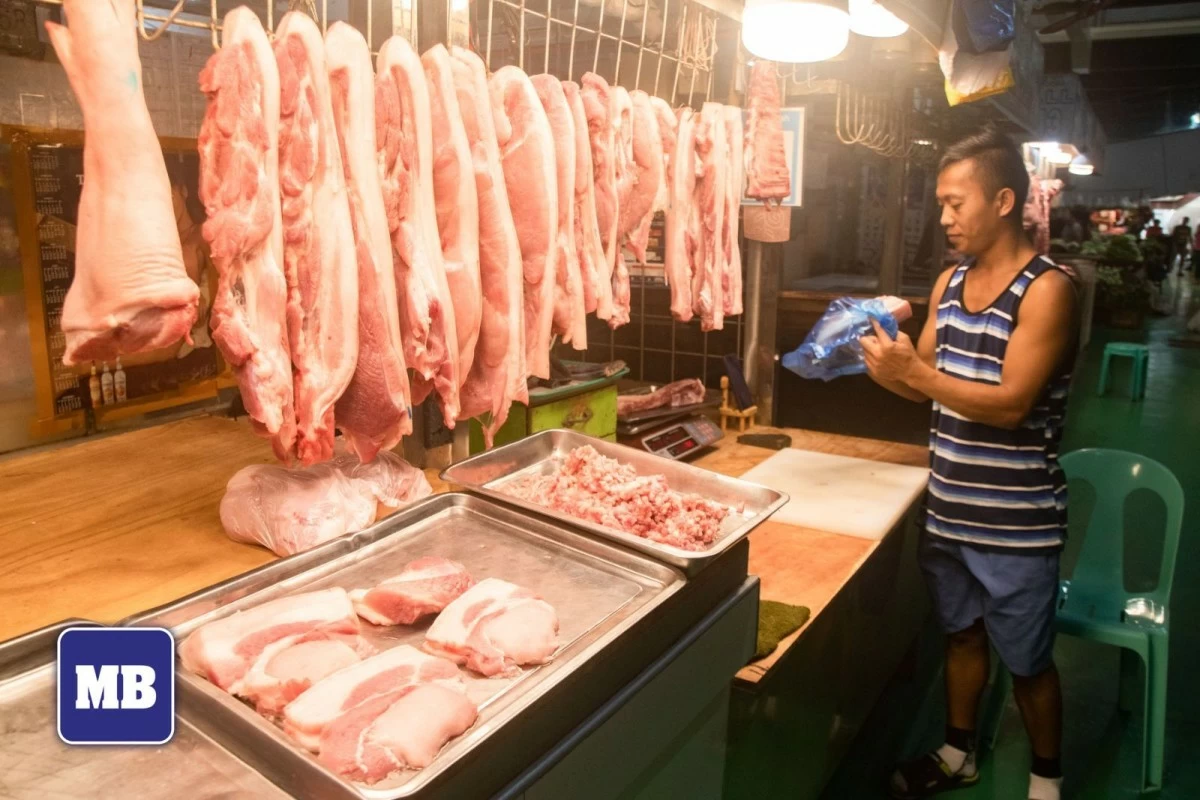
The Department of Agriculture sets a minimum farmgate price for live hogs to help local raisers recover from an influx of cheaper imports.
The Department of Agriculture (DA) is set to impose a floor price for live hogs at ₱210 per kilo, as the government works to help hog raisers recover from losses due to the influx of pork imports.
In a statement on Tuesday, Nov. 4, the DA said it has received the approval of local hog producers to establish a minimum farmgate price as a measure to revive the struggling swine industry.
Hog raisers have called on the agency to implement a floor price to reverse the sharp decline in farmgate prices.
Based on reports, farmgate prices had fallen to as low as ₱150 per kilo, well below the production cost of around ₱180 per kilo.
Similar to the rice situation, Agriculture Assistant Secretary Arnel de Mesa said the influx of cheaper pork imports this year essentially eroded the competitiveness of local producers.
“There’s just too much imported pork,” De Mesa, also the DA’s spokesperson, said in an interview.
Data from the Bureau of Animal Industry (BAI) showed that meat imports from January to August rose by 17 percent to 1.06 million metric tons (MT) from 907,771 MT in the same period last year.
Pork imports, which cover more than half of the total meat imports, reached 573,091 MT during the eight-month period, up 27 percent from last year’s 450,361 MT.
The increase in arrival of foreign pork shipments, according to Agriculture Secretary Francisco Tiu Laurel, is due to the imposition of lower import duties.
“This has flooded the market, squeezed local producers, and endangered both our food security and farmers’ livelihoods,” he said.
To help curb imports, the DA plans to recommend the restoration of the pork import tariff to 40 percent from the current 25 percent, as embodied under Executive Order (EO) No. 62.
President Marcos issued EO No. 62 last year, which includes the tariff cut on rice imports and other agricultural commodities, to help reduce the prices of imported goods to the benefit of consumers.
“Farmgate prices have fallen sharply, yet consumers haven’t felt any relief. During my market visits, I’ve seen liempo still selling for around ₱400 per kilo,” Tiu Laurel said.
The Samahang Industriya ng Agrikultura (SINAG) noted that the decline in farmgate prices in pork is the same predicament of rice farmers who are “bearing the brunt of excessive imports.”
The industry group has been urging the government to raise the tariff on rice imports from the current 15 percent to 35 percent for ASEAN and 50 percent for non-ASEAN countries.
Meanwhile, the DA is also planning to reinstate the maximum suggested retail price (MSRP) for pork before the end of the year.
The agency said it will still determine the price limit to “balance profitability across the supply chain and consumer protection.”
Last May, the DA reversed its MSRP policy on pork due to low compliance among Metro Manila’s wet markets. At that time, only around five percent of retailers were found to be compliant.
Initially, the MSRP was set at ₱350 per kilo for pigue (leg/ham) and kasim (shoulder), and ₱380 per kilo for liempo (pork belly). A price limit was also enforced for “sabit ulo” or freshly slaughtered carcass at ₱300 per kilo.
Furthermore, the DA will issue an administrative order to reclassify pork jowls—currently treated as offal—so they can be levied a higher tariff.
Jowls, a cut popular in Korean barbecue, or samgyupsal, have seen increasing demand from meat processors.
Tiu Laurel has likewise directed the Agribusiness and Marketing Assistance Service (AMAS) and the National Meat Inspection Service (NMIS) to ramp up monitoring to ensure transparency and fair trade.
“Supermarkets must clearly label frozen meat products and avoid misrepresenting them as fresh, while retailers selling frozen items are required to maintain proper chillers and freezers,” he explained.