






Manila Bulletin
 Lifestyle
Food
This Michelin-recommended Kapampangan chef just beat Bobby Flay with her mom's Kare-kare recipe
Lifestyle
Food
This Michelin-recommended Kapampangan chef just beat Bobby Flay with her mom's Kare-kare recipe
Lifestyle
Food
This Michelin-recommended Kapampangan chef just beat Bobby Flay with her mom's Kare-kare recipe
This Michelin-recommended Kapampangan chef just beat Bobby Flay with her mom's Kare-kare recipe
Published Nov 3, 2025 02:33 pm


At A Glance
- By Jellyn Gueco
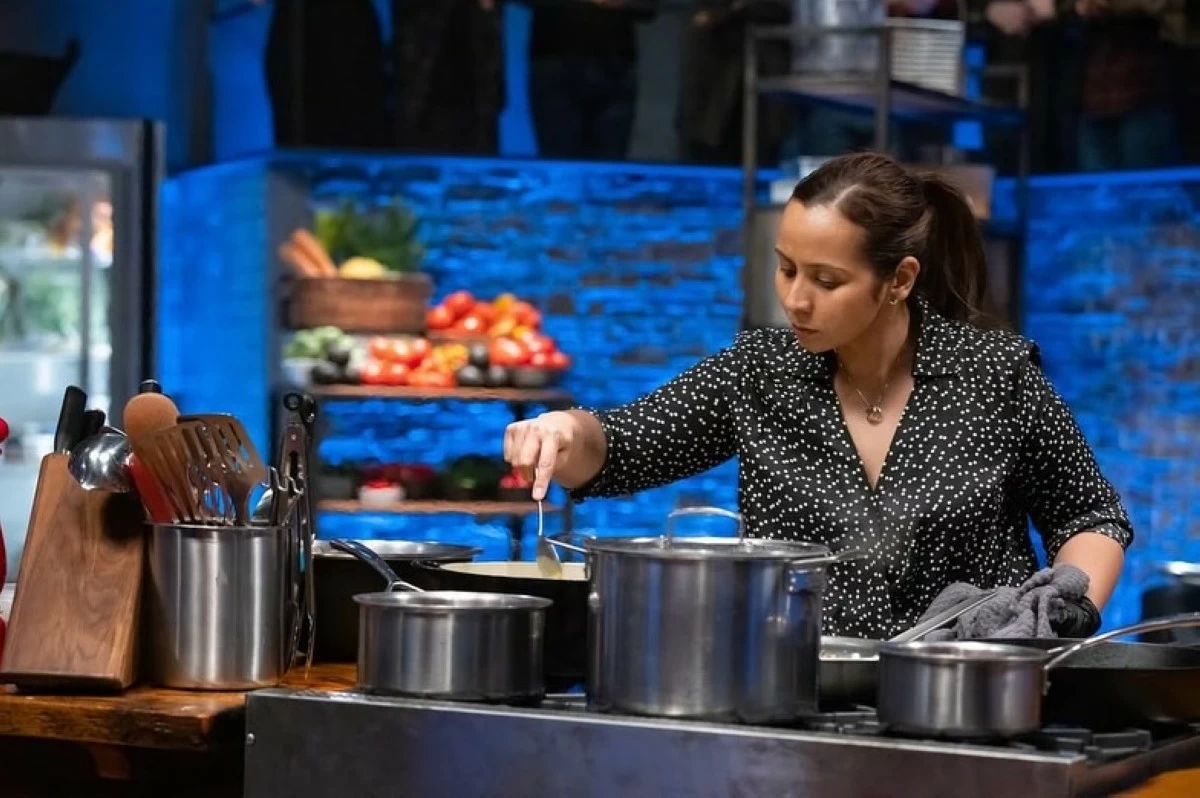
Chef Laila Bazahm (Photo courtesy of Food Network)
Though Kare-kare is quintessentially Filipino, even those who grew up with the dish may not exactly have the skill nor the patience to painstakingly perfect every ingredient from scratch so it results in this rich, velvety stew with complex yet comforting flavors. It’s also not a dish that can be recreated just by following a recipe step-by-step, as it requires having first-hand knowledge of how it should taste, a sensory memory passed down through generations.
So when Texas-based Kapampangan chef, Laila Bazahm, challenged one of Food Network’s celebrity icons, Chef Bobby Flay, in a Kare-kare cookoff for his TV show "Beat Bobby Flay," it was not only a test for Bobby, but a risk for Chef Laila, who for the very first time, is cooking a heritage Filipino dish in a very public stage.

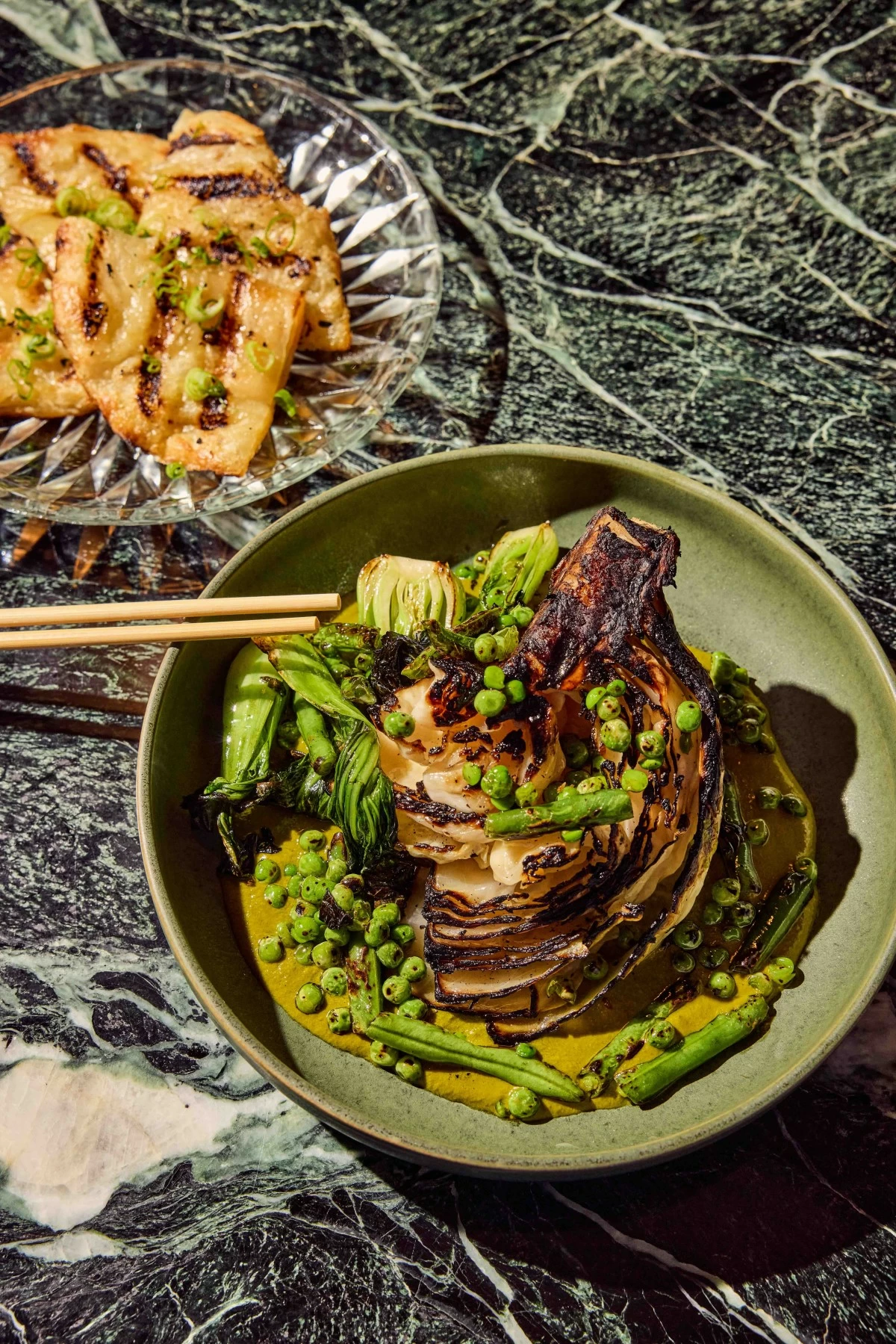
(Photo courtesy of Food Network)
Charred Cabbage Nilaga Stew
Chef Laila was raised in the Philippines and started her career in the culinary industry working in some of the world’s most prestigious restaurants, including L'Atelier de Joël Robuchon in Singapore. She also lived in Spain for nearly a decade where she opened her first restaurant Hawker 45, which was named one of Conde Nast’s 30 Best Restaurants in Barcelona for two consecutive years.
With her experience, you would think nerves would be the least of her worries but Chef Laila admitted that being in the show was a stressful experience, especially since she needed to win the first round against another Filipino, Michelin-starred chef Michael Collantes, before she earned the right to compete against Bobby.
“I did not know what to expect and Chef Michael is an amazing chef. He also trained under Robuchon so I knew that his skills would be on point” said Chef Laila.
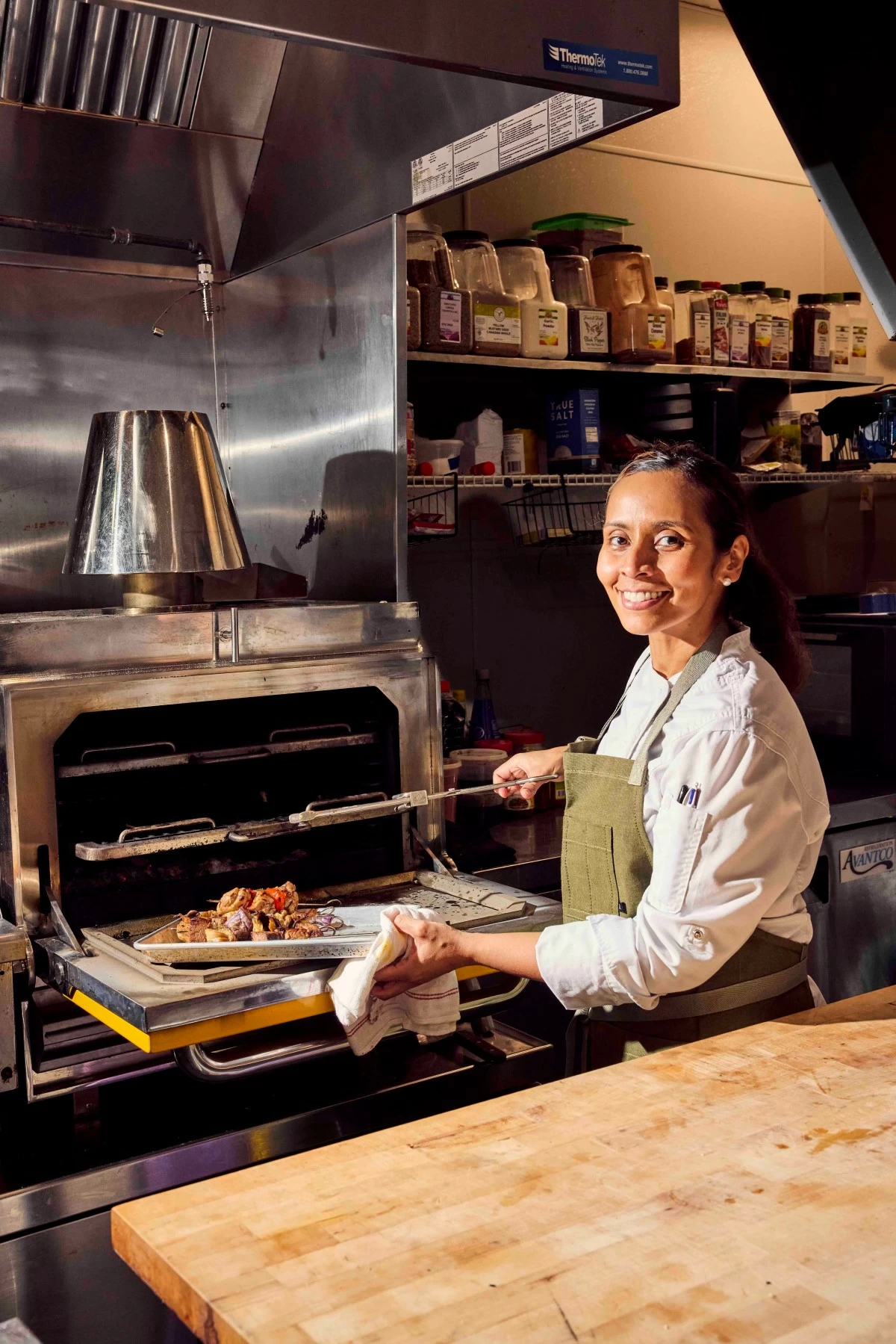
Chef Laila Bazahm at her new restaurant Siti in Austin Texas
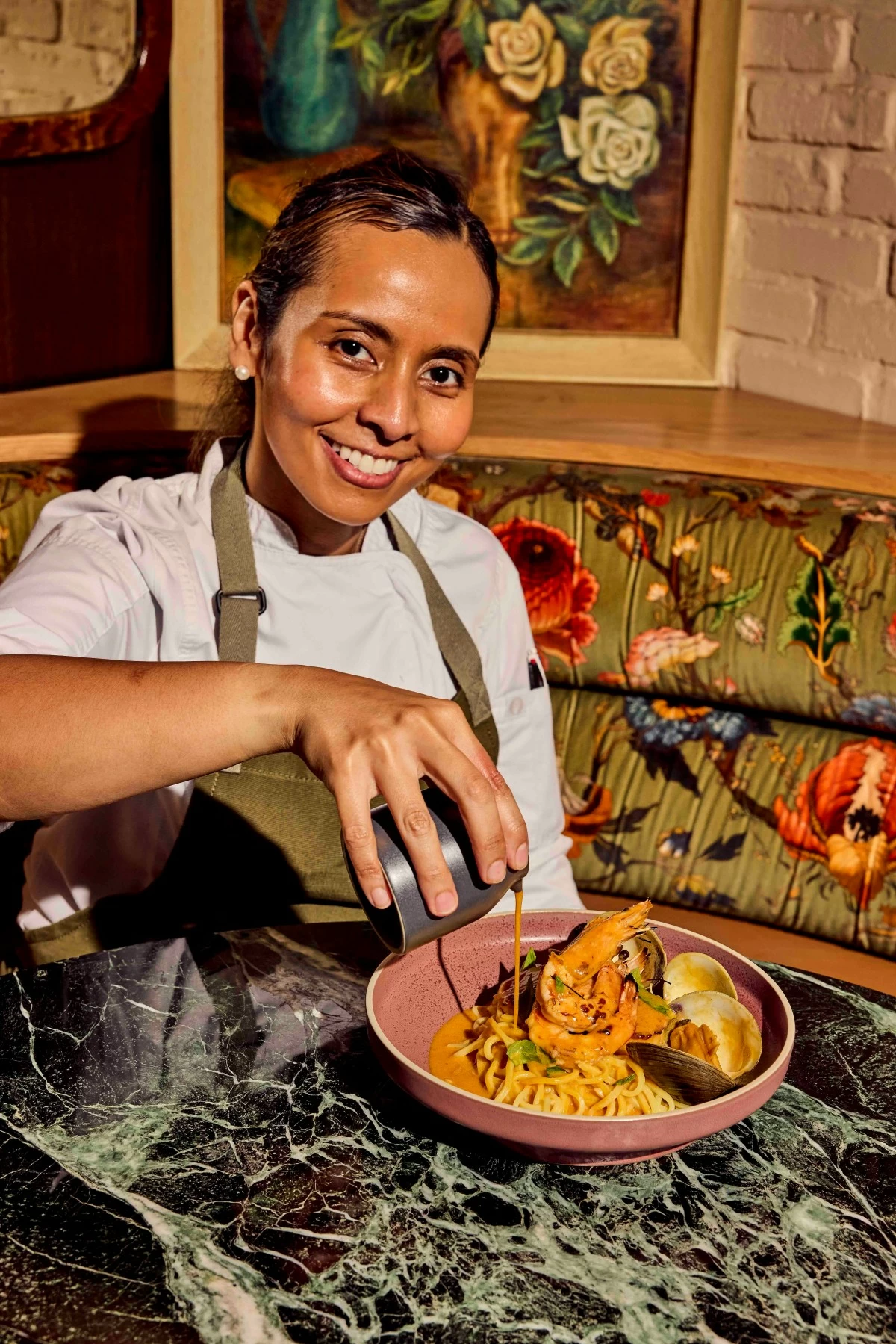
Chef Laila Bazahm was raised in the Philippines
The head-to-head battle featured savoy cabbage as the star ingredient and Chef Laila said that cooking Nilaga was the first thing that came to her mind, a mainstay in many Filipino kitchens. “While I was grabbing ingredients, I initially did not know what to make. But I’m very competitive so I also wanted to win. I thought I could elevate Nilaga and make the cabbage the highlight of the dish.”
Chef Laila braised the cabbage in tangerine juice, ginger, garlic, shallots, and a bit of jalapeño. She then charred the cabbage, added a Nilaga broth made with duck fat, and finished it with crème fraîche. She was not able to plate the mushrooms which were supposed to deliver meatiness to the dish, replacing beef, but still, it was enough for her to secure the first round win and compete against Bobby.
Kare-kare with a twist
Now based in Austin, Texas, Chef Laila has opened two restaurants – El Raval, a Spanish tapas bar and three-month old Siti, a Southeast Asian restaurant where she serves her now famous Kare-kare. Siti’s success has been truly phenomenal, earning a “Michelin Recommended” recognition in the Michelin Guide 2025 just a little over 100 days after its opening.
Before opening Siti, however, Chef Laila said that never in a million years did she think of serving a traditional Filipino dish like Kare-kare in her own restaurant.
“I trained in Michelin-starred kitchens, and the main thing about that is finding your voice, making your own food. In all the restaurants I worked in, none of those restaurants were serving traditional food,” she recalled.
For the first few years in her career, Chef Laila said that she was not really doing anything Filipino. Eventually, she would infuse Filipino techniques like adding an Adobo sauce or a Caldereta reduction to some of her creations, but that was not the main focus of her cuisine.
“If you’re a chef you want to reimagine a dish. You want to put your own riff. I did not want to serve something that has been done so many times. That’s one of the reasons why I was holding off on doing anything Filipino in my restaurants.”
However, when the Food Network producers asked her what dish she would want to cook against Bobby, choosing a Filipino dish like Kare-kare was a no brainer. Chef Laila shared on the show that it was her mom’s specialty dish that she personally learned from her.
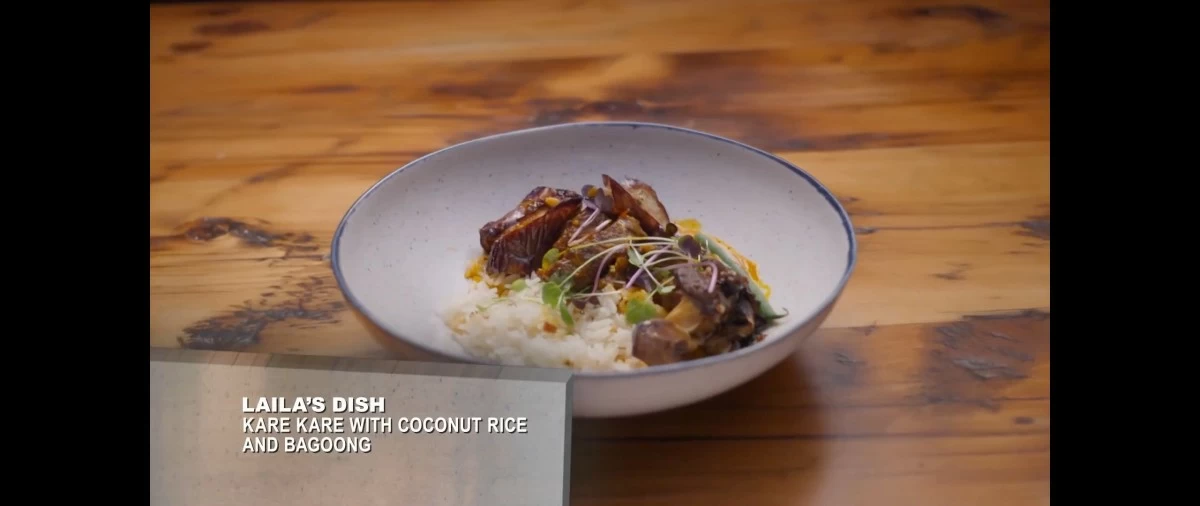
Chef Laila's Kare-kare (Photo courtesy of Food Network)
Siti Southeast Asian Cuisine
“It’s me, it’s a dish that’s very personal to me. I remember how Chef Bobby kept telling me ‘Why did you choose this dish? It’s so difficult!’ but that’s the point, because it’s a very complex dish,” she shared.
Chef Laila said she tried to stay as authentic as she could with the Kare-kare she cooked on the show, with only a few swaps given the forty-five minute time limit. Instead of oxtail, she used beef chuck to ensure a tender meat. And to push the flavors and save on time, she created an aromatic paste that she sauteed and added to the stew. She also wanted the fermented shrimp paste to be an essential part of the dish so she created a bagoong gremolata with yuzu to finish the dish.
The odds were against Chef Laila, with Bobby’s winning record at 62% in the previous 500 episodes of the show. So, it was definitely a surprise when she heard her name announced as the winner.
“Bobby always wins in this show so it was really cool that I was able to beat him. The episode was filmed several months ago and when it finally aired, we saw an uptick of guests coming into El Raval and Siti, particularly from the Filipino community in Texas. So it’s great to see that they’re there and they’re paying attention,” she remarked.
Michelin Recommended restaurant Siti
Aside from serving Kare-kare at Siti, Chef Laila has started incorporating Filipino-inspired recipes in her menu. She shared that she recently did a special which featured Stuffed Quail Inasal and Octopus & Calamari with a Kinilaw gastrique.
“I love Filipino food. When I’m cooking for myself, that’s usually what I make. In my restaurants, I try to honor traditions and authentic flavors, but I also want to make the dishes my own. Hopefully, the guests can support this new take on classic dishes.”
Chef Laila said that if given the opportunity, she would welcome going back to the Philippines to pursue culinary projects. While she feels that her priorities are now focused on her Austin restaurants, she’s still excited at the thought of going back home to Pampanga, even just for a food trip.
“Pampanga has such great food. I remember walking at Nepo Mart to get a pint of buko sherbet or eating pancit luglug at Susie’s. I love the sisig and tokwa’t baboy at Mila’s… even the pork chop with soy sauce served in our high school canteen was one of my favorites. Growing up in that environment was priceless. Those little things that we don't really think about – our memories, they shape us, they shape our palate,” she reflected.
When asked if she now believes her Kare-Kare recipe is better than her mom’s, Chef Laila insists that her mom still cooks the better dish.