






Manila Bulletin
 Environment and Sustainability
Puerto Princesa's green breakthrough: Philippine water facility wins top honor for restoring coastal ecosystems
Environment and Sustainability
Puerto Princesa's green breakthrough: Philippine water facility wins top honor for restoring coastal ecosystems
Environment and Sustainability
Puerto Princesa's green breakthrough: Philippine water facility wins top honor for restoring coastal ecosystems
Puerto Princesa's green breakthrough: Philippine water facility wins top honor for restoring coastal ecosystems
Published Nov 3, 2025 02:23 pm


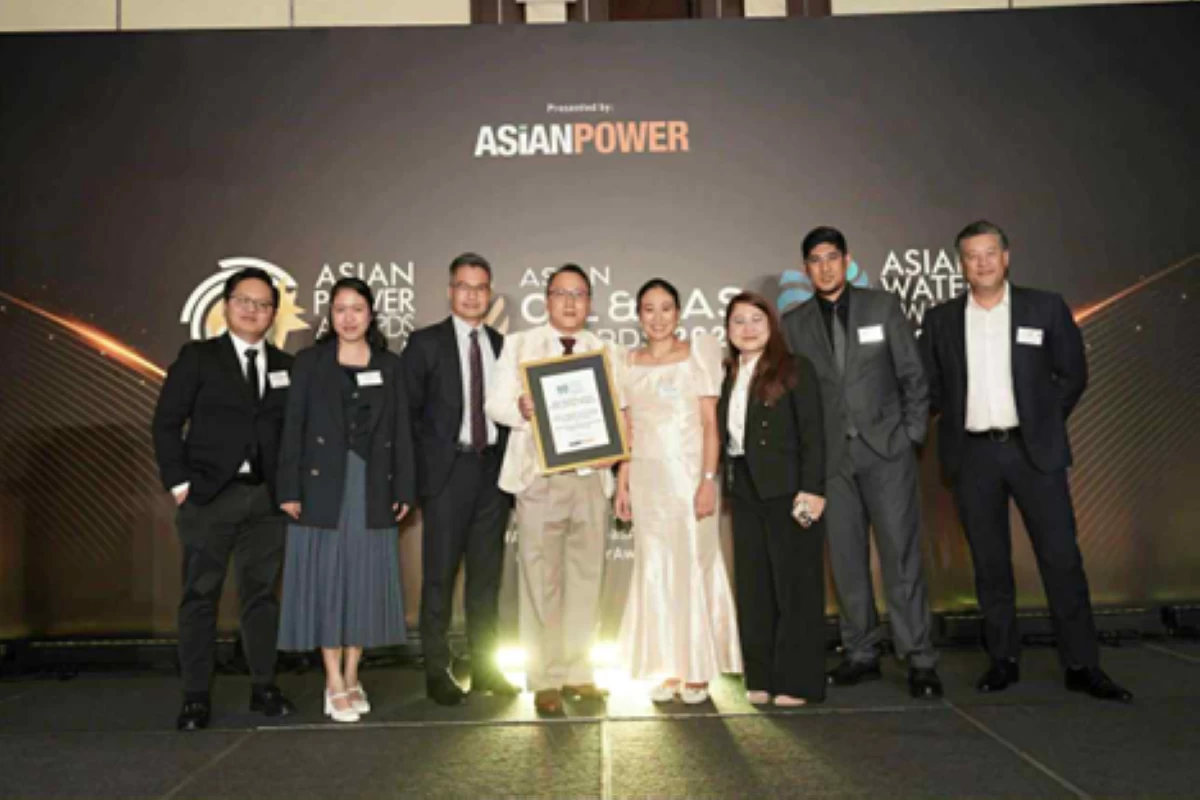
Puerto Princesa Water Reclamation and Learning Center Inc. (“PPWRLC”) received the prestigious Asian Water Improvement Project of the Year award at the 23 October 2025 awards dinner held at the Intercon Kuala Lumpur, Malaysia. From left to right –
Constantine Doncila (PPWRLC Corporate Secretary), Margie Ablay, Grant Clarke
(representatives of Vivant Hydro Holdings Inc.), Jehremiah C. Asis (PPWRLC and JCA
1221 Holdings Inc. founder and President), Katherine Asis, Zara See (JCA 1221 Head
of Admin and Finance), Marco Magay (PPWRLC Plant Manager), and Chris Ong
(awards judge from Roland Berger).
The Philippines took home a major regional distinction at the 2025 Asian Water Awards after the Puerto Princesa Water Reclamation and Learning Center (PPWRLC) was named Water Quality Improvement Project of the Year, recognizing its groundbreaking work in sustainable water management and environmental innovation.
Developed through a public-private partnership between the City Government of Puerto Princesa and JCA 1221 Holdings, Inc., the PPWRLC represents the country’s first large-scale wastewater treatment facility that combines sewage and septage treatment in a single, integrated system. Beyond cleaning water, the project regenerates ecosystems and restores livelihoods across Palawan’s capital city.
“This award affirms that the Philippines can lead Asia in environmental innovation,” said Jehremiah “Jehri” Asis, CEO of JCA 1221 Holdings, Inc. “What began as a local solution to rehabilitate Puerto Princesa Bay has grown into a model for how cities across the country can achieve water security and sustainability through innovation and faith in purpose.”
The PPWRLC was designed to prevent up to 4,000 cubic meters of wastewater per day from polluting Puerto Princesa Bay. At the same time, it releases high-quality recycled water that supports reforestation, agriculture, and urban greening initiatives. The facility also operates partially on solar energy and includes a four-stage self-cleaning system that minimizes chemical use and power consumption.
Central to PPWRLC’s operations is the Puerto Princesa Innovative Economical Septage and Sewage Treatment Plant (PP-ieSSTP). The PP-ieSSTP’s modular combined treatment system results in lower capital and operational expenditures. This translates to lower user fees for the beneficiary community – PPWRLC charges the lowest septage fee rate for residents of highly urbanized cities in the Philippines, and is also among the lowest rate nationwide for septage projects with fully operational plants. The PP-ieSSTP captures sewage from a combined canal and storm drain with varying salinity from the action of the water tide; it is tailored to coastal cities where conventional sewer systems are not yet viable, particularly due to limited funding. This approach demonstrates efficient, cost-effective, adaptable, context-sensitive infrastructure—particularly valuable in geographically constrained or fast-developing settings. A team of scientists from the University of the Philippines validated the effectiveness of the treatment process of the PP-ieSSTP.
“The project uses technology that works with nature, not against it,” Asis added. “Our machines enhance natural treatment processes instead of replacing them. We see ourselves as stewards of creation, tasked with restoring what was damaged and ensuring that future generations inherit cleaner waters and healthier ecosystems.”
Since its commissioning in 2022, the PPWRLC has transformed Puerto Princesa Bay, enabling the city to once again host international events such as Ironman and Dragon Boat races, which demand world-class water quality standards.
The Asian Water Awards, held annually, recognizes outstanding projects and organizations across the region for excellence in water management, conservation, and innovation. This year’s recognition marks a milestone for the Philippines, highlighting how local ingenuity and private-public collaboration can drive large-scale environmental transformation.
Asis noted that the collaboration among his company JCA 1221 Holdings Inc. and Vivant Hydro Holdings Inc., and the Puerto Princesa City local government led by Mayor Lucilo Bayron and the Puerto Princesa City Water District was essential to the success of the project. He added, “Our success and your recognition shows what can be done when the private and public sectors align to develop, construct, and operate innovative infrastructure that addresses ecological and environmental concerns. The alignment of wills and objectives can achieve sustainable growth and promote the overall general well-being of a growing community the way its Creator intended it to be.”
Looking ahead, JCA 1221 Holdings is expanding the PPWRLC model to other areas in the Philippines, including Gingoog City in Misamis Oriental and Siargao Island in Surigao del Norte. These new projects aim to replicate Puerto Princesa’s success by integrating waste treatment, recycled water reuse, and renewable energy into local infrastructure.
“With this award, we hope to inspire more cities and local governments to see environmental sustainability not as a burden, but as an opportunity,” Asis concluded. “Clean water is not just a resource—it’s a reflection of who we are as a people.”
The Asian Water Awards, now in its 4th year, is an initiative of the Charlton Media group to inspire and promote best practices, foster knowledge exchange, and encourage collaboration among water professionals, organizations, and communities. It serves as a platform to showcase innovative projects, initiatives, and companies based in Asia that have made significant contributions to water management, conservation, and sustainability in the region. Apart from PPWRLC, the other Philippine honorees of the 2025 Asian Water Awards are ACCIONA, Maynilad Water Services, Inc., Malita Power Inc., NXTLVL Water Technology Inc., and San Miguel Corporation/Northern Cement Corporation.