ADVERTISEMENT

Powerful earthquake kills at least 20 people in northern Afghanistan

Published Nov 3, 2025 11:47 am  |  Updated Nov 3, 2025 03:48 pm
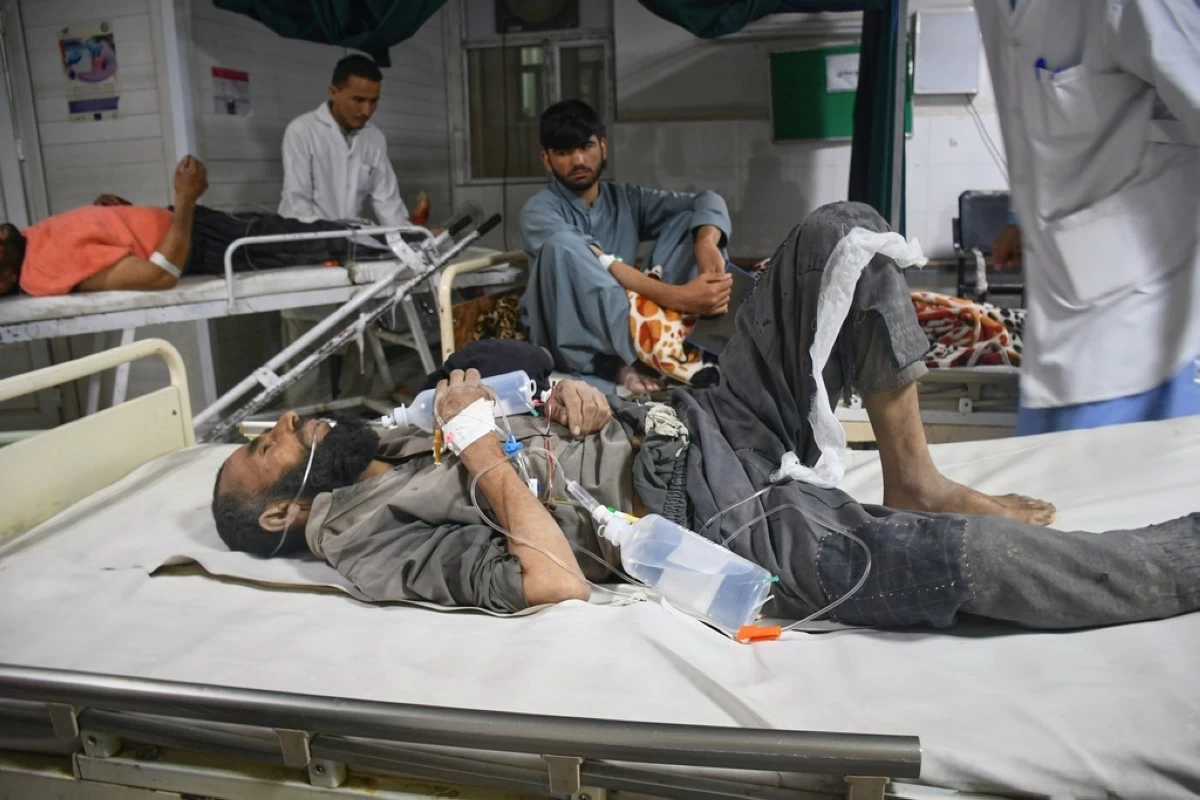
Injured residents of a 6.3 powerful earthquake in northern Afghanistan wait for treatment at a hospital in Mazar-e-Sharif, Afghanistan, Monday, Nov. 3, 2025.(AP Photo/Sirat Noori)
KABUL, Afghanistan (AP) — A powerful, 6.3 magnitude earthquake shook northern Afghanistan before dawn Monday, killing at least 20 people and injuring more than 300 others, a health official said.
The U.S. Geological Survey said the quake's epicenter was located 22 kilometers (14 miles) west-southwest of the town of Khulm, and that it struck at 12:59 a.m. at a depth of 28 kilometers (17 miles).
Sharafat Zaman, a spokesperson for the Ministry of Public Health, said the quake killed at least 20 people and injured 320 others.
Yousaf Hammad, a spokesman for Afghanistan’s disaster management agency, said most of the injured suffered minor wounds and were discharged after receiving initial treatment.
In the Afghan capital of Kabul, the Ministry of Defense announced that rescue and emergency aid teams have reached the areas affected by last night’s earthquake in the provinces of Balkh and Samangan, which suffered the most damage, and have begun rescue operations, including transporting the injured and assisting affected families.
The Taliban government’s chief spokesman, Zabihullah Mujahid, in a post on X platform said the earthquake hit Afghanistan's Balkh, Samangan and Baghlan provinces, causing casualties and financial loss. He expressed his sorrow and grief over the losses and said relevant governmental organizations were busy trying to get needed help to the people affected by the quake.
According to the Afghan officials, the earthquake was also felt in Mazar-e-Sharif, the capital of northern Balkh province.
In Mazar-e-Sharif, footage circulating on social media showed damage to the historic Blue Mosque. Several bricks had fallen from the walls but the mosque remained intact. The centuries-old site is one of Afghanistan’s most revered religious landmarks and a major gathering place during Islamic and cultural festivals.
The quake was felt in Kabul and several other provinces in Afghanistan. The Defense Ministry said in a statement that a rockslide briefly blocked a main mountain highway linking Kabul with Mazar-e-Sharif, but the road was later reopened. It said some people who were injured and trapped along the highway were transported to the hospital.
The United Nations in Afghanistan said on X that Monday's earthquake came just weeks after a deadly earthquake struck eastern Afghanistan. The U.N. said its teams are on the ground assessing needs and delivering urgent aid.
“We stand with the affected communities and will provide the necessary support,” the post said.
Afghanistan has been rattled by a series of earthquakes in recent years and the impoverished country often faces difficulty in responding to such natural disasters, especially in remote regions. Buildings tend to be low-rise constructions, mostly of concrete and brick, with homes in rural and outlying areas made from mud bricks and wood, many poorly built.
A magnitude 6.0 earthquake hit eastern Afghanistan on Aug. 31 near the border with Pakistan, killing more than 2,200 people. On Oct. 7, 2023, a magnitude 6.3 quake followed by strong aftershocks left at least 4,000 people dead, according to the Taliban government.

Related Tags

WORLDNEWS earthquake Afghanistan
ADVERTISEMENT
.most-popular .layout-ratio{ padding-bottom: 79.13%; } @media (min-width: 768px) and (max-width: 1024px) { .widget-title { font-size: 15px !important; } }

{{ articles_filter_1561_widget.title }}

.most-popular .layout-ratio{ padding-bottom: 79.13%; } @media (min-width: 768px) and (max-width: 1024px) { .widget-title { font-size: 15px !important; } }

{{ articles_filter_1562_widget.title }}

.most-popular .layout-ratio{ padding-bottom: 79.13%; } @media (min-width: 768px) and (max-width: 1024px) { .widget-title { font-size: 15px !important; } }

{{ articles_filter_1563_widget.title }}

{{ articles_filter_1564_widget.title }}

.mb-article-details { position: relative; } .mb-article-details .article-body-preview, .mb-article-details .article-body-summary{ font-size: 17px; line-height: 30px; font-family: "Libre Caslon Text", serif; color: #000; } .mb-article-details .article-body-preview iframe , .mb-article-details .article-body-summary iframe{ width: 100%; margin: auto; } .read-more-background { background: linear-gradient(180deg, color(display-p3 1.000 1.000 1.000 / 0) 13.75%, color(display-p3 1.000 1.000 1.000 / 0.8) 30.79%, color(display-p3 1.000 1.000 1.000) 72.5%); position: absolute; height: 200px; width: 100%; bottom: 0; display: flex; justify-content: center; align-items: center; padding: 0; } .read-more-background a{ color: #000; } .read-more-btn { padding: 17px 45px; font-family: Inter; font-weight: 700; font-size: 18px; line-height: 16px; text-align: center; vertical-align: middle; border: 1px solid black; background-color: white; } .hidden { display: none; }
function initializeAllSwipers() { // Get all hidden inputs with cms_article_id document.querySelectorAll('[id^="cms_article_id_"]').forEach(function (input) { const cmsArticleId = input.value; const articleSelector = '#article-' + cmsArticleId + ' .body_images'; const swiperElement = document.querySelector(articleSelector); if (swiperElement && !swiperElement.classList.contains('swiper-initialized')) { new Swiper(articleSelector, { loop: true, pagination: false, navigation: { nextEl: '#article-' + cmsArticleId + ' .swiper-button-next', prevEl: '#article-' + cmsArticleId + ' .swiper-button-prev', }, }); } }); } setTimeout(initializeAllSwipers, 3000); const intersectionObserver = new IntersectionObserver( (entries) => { entries.forEach((entry) => { if (entry.isIntersecting) { const newUrl = entry.target.getAttribute("data-url"); if (newUrl) { history.pushState(null, null, newUrl); let article = entry.target; // Extract metadata const author = article.querySelector('.author-section').textContent.replace('By', '').trim(); const section = article.querySelector('.section-info ').textContent.replace(' ', ' '); const title = article.querySelector('.article-title h1').textContent; // Parse URL for Chartbeat path format const parsedUrl = new URL(newUrl, window.location.origin); const cleanUrl = parsedUrl.host + parsedUrl.pathname; // Update Chartbeat configuration if (typeof window._sf_async_config !== 'undefined') { window._sf_async_config.path = cleanUrl; window._sf_async_config.sections = section; window._sf_async_config.authors = author; } // Track virtual page view with Chartbeat if (typeof pSUPERFLY !== 'undefined' && typeof pSUPERFLY.virtualPage === 'function') { try { pSUPERFLY.virtualPage({ path: cleanUrl, title: title, sections: section, authors: author }); } catch (error) { console.error('ping error', error); } } // Optional: Update document title if (title && title !== document.title) { document.title = title; } } } }); }, { threshold: 0.1 } ); function showArticleBody(button) { const article = button.closest("article"); const summary = article.querySelector(".article-body-summary"); const body = article.querySelector(".article-body-preview"); const readMoreSection = article.querySelector(".read-more-background"); // Hide summary and read-more section summary.style.display = "none"; readMoreSection.style.display = "none"; // Show the full article body body.classList.remove("hidden"); } document.addEventListener("DOMContentLoaded", () => { let loadCount = 0; // Track how many times articles are loaded const offset = [1, 2, 3, 4, 5, 6, 7, 8, 9, 10]; // Offset values const currentUrl = window.location.pathname.substring(1); let isLoading = false; // Prevent multiple calls if (!currentUrl) { console.log("Current URL is invalid."); return; } const sentinel = document.getElementById("load-more-sentinel"); if (!sentinel) { console.log("Sentinel element not found."); return; } function isSentinelVisible() { const rect = sentinel.getBoundingClientRect(); return ( rect.top < window.innerHeight && rect.bottom >= 0 ); } function onScroll() { if (isLoading) return; if (isSentinelVisible()) { if (loadCount >= offset.length) { console.log("Maximum load attempts reached."); window.removeEventListener("scroll", onScroll); return; } isLoading = true; const currentOffset = offset[loadCount]; window.loadMoreItems().then(() => { let article = document.querySelector('#widget_1690 > div:nth-last-of-type(2) article'); intersectionObserver.observe(article) loadCount++; }).catch(error => { console.error("Error loading more items:", error); }).finally(() => { isLoading = false; }); } } window.addEventListener("scroll", onScroll); });

Sign up by email to receive news.