






Manila Bulletin
 Business
The Economy
Philippine manufacturing returns to growth in October despite weather disruptions
Business
The Economy
Philippine manufacturing returns to growth in October despite weather disruptions
Business
The Economy
Philippine manufacturing returns to growth in October despite weather disruptions
Philippine manufacturing returns to growth in October despite weather disruptions
Published Nov 3, 2025 02:08 pm


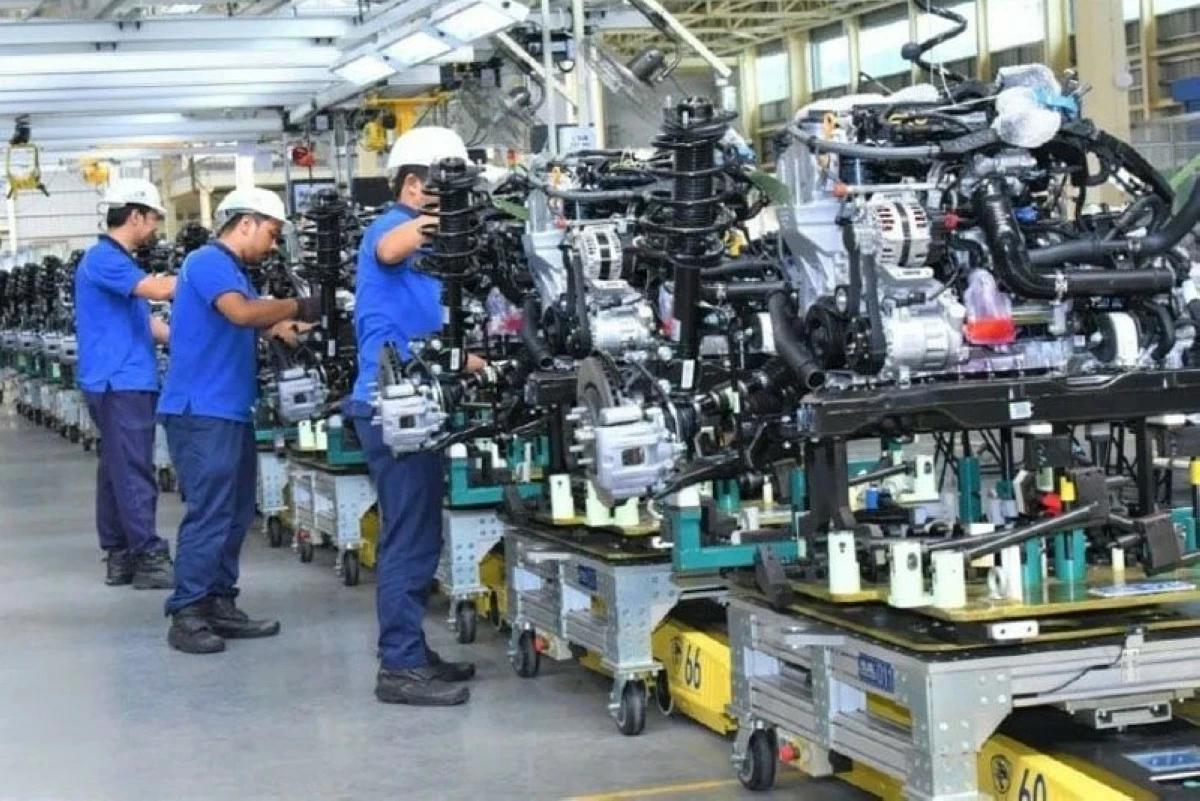
Despite weather disturbances, the Philippines’ manufacturing sector returned to growth in October, with the purchasing managers’ index (PMI) climbing back above the 50 mark after September’s slowdown.
However, October’s PMI remained among the weakest readings in seven months, or since March 2025, and one of the lowest in over two years, or since August 2023.
S&P Global Market Intelligence’s Philippines manufacturing PMI for October 2025, released on Monday, Nov. 3, posted an expansion of 50.1 in October after the contraction in September of 49.9. A score below 50 signals contraction, while a reading above 50 indicates expansion.
The report noted that growth in October signaled broadly stable operating conditions across the Filipino manufacturing sector.
S&P Global, however, reported that, “A further and stronger fall in new orders was recorded. This was accompanied by a solid and fresh reduction in new export orders. In turn, production remained in contraction territory. Indeed, reduced output requirements prompted firms to scale back their purchasing activity for the first time in nearly two years.”
Despite a sustained fall in new orders, S&P Global noted that “Filipino manufacturers looked more favorably on the prospect of product levels rising over the coming 12 months.”
“Positive sentiment was close to the recent high observed back in August. Panelists were hopeful that production will bounce back, supported by strengthening demand trends,” it added.
S&P Global highlighted some positive signs in the latest data, noting that manufacturers grew more optimistic about output prospects for the year ahead and continued to increase their workforce.
“The recent decline in output was closely associated with falling new orders, which panelists linked to adverse weather conditions and the end-of-life status for certain products. Nevertheless, the rate of contraction in production slowed on the month and was only marginal,” the report added.
S&P Global emphasized that new factory orders placed with manufacturing firms in the Philippines fell at a stronger rate in October.
“Surveyed panelists often linked this decline to a sluggish demand climate, with clients often putting orders on hold.” S&P Global also noted, “New export orders fell for the first time since May and at a solid pace, which was the most pronounced for a year. Companies reported weaker demand from international clients.”
It added that employment continued to rise in October. While the increase was modest, it marked the fastest pace of job growth in three months, driven by firms’ successful hiring efforts.
“Falling new orders and rising workforce numbers meant that Filipino goods producers were able to reduce their backlogs of work for a second straight month in October,” the report added.
The report also noted that the steeper drop in new factory orders resulted in a renewed decline in purchasing activity, ending a 22-month streak of growth.
S&P Global also indicated that anecdotal evidence pointed to last-minute order cancellations, which caused slight increases in both pre- and post-production inventories. The latter saw its first rise in three months.
“Despite firms cutting back on their buying activity, delivery times for inputs continued to lengthen in October, and to the strongest degree in three months,” it added.
The report also stated that, in terms of prices, October saw a continued easing of cost pressures. Input price inflation remained mild, reaching its lowest level in three months. Nonetheless, manufacturers who reported price increases attributed them to higher input prices.
S&P Global observed that the combination of mild cost pressures and sluggish demand prompted Philippine manufacturers to provide discounts.
“A closer examination of the Philippines’ PMI data revealed a mixed picture in October. The two largest segments, new orders and output, indicated further declines,” said Maryam Baluch, economist at S&P Global Market Intelligence. “Fresh contractions were observed in new export orders and purchasing activity, highlighting underlying demand conditions.”
“The sector has now remained in sluggish territory for most of the second half of 2025 so far. Whether it can see a notable recovery in performance in the coming months will depend greatly on efforts to stimulate consumer demand,” she added.
Michael Ricafort, chief economist at Rizal Commercial Banking Corp. (RCBC), told Manila Bulletin that PMI slightly improved and returned to expansion mode, partly due to improved weather conditions.
Ricafort added that the expansion was also partly driven by the positive impact of recent Bangko Sentral ng Pilipinas (BSP) policy rate cuts, which lowered borrowing and financing costs for some domestic manufacturers.
(Ricardo M. Austria)