ADVERTISEMENT

DepEd calls for full funding of education mandates to address functional illiteracy

Agency seeks sustained support for literacy reforms and implementation of key education laws

Published Nov 3, 2025 04:04 pm
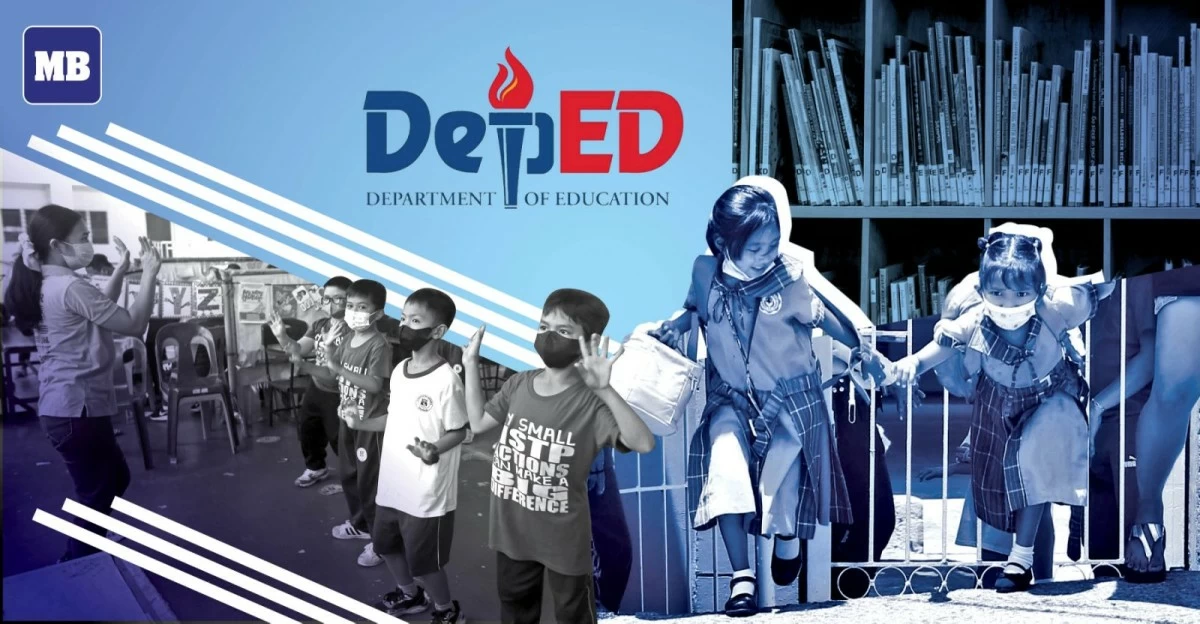
The Department of Education (DepEd) called for full funding of education mandates, citing unfunded laws and resource gaps that hinder efforts to address functional illiteracy. (DepEd / MB Visual Content Group)
The Department of Education (DepEd) is urging the government to fully fund its mandates and programs, stressing that solving the country’s persistent literacy challenges requires financial support that matches the scope and cost of its growing responsibilities.
DepEd Secretary Sonny Angara, in a statement issued Monday, November 3, underscored that while the Constitution prioritizes education in the national budget, DepEd’s expanding mandate has not always been met with corresponding resources.
“While responsibilities grew, resources did not always follow,” Angara said. “We have been spread too thinly. We must reclaim our focus on foundational learning, consistent with the intentions of the first EDCOM in the 1990s,” he added.
DepEd cites unfunded laws straining implementation
DepEd noted that several landmark education laws—such as the ARAL Program Act, the Career Progression System for Teachers and School Leaders, the Basic Education Mental Health and Well-Being Promotion Act, and the Alternative Learning System (ALS) Act—were passed without adequate or sustained funding.
This, DepEd said, has hindered the full implementation of crucial reforms.
DepEd’s statement follows discussions during the Second Congressional Commission on Education (EDCOM 2) hearing on October 28, where the cumulative burden of underfunded mandates and fragmented coordination was identified as a key challenge.
Focus on functional literacy and foundational learning
During the hearing, Angara reaffirmed DepEd’s commitment to focus on functional literacy and improved learning outcomes, in line with President Ferdinand R. Marcos Jr.’s directive.
To streamline operations, DepEd is coordinating with the Education and Workforce Development Group (EWDG) under the Office of the President to align education and labor initiatives.
Executive Committee members have also been directed to engage only in high-impact, mission-aligned coordinating bodies—such as those on inclusive education, education-to-employment, and curriculum review.
Textbook procurement and classroom initiatives
To support foundational learning, DepEd reported major gains in textbook procurement—60 new textbook titles in the past two years alone, compared to 27 titles from 2012 to 2023, a 122-percent increase.
Angara also cited efforts to accelerate classroom construction through Public-Private Partnerships (PPPs) and expanded participation from local government units (LGUs) and civil society organizations (CSOs).
Ongoing curriculum and administrative reforms
DepEd’s internal reforms include the rollout of the revised K to 10 and Senior High School curricula, nationwide teacher and school head training, and the integration of education technology across schools.
To reduce administrative workloads, the agency has deployed more administrative officers to allow teachers to focus on instruction.
Funding gaps for the ARAL Program
Despite progress, DepEd continues to face significant funding gaps.
The Academic Recovery and Accessible Learning (ARAL) Program needs P9.6 billion for 2026 but currently faces a P3.3 billion shortfall.
To sustain implementation, DepEd said it has reallocated P1.8 billion in internal savings to support the printing of tutorial modules and teacher training.
“Sustained reform requires sustained support,” Angara said. “We must never forget our bottom line: a Filipino learner who can read and comprehend,” he added.

Related Tags

DepEd Sonny Angara functional illiteracy education funding ARAL Program EDCOM 2 Philippine education K to 12 curriculum literacy rate
ADVERTISEMENT
.most-popular .layout-ratio{ padding-bottom: 79.13%; } @media (min-width: 768px) and (max-width: 1024px) { .widget-title { font-size: 15px !important; } }

{{ articles_filter_1561_widget.title }}

.most-popular .layout-ratio{ padding-bottom: 79.13%; } @media (min-width: 768px) and (max-width: 1024px) { .widget-title { font-size: 15px !important; } }

{{ articles_filter_1562_widget.title }}

.most-popular .layout-ratio{ padding-bottom: 79.13%; } @media (min-width: 768px) and (max-width: 1024px) { .widget-title { font-size: 15px !important; } }

{{ articles_filter_1563_widget.title }}

{{ articles_filter_1564_widget.title }}

.mb-article-details { position: relative; } .mb-article-details .article-body-preview, .mb-article-details .article-body-summary{ font-size: 17px; line-height: 30px; font-family: "Libre Caslon Text", serif; color: #000; } .mb-article-details .article-body-preview iframe , .mb-article-details .article-body-summary iframe{ width: 100%; margin: auto; } .read-more-background { background: linear-gradient(180deg, color(display-p3 1.000 1.000 1.000 / 0) 13.75%, color(display-p3 1.000 1.000 1.000 / 0.8) 30.79%, color(display-p3 1.000 1.000 1.000) 72.5%); position: absolute; height: 200px; width: 100%; bottom: 0; display: flex; justify-content: center; align-items: center; padding: 0; } .read-more-background a{ color: #000; } .read-more-btn { padding: 17px 45px; font-family: Inter; font-weight: 700; font-size: 18px; line-height: 16px; text-align: center; vertical-align: middle; border: 1px solid black; background-color: white; } .hidden { display: none; }
function initializeAllSwipers() { // Get all hidden inputs with cms_article_id document.querySelectorAll('[id^="cms_article_id_"]').forEach(function (input) { const cmsArticleId = input.value; const articleSelector = '#article-' + cmsArticleId + ' .body_images'; const swiperElement = document.querySelector(articleSelector); if (swiperElement && !swiperElement.classList.contains('swiper-initialized')) { new Swiper(articleSelector, { loop: true, pagination: false, navigation: { nextEl: '#article-' + cmsArticleId + ' .swiper-button-next', prevEl: '#article-' + cmsArticleId + ' .swiper-button-prev', }, }); } }); } setTimeout(initializeAllSwipers, 3000); const intersectionObserver = new IntersectionObserver( (entries) => { entries.forEach((entry) => { if (entry.isIntersecting) { const newUrl = entry.target.getAttribute("data-url"); if (newUrl) { history.pushState(null, null, newUrl); let article = entry.target; // Extract metadata const author = article.querySelector('.author-section').textContent.replace('By', '').trim(); const section = article.querySelector('.section-info ').textContent.replace(' ', ' '); const title = article.querySelector('.article-title h1').textContent; // Parse URL for Chartbeat path format const parsedUrl = new URL(newUrl, window.location.origin); const cleanUrl = parsedUrl.host + parsedUrl.pathname; // Update Chartbeat configuration if (typeof window._sf_async_config !== 'undefined') { window._sf_async_config.path = cleanUrl; window._sf_async_config.sections = section; window._sf_async_config.authors = author; } // Track virtual page view with Chartbeat if (typeof pSUPERFLY !== 'undefined' && typeof pSUPERFLY.virtualPage === 'function') { try { pSUPERFLY.virtualPage({ path: cleanUrl, title: title, sections: section, authors: author }); } catch (error) { console.error('ping error', error); } } // Optional: Update document title if (title && title !== document.title) { document.title = title; } } } }); }, { threshold: 0.1 } ); function showArticleBody(button) { const article = button.closest("article"); const summary = article.querySelector(".article-body-summary"); const body = article.querySelector(".article-body-preview"); const readMoreSection = article.querySelector(".read-more-background"); // Hide summary and read-more section summary.style.display = "none"; readMoreSection.style.display = "none"; // Show the full article body body.classList.remove("hidden"); } document.addEventListener("DOMContentLoaded", () => { let loadCount = 0; // Track how many times articles are loaded const offset = [1, 2, 3, 4, 5, 6, 7, 8, 9, 10]; // Offset values const currentUrl = window.location.pathname.substring(1); let isLoading = false; // Prevent multiple calls if (!currentUrl) { console.log("Current URL is invalid."); return; } const sentinel = document.getElementById("load-more-sentinel"); if (!sentinel) { console.log("Sentinel element not found."); return; } function isSentinelVisible() { const rect = sentinel.getBoundingClientRect(); return ( rect.top < window.innerHeight && rect.bottom >= 0 ); } function onScroll() { if (isLoading) return; if (isSentinelVisible()) { if (loadCount >= offset.length) { console.log("Maximum load attempts reached."); window.removeEventListener("scroll", onScroll); return; } isLoading = true; const currentOffset = offset[loadCount]; window.loadMoreItems().then(() => { let article = document.querySelector('#widget_1690 > div:nth-last-of-type(2) article'); intersectionObserver.observe(article) loadCount++; }).catch(error => { console.error("Error loading more items:", error); }).finally(() => { isLoading = false; }); } } window.addEventListener("scroll", onScroll); });

Sign up by email to receive news.