ADVERTISEMENT

Marcos calls for return to WTO's free market principles

Published Nov 2, 2025 12:14 am  |  Updated Nov 2, 2025 01:23 pm
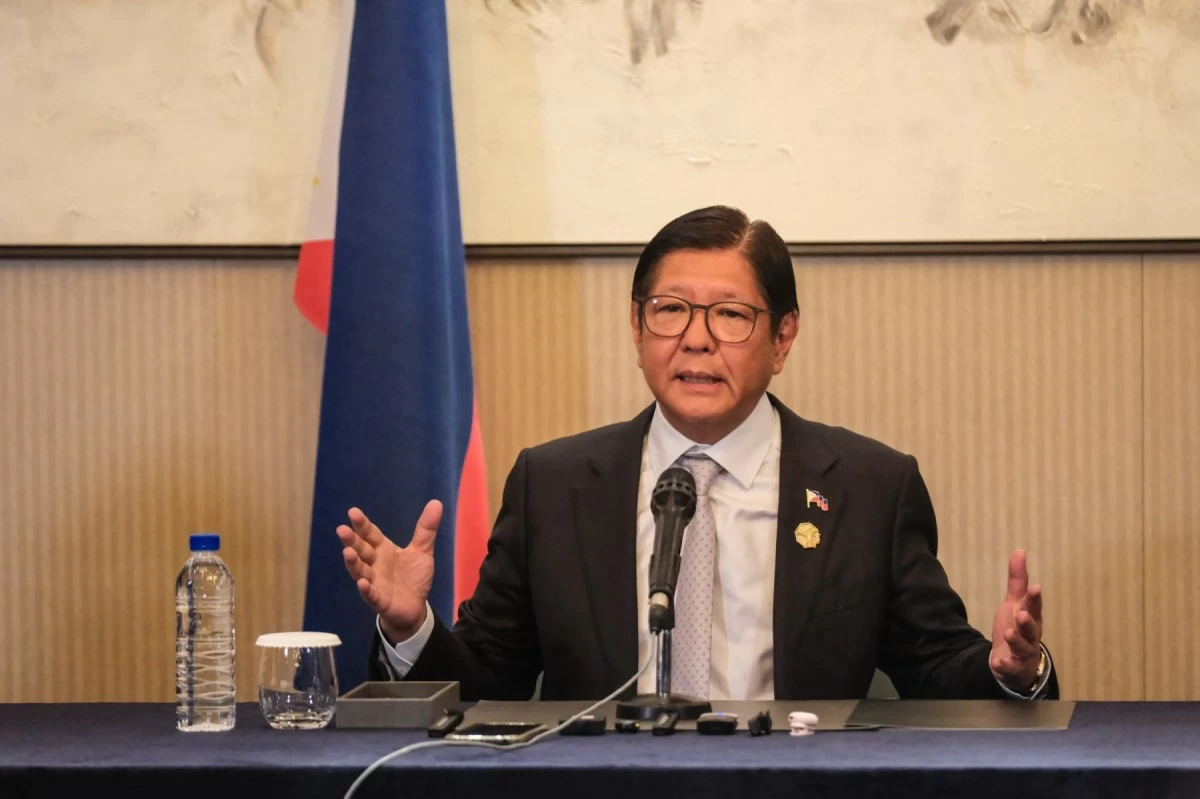
President Ferdinand 'Bongbong' Marcos Jr. (Yummie Dingding/PPA Pool)
BUSAN, South Korea — President Marcos urged member economies of the World Trade Organization (WTO) to restore the founding principles of free and open trade, warning that current global trends are moving in the opposite direction.
Marcos said this after the 32nd Asia-Pacific Economic Cooperation (APEC) Economic Leaders’ Meeting dropped any mention of the WTO in the Gyeongju Declaration, the outcome document of the summit.
In an interview here on Saturday evening, Nov. 1, the President said many countries have strayed from the WTO’s original purpose of expanding access to global markets.
“The fear that everyone is feeling now is that the principles and the strictures that guided the creation of the WTO are no longer in place, or at least no longer effective,” he said.
Marcos said the recent APEC discussions revealed a shared concern that trade barriers and protectionist policies are undermining multilateralism and competition.
“We have to return to the free market principles that the WTO was created for,” he said.
He added that nations must reaffirm their commitment to fair trade and mutual benefit.
“Hindi na nasusundan yung (Countries are no longer following the) idea that the WTO will open markets between countries,” Marcos said.
While reaffirming the importance of robust trade and investment, the Gyeongju Declaration notably omitted the reference to a “rules-based multilateral trading system with the WTO at its core” — a phrase that had appeared in every APEC declaration since 2021.
The APEC leaders' declaration can only be adopted by consensus, with support from every single member economy.
The change reflects growing divergence among major economies amid the renewed US-China trade rivalry.

Changing dynamics

President Marcos noted that recent shifts in global trade have altered the traditional dynamics between major economies.
“Now China is the one who says, ‘Let’s open more markets,’” he said, observing that the world order is “really turning” as old trade alignments evolve.
Marcos said he supports renewed cooperation under the WTO framework, especially as the Philippines continues to pursue more resilient and diversified trade relations.
“The comment that we have is that the world is really changing,” he said.
“Things are shifting, and we have to adjust while keeping to the principle of open markets,” he added.
Established in 1995, the WTO aims to promote free trade and reduce barriers among member countries.

Related Tags

President Marcos Bongbong Marcos World Trade Organization (WTO) APEC 2025
ADVERTISEMENT
.most-popular .layout-ratio{ padding-bottom: 79.13%; } @media (min-width: 768px) and (max-width: 1024px) { .widget-title { font-size: 15px !important; } }

{{ articles_filter_1561_widget.title }}

.most-popular .layout-ratio{ padding-bottom: 79.13%; } @media (min-width: 768px) and (max-width: 1024px) { .widget-title { font-size: 15px !important; } }

{{ articles_filter_1562_widget.title }}

.most-popular .layout-ratio{ padding-bottom: 79.13%; } @media (min-width: 768px) and (max-width: 1024px) { .widget-title { font-size: 15px !important; } }

{{ articles_filter_1563_widget.title }}

{{ articles_filter_1564_widget.title }}

.mb-article-details { position: relative; } .mb-article-details .article-body-preview, .mb-article-details .article-body-summary{ font-size: 17px; line-height: 30px; font-family: "Libre Caslon Text", serif; color: #000; } .mb-article-details .article-body-preview iframe , .mb-article-details .article-body-summary iframe{ width: 100%; margin: auto; } .read-more-background { background: linear-gradient(180deg, color(display-p3 1.000 1.000 1.000 / 0) 13.75%, color(display-p3 1.000 1.000 1.000 / 0.8) 30.79%, color(display-p3 1.000 1.000 1.000) 72.5%); position: absolute; height: 200px; width: 100%; bottom: 0; display: flex; justify-content: center; align-items: center; padding: 0; } .read-more-background a{ color: #000; } .read-more-btn { padding: 17px 45px; font-family: Inter; font-weight: 700; font-size: 18px; line-height: 16px; text-align: center; vertical-align: middle; border: 1px solid black; background-color: white; } .hidden { display: none; }
function initializeAllSwipers() { // Get all hidden inputs with cms_article_id document.querySelectorAll('[id^="cms_article_id_"]').forEach(function (input) { const cmsArticleId = input.value; const articleSelector = '#article-' + cmsArticleId + ' .body_images'; const swiperElement = document.querySelector(articleSelector); if (swiperElement && !swiperElement.classList.contains('swiper-initialized')) { new Swiper(articleSelector, { loop: true, pagination: false, navigation: { nextEl: '#article-' + cmsArticleId + ' .swiper-button-next', prevEl: '#article-' + cmsArticleId + ' .swiper-button-prev', }, }); } }); } setTimeout(initializeAllSwipers, 3000); const intersectionObserver = new IntersectionObserver( (entries) => { entries.forEach((entry) => { if (entry.isIntersecting) { const newUrl = entry.target.getAttribute("data-url"); if (newUrl) { history.pushState(null, null, newUrl); let article = entry.target; // Extract metadata const author = article.querySelector('.author-section').textContent.replace('By', '').trim(); const section = article.querySelector('.section-info ').textContent.replace(' ', ' '); const title = article.querySelector('.article-title h1').textContent; // Parse URL for Chartbeat path format const parsedUrl = new URL(newUrl, window.location.origin); const cleanUrl = parsedUrl.host + parsedUrl.pathname; // Update Chartbeat configuration if (typeof window._sf_async_config !== 'undefined') { window._sf_async_config.path = cleanUrl; window._sf_async_config.sections = section; window._sf_async_config.authors = author; } // Track virtual page view with Chartbeat if (typeof pSUPERFLY !== 'undefined' && typeof pSUPERFLY.virtualPage === 'function') { try { pSUPERFLY.virtualPage({ path: cleanUrl, title: title, sections: section, authors: author }); } catch (error) { console.error('ping error', error); } } // Optional: Update document title if (title && title !== document.title) { document.title = title; } } } }); }, { threshold: 0.1 } ); function showArticleBody(button) { const article = button.closest("article"); const summary = article.querySelector(".article-body-summary"); const body = article.querySelector(".article-body-preview"); const readMoreSection = article.querySelector(".read-more-background"); // Hide summary and read-more section summary.style.display = "none"; readMoreSection.style.display = "none"; // Show the full article body body.classList.remove("hidden"); } document.addEventListener("DOMContentLoaded", () => { let loadCount = 0; // Track how many times articles are loaded const offset = [1, 2, 3, 4, 5, 6, 7, 8, 9, 10]; // Offset values const currentUrl = window.location.pathname.substring(1); let isLoading = false; // Prevent multiple calls if (!currentUrl) { console.log("Current URL is invalid."); return; } const sentinel = document.getElementById("load-more-sentinel"); if (!sentinel) { console.log("Sentinel element not found."); return; } function isSentinelVisible() { const rect = sentinel.getBoundingClientRect(); return ( rect.top < window.innerHeight && rect.bottom >= 0 ); } function onScroll() { if (isLoading) return; if (isSentinelVisible()) { if (loadCount >= offset.length) { console.log("Maximum load attempts reached."); window.removeEventListener("scroll", onScroll); return; } isLoading = true; const currentOffset = offset[loadCount]; window.loadMoreItems().then(() => { let article = document.querySelector('#widget_1690 > div:nth-last-of-type(2) article'); intersectionObserver.observe(article) loadCount++; }).catch(error => { console.error("Error loading more items:", error); }).finally(() => { isLoading = false; }); } } window.addEventListener("scroll", onScroll); });

Sign up by email to receive news.